Mug Warmer vs Hot Plate: What's the Difference and Which Do You Need
A mug warmer and a small hot plate look similar from across the room but are built for completely different jobs. Here's where the line is, where it blurs, and which one actually solves your problem.
A mug warmer and a small countertop hot plate share a silhouette — a flat heated surface, a power cord, a single knob or button — but they are not the same product. A mug warmer is designed to hold one ceramic mug at drinking temperature for hours. A hot plate is designed to heat cookware to cooking temperature in minutes. They are not interchangeable.
This is the actual difference, and when each one is the right tool.
What a small hot plate is built for
A countertop single-burner hot plate is a cooking appliance. The use cases:
- Boil water in a small saucepan
- Reheat a can of soup or a leftover portion
- Cook a single egg or a small skillet of vegetables
- Simmer a sauce while you finish the rest of the meal
The numbers in this category vary, but the mainstream single-burner hot plate sits in the 1000-1500W range with a 5-7" cast-iron or infrared glass plate. Temperature controls are usually a knob with 5 levels or a stepless dial. Surface temperatures on the high end routinely hit 1000°F or more — well past the range of any drinking vessel. The plate is sized for cookware, not mugs.
There's also a smaller "warming plate" subcategory in the 200-500W range, designed to keep already-cooked food warm rather than to cook from cold. These get to maybe 200-400°F. Still cooking territory, not drinking territory.
In every case, the hot plate design priority is "make a small pan or pot hot, fast." That's why you buy it.
What a mug warmer is built for
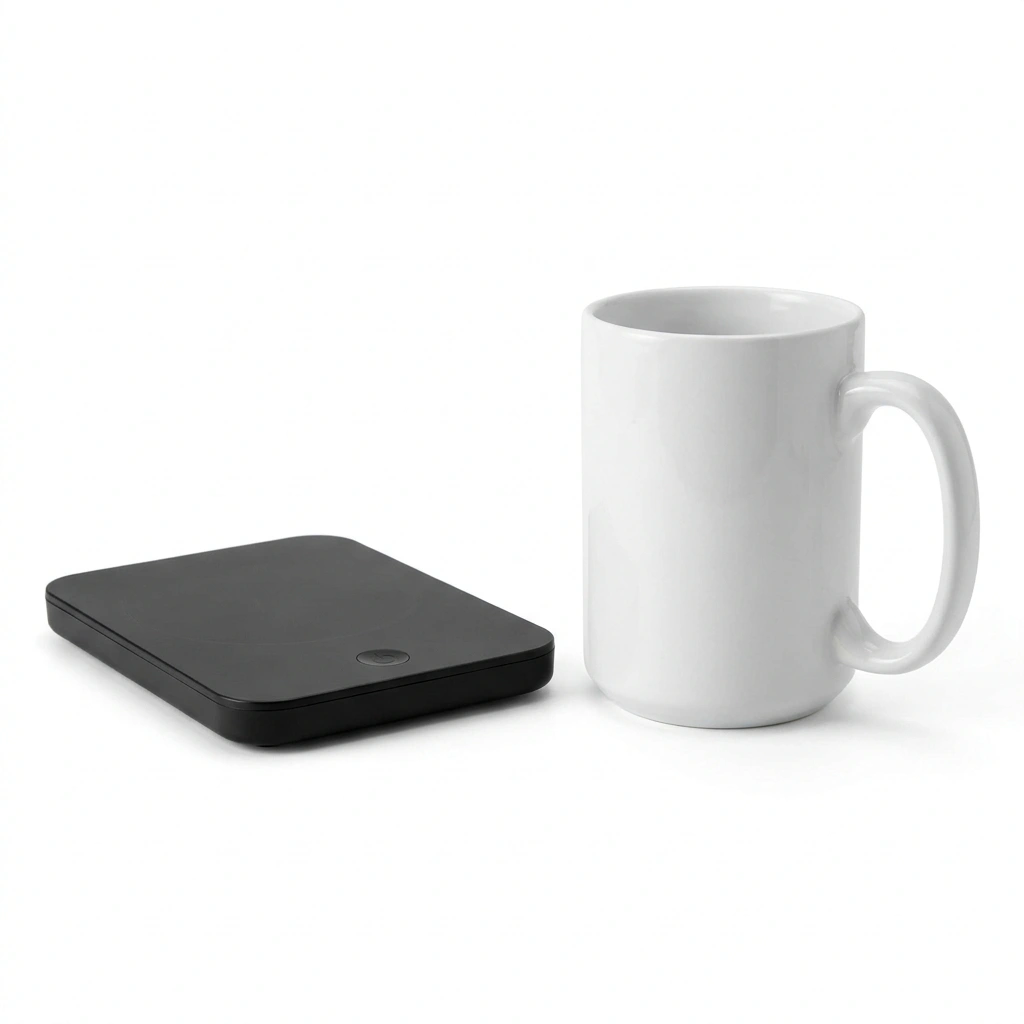
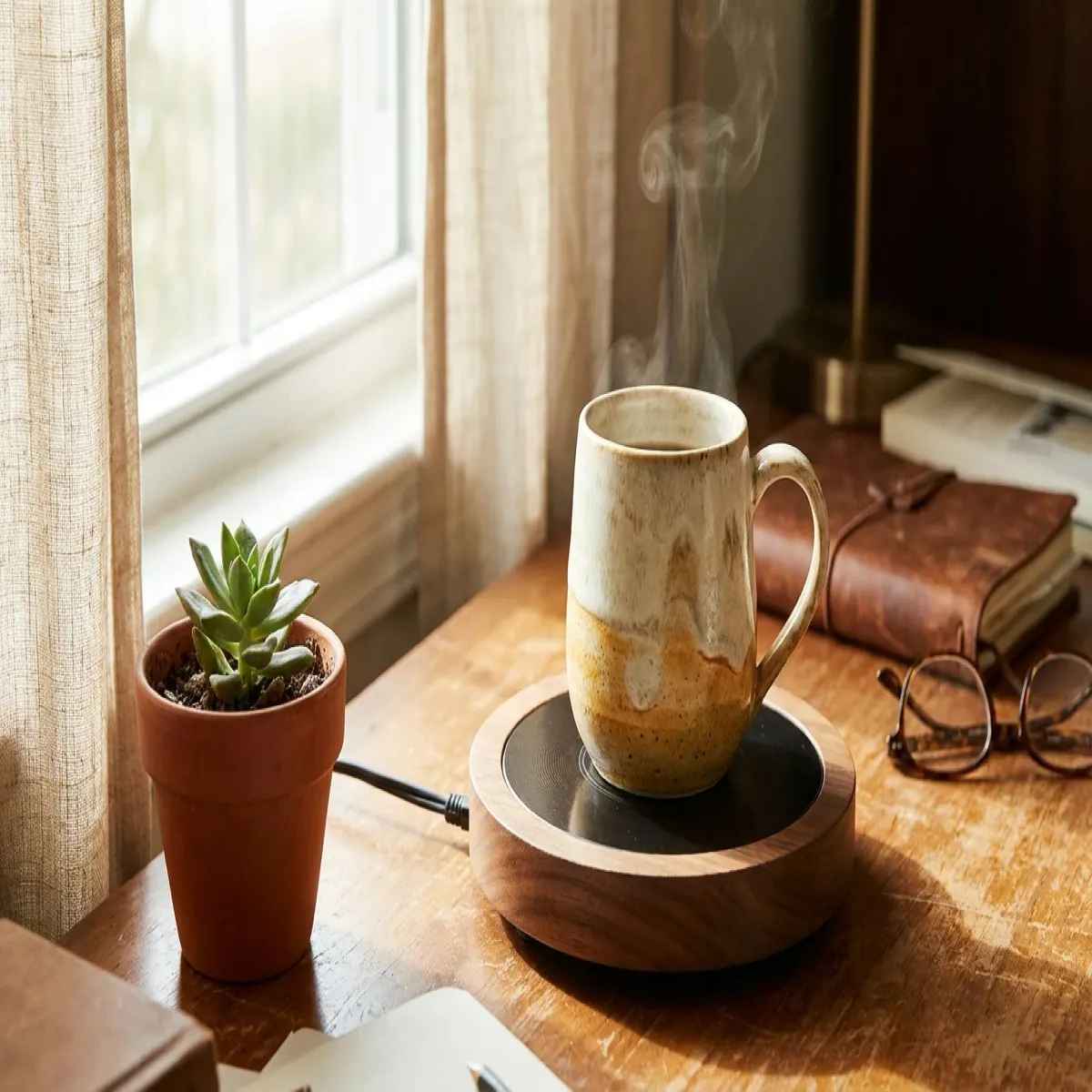
A mug warmer is a holding-warming device for one specific use case: a 12-15oz ceramic mug of coffee or tea, kept at 130-140°F liquid temperature for the duration of a work session.
The numbers in this category:
- Wattage: 15-36W (full breakdown in the wattage explainer)
- Plate diameter: 3-3.5"
- Plate surface temperature: roughly 110-160°F depending on setting
- Auto shutoff: typically 4 hours for budget picks, up to 12 for mid-tier
- Controls: usually low / medium / high or a temperature dial
A mug warmer plate is sized for a standard coffee mug and runs at temperatures that won't thermal-shock the ceramic. The plate material — covered in the plate material explainer — is also different. Hot plates use cast iron or infrared glass because they need to survive cooking heat. Mug warmers use aluminum or stainless steel because they're not designed to take that abuse.
The design priority is "hold the mug at drinking temperature for hours without me thinking about it."
What happens when you cross the wires
Mug on a hot plate. A hot plate on "low" still runs at 200°F or higher surface temperature. A ceramic mug placed on a hot plate heats the bottom of the mug rapidly while the upper walls and the coffee stay near boiling. That temperature differential — 200°F at the bottom, 200°F+ in the coffee, with a steep gradient through the wall — can crack the mug. Even on a warming-plate setting, a hot plate does not regulate around a mug's needs.
Beyond thermal shock, a hot plate does not have a useful auto shutoff. Most run until you turn them off. Leave the house with a mug on a hot plate and it sits at full power indefinitely — see the mug warmer safety guide for why this is a different category of risk from a mug warmer.
Cookware on a mug warmer. The opposite failure. A 5-7" saucepan doesn't fit on a 3-3.5" plate. The pot wobbles. Even if it made contact, a 24W mug warmer plate can't transfer enough heat through a metal pot to bring water to a simmer. You'd wait an hour for a cup of water to reach lukewarm.
Neither substitution works.
The candle warmer exception
There is one category that genuinely blurs the line: candle warmers / wax melt warmers. These are 15-30W hot plates designed to melt scented wax in a small jar. From above, they look identical to a budget mug warmer.
In practice, a candle warmer plate will keep a ceramic mug acceptably warm. The thermal regulation is in roughly the right range. But:
- Most candle warmers lack reliable auto shutoff. The candle is meant to be left for hours; the design assumes you'll shut it off manually.
- Plate diameter is sometimes undersized for a standard coffee mug.
- The temperature dial is calibrated for melting wax (around 130-150°F), not the slightly different range mug warmers target.
For the candle warmer vs mug warmer breakdown in detail, the conclusion is the same: candle warmers work in a pinch if you already own one, but a dedicated mug warmer is the better tool for the job.
Which one do you actually need
The simplest rule:
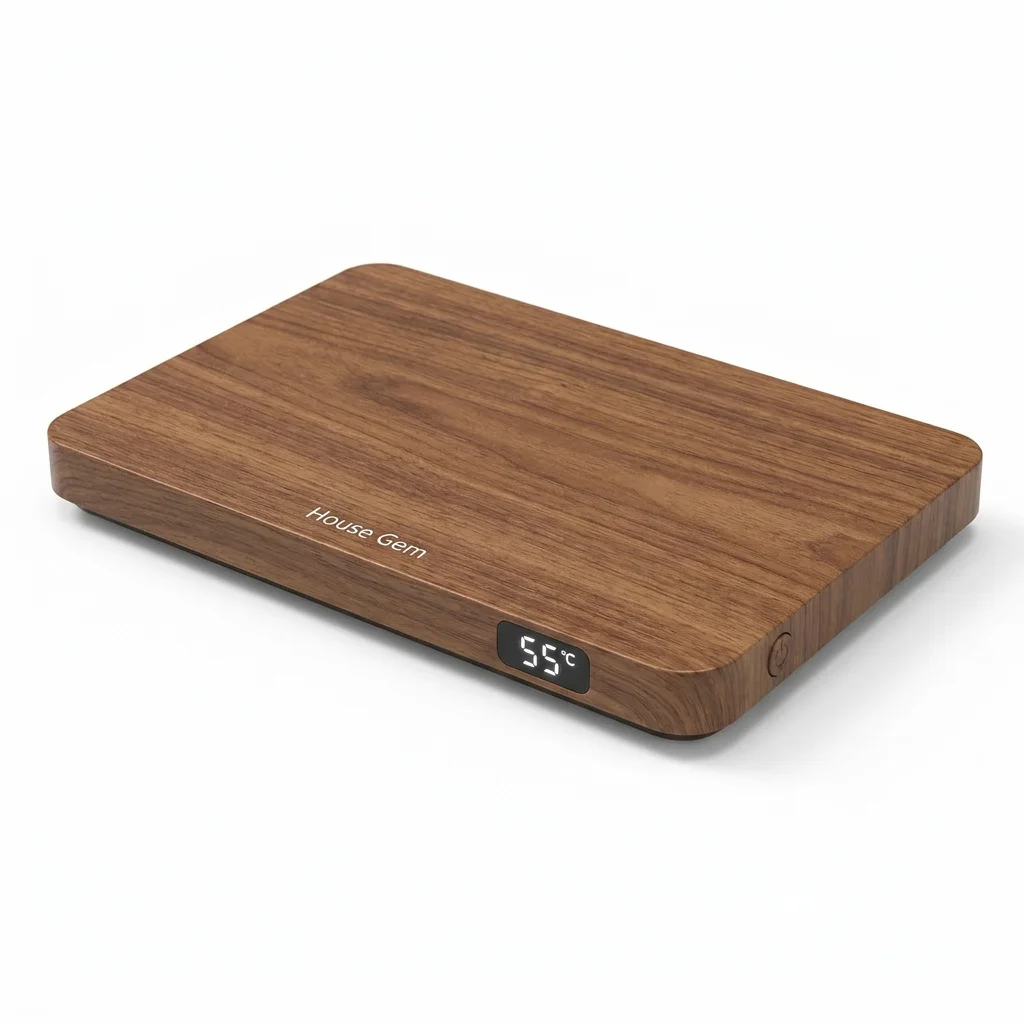
- "I want hot coffee or tea at my desk for a few hours" → you need a mug warmer. The Cosori is the default budget-tier pick. The Mr. Coffee is the cheaper option. The House Gem 36W is the mid-tier upgrade. Each is sized, wattaged, and regulated for the mug-warming job specifically.
- "I want to cook small things in a dorm, studio, or single-burner kitchen" → you need a hot plate. The use cases are completely separate.
- "I want both" → they're different products. Buy both. Don't substitute one for the other.
For another "different tool, different job" comparison in the same vein, see the mug warmer vs microwave breakdown. Same logic — the microwave can reheat, a mug warmer can hold temperature, and using one for the other's job produces mediocre results.
The takeaway: a flat heated surface is a flat heated surface, but the wattage, plate diameter, thermal regulation, and safety controls decide what it's actually for. Mug warmers and hot plates solve different problems. Choose the one that matches the problem you actually have.
Methodology: AI-assisted editorial assessment based on manufacturer specifications for both product categories, basic thermal physics, and aggregated verified-purchaser reports. We do not perform hands-on testing. See our editorial policy for how we work.