Candle Warmer Plate vs Coffee Mug Warmer: What's the Difference?
Candle warmer plates and mug warmers look similar but aren't the same product. Here's the actual difference and when each is the right tool.
A candle warmer plate and a coffee mug warmer are the same form factor — a flat plate on a stand, with a heat source below. They look interchangeable, and some people do use them interchangeably. They're not actually the same product, and the difference matters.
This is the breakdown.
What a candle warmer plate is designed to do
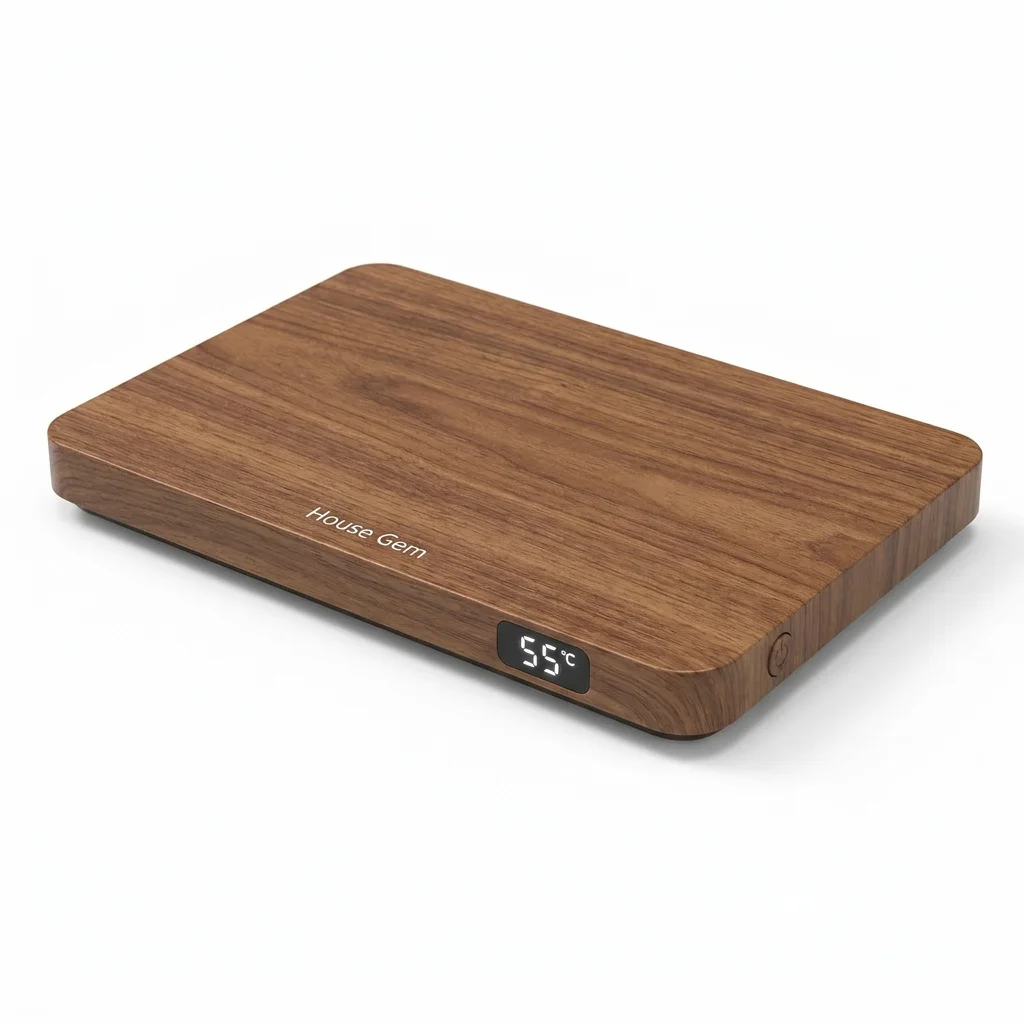
A candle warmer plate is designed to melt candles from below. The candle sits on top, the plate heats up, the wax melts, the candle's fragrance oil releases into the air.
The use case: get the fragrance and ambiance of a candle without an open flame. Useful for offices (no flame), shared spaces (no flame), small children or pets (no flame).
The design priorities:
- Slow, even melt over hours (a candle should burn slowly, not quickly)
- Even heat across the plate
- Aesthetic, often wood or ceramic body
- Sized for candle jars (3-5" diameter)
The wattage is typically 15-25W — similar to a budget mug warmer. The temperature range is similar.
What a coffee mug warmer is designed to do
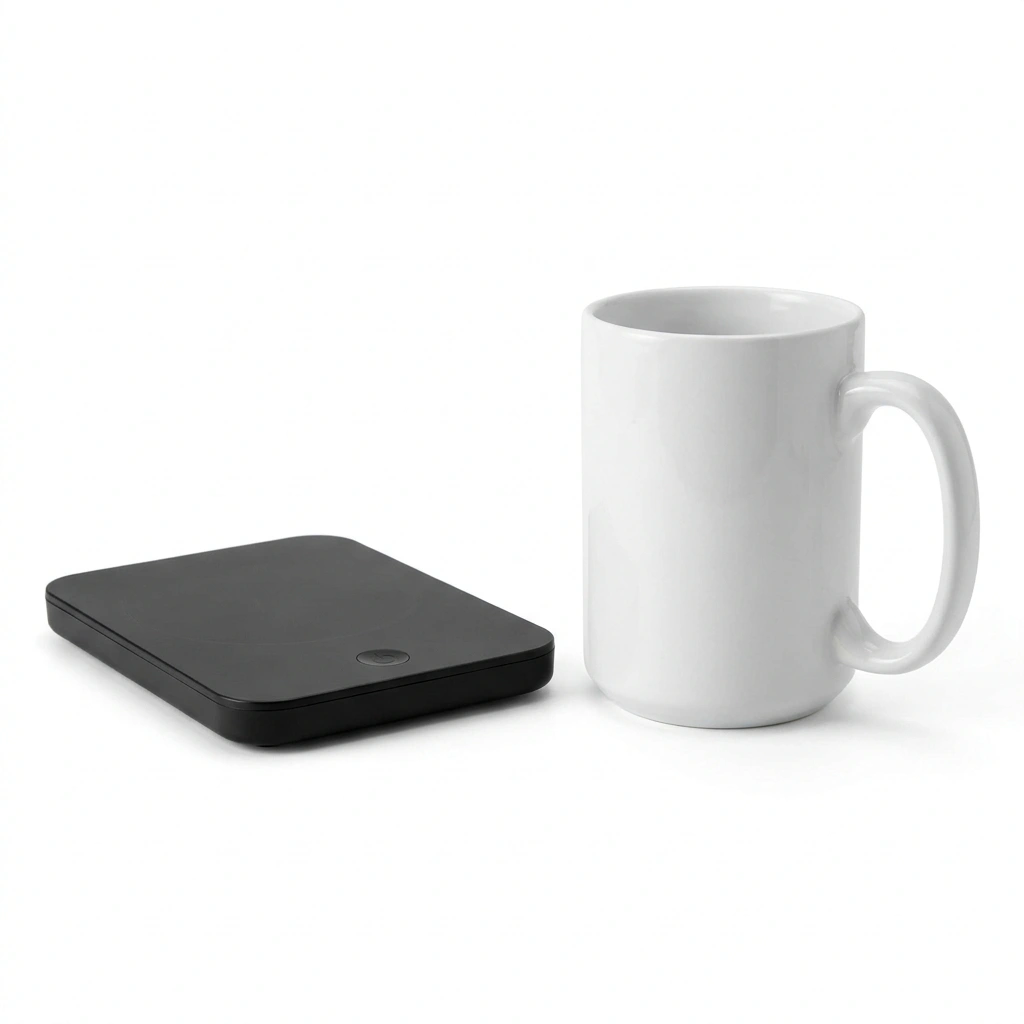
A coffee mug warmer is designed to keep a mug of coffee at drinking temperature. The mug sits on the plate, the plate heats up, the coffee stays warm.
The design priorities:
- Quick recovery (the coffee is already hot when it goes on the plate)
- Auto shutoff (forget-it-and-leave safety)
- Sometimes a temperature display (so the user knows what's happening)
- Sized for coffee mugs (3-3.5" diameter flat-bottom)
The wattage is typically 15-36W. The temperature range is similar to a candle warmer.
The four real differences
1. The presence of a mug sensor
Some mug warmers have a sensor that detects when a mug is on the plate. If no mug is detected, the plate doesn't heat. This is a safety feature for the "I forgot to put anything on the warmer and walked away" case.
Candle warmer plates usually don't have this sensor. The plate heats when turned on, period. If you leave a candle warmer plate on with nothing on it, the plate runs hot indefinitely.
For desk use, the mug sensor is a real feature. The Cosori's 4-hour auto shutoff is one version of this; some warmers have a weight sensor that's a different version.
2. Auto shutoff
Most mug warmers have auto shutoff. The 4-hour shutoff is standard; 2-12 hour is the mid-tier range.
Most candle warmers don't have auto shutoff. The expected use pattern is "turn on, burn candle for 4-8 hours, turn off." If the user forgets, the candle burns out and the plate runs hot.
For shared-space or office use, the candle warmer's lack of auto shutoff is a real safety consideration. For home use with intentional lighting, it's fine.
3. The plate surface
Candle warmer plates are often ceramic or wood. The aesthetic matters. The functional requirement is "even melt across the candle."
Mug warmer plates are almost always metal with a non-stick coating. The aesthetic is less important. The functional requirement is "fast heat transfer to the mug bottom."
If you use a candle warmer as a mug warmer, the wood or ceramic plate transfers heat more slowly than a metal one. The coffee will warm up more slowly. Once it's at temperature, the heat-hold is similar.
4. The spec sheet (and the warranty)
A candle warmer is spec'd for candle use. The temperature ranges, the safety certifications, and the warranty all assume candle use. If you use it as a mug warmer and it fails (electrical, fire, etc.), the manufacturer has a case for "you used it outside the spec'd use case."
A mug warmer is spec'd for coffee use. The temperature ranges and certifications cover hot liquid. The warranty covers liquid damage within the spec.
If you're going to use a candle warmer as a mug warmer, do it with eyes open. The functional difference is small. The warranty and certification difference is real.
When to use a candle warmer as a mug warmer
The honest case: never, if you can avoid it. Buy a real mug warmer for $25 and avoid the warranty and certification question.
The honest case for using a candle warmer as a mug warmer: you already own one, you already have it on your desk for candles, and adding a $25 mug warmer is redundant. In that case, the candle warmer does the job. The coffee warms up a little slower, the lack of auto shutoff is a real but small concern, and the lack of an explicit mug-warming warranty means you're accepting some risk.
For most people, just buy the $25 Cosori. It's cheaper than a candle warmer plate and explicitly designed for the use case.
When to use a mug warmer as a candle warmer
The honest case: never, if you can avoid it. Mug warmers are designed for liquid; candles are not. The temperature range is similar but the safety certification is different.
The honest case for using a mug warmer as a candle warmer: you already own one, you don't have candles lit very often, and a $25 mug warmer is simpler than buying a separate candle warmer.
In practice, this works fine for a small candle. The candle melts, the fragrance releases. The safety certifications don't explicitly cover this use case, but the function is the same.
What "Candle Warmers Etc 2-in-1" actually is
The Candle Warmers Etc 2-in-1 is marketed as both a candle warmer and a mug warmer. The product spec actually covers both use cases. The wattage, plate size, and certifications are designed for either.
This is the right answer if you want one product that does both jobs. The downside is that the design is a compromise — neither use case is optimized. The plate is sized for a candle jar but it works for a mug. The wattage is sized for candles but it works for mugs.
For most users, separate products (a $15 candle warmer for the candle use case, a $25 mug warmer for the coffee use case) are better than one product that does both. The Candle Warmers Etc 2-in-1 is the right answer if you only need one product, or if you want the dual-use aesthetic.
The verdict
A candle warmer plate and a coffee mug warmer look similar but aren't the same product. The functional overlap is high; the certification, warranty, and safety feature differences are real.
For desk coffee, buy a $25 Cosori. For candles at home, buy a $15 candle warmer. If you want one product that does both, the Candle Warmers Etc 2-in-1 works but is a compromise on each use case.
For the broader question of which mug warmer is right for desk coffee, see the best mug warmer for office desks guide. For the candlemaking side, the candle warmer at Amazon search shows what's currently on the market.
Methodology: AI-assisted editorial assessment based on manufacturer specifications for both product categories and aggregated verified-purchaser reviews. We do not perform hands-on testing. See our editorial policy for how we work.