Mug Warmer Wattage Explained: 17W vs 24W vs 36W vs Smart Mugs
What the wattage number on a mug warmer actually means, where it stops mattering, and when to spend the extra for higher wattage.
The wattage rating on a mug warmer is one of the most-misunderstood specs in the category. Higher wattage doesn't mean "hotter" in a simple sense — it means "faster recovery" and "better with thick mugs." This is the breakdown.
The three tiers
| Wattage | What it does | Examples |
|---|---|---|
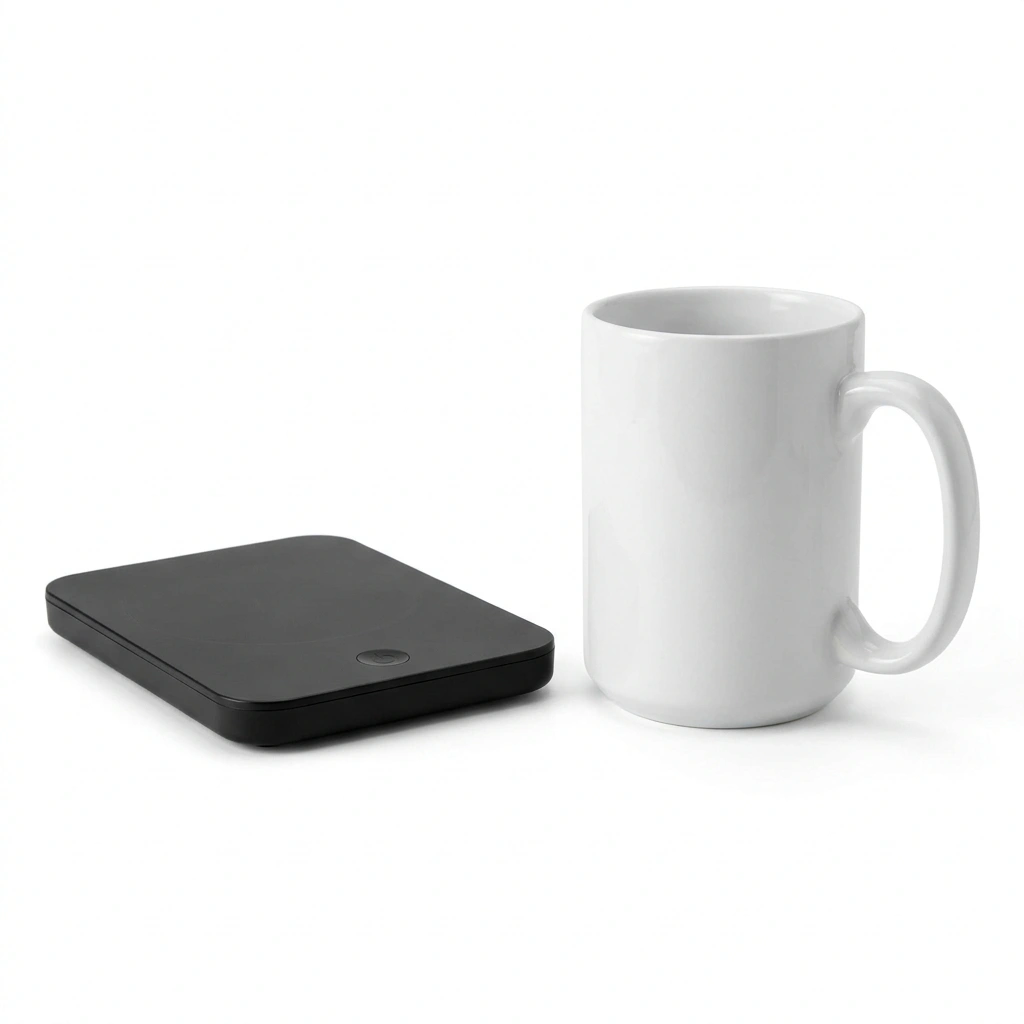
| 15-17W | Maintains small/thin mugs at drinking temperature. Struggles with thick ceramic or large mugs. | Mr. Coffee (17W) |
| 20-24W | Handles most mugs including thicker ceramic. Standard for the budget-mid segment. | Cosori (24W) |
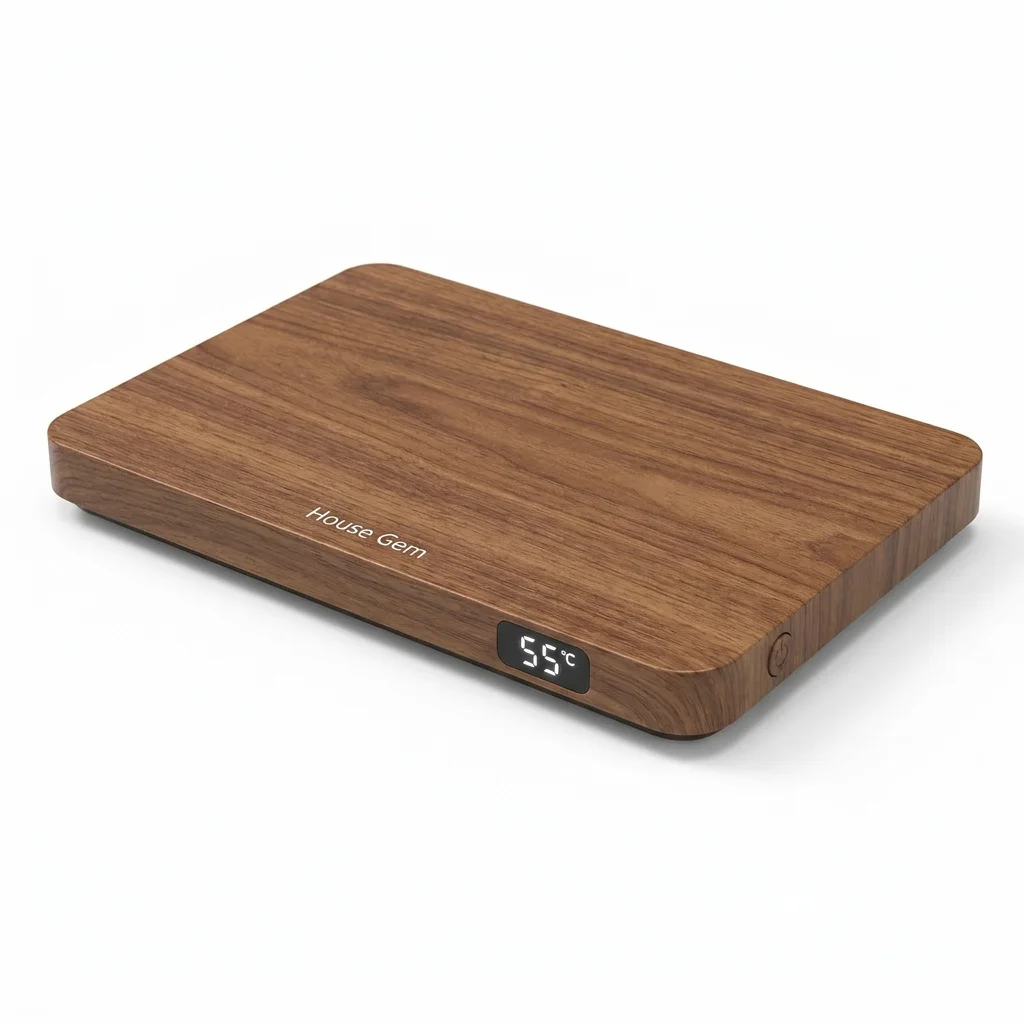
| 36W+ | Faster warm-up from cold. Better for thick mugs, ceramic, stoneware, or large mugs. | House Gem 36W |
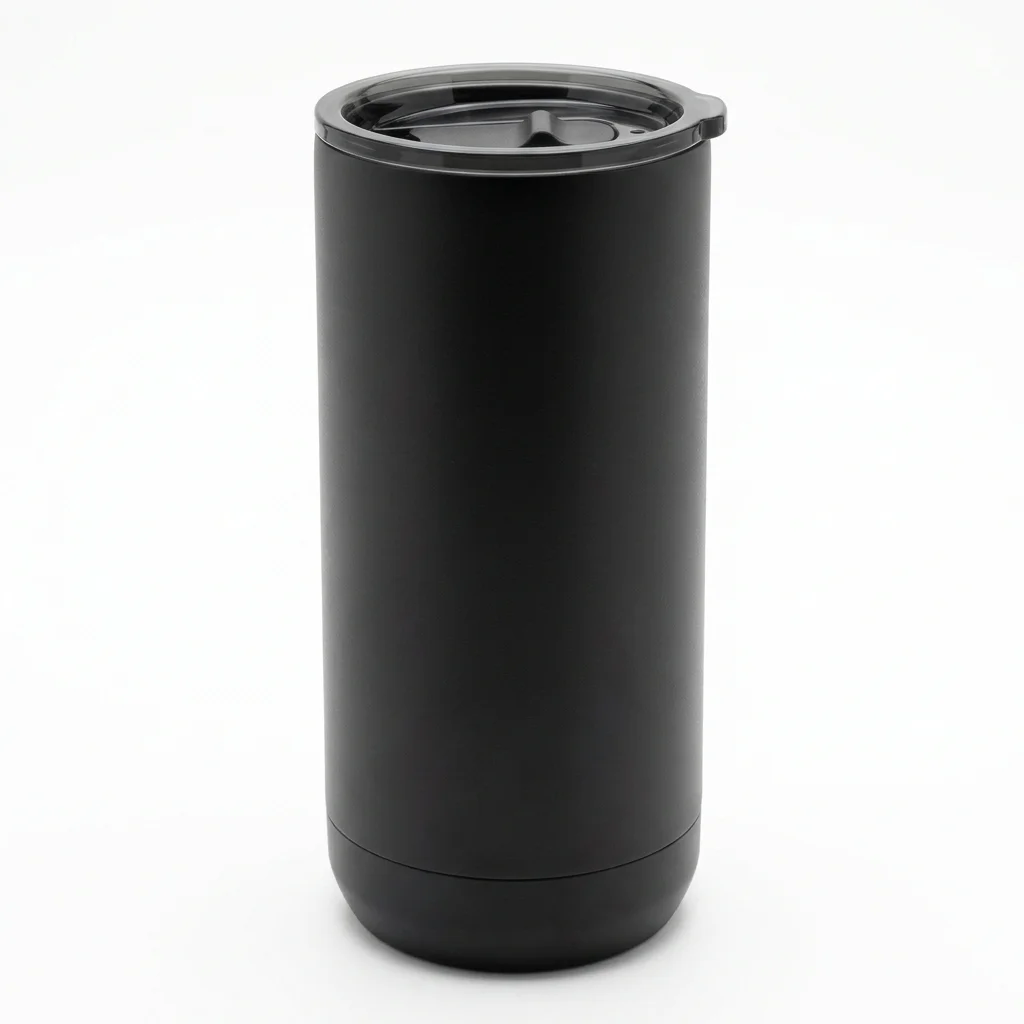
| Self-heating mug | Wattage is in the mug, not the plate. The mug actively maintains liquid temperature. | Ember Mug 2, Nextmug |
What higher wattage actually buys you
Faster warm-up from cold
If you put a cold mug of coffee on a 17W plate, it takes 10-15 minutes for the plate to bring the bottom of the mug up to temperature. The top of the liquid stays cooler for longer. The temperature gradient in the mug is steep.
A 36W plate does the same job in 5-7 minutes. The gradient is smaller. By 10 minutes, the entire mug is at the steady-state temperature.
For most desk use, this doesn't matter. You put the coffee on the warmer right after pouring, and the warm-up period is part of the first 5-10 minutes of your drink.
For "I forgot about the warmer and the coffee went cold" recovery, the higher wattage matters. A 36W plate recovers from room temperature to drinking temperature in roughly half the time of a 17W plate.
Better with thick mugs
A thin porcelain mug (1/8" wall) conducts heat from the plate to the liquid in seconds. A 17W plate is fine.
A thick stoneware mug (3/8" wall) or a double-walled ceramic mug insulates more. A 17W plate may not be enough to drive heat through the wall. The plate reaches temperature, but the liquid stays cooler. A 24W or 36W plate is necessary for these mugs.
This is the case most often missed in product reviews. The reviewer uses a thin mug, the warmer works fine, the review gives it 5 stars. The buyer with a thick mug buys the same warmer, finds it underwhelming, leaves a 2-star review. The product didn't change — the mug did.
If your mug is thick ceramic or stoneware, get a 24W+ warmer. The Cosori is the minimum; the House Gem 36W is the better pick.
Power draw
A 17W plate running for 8 hours is 0.136 kWh. At the US average residential rate of $0.16/kWh, that's about 2 cents per day. A 36W plate running 8 hours is about 4.5 cents per day. Both are negligible.
A self-heating smart mug (Ember, Nextmug) on its charging coaster all day is roughly 5W continuous = $0.064 per day = about 2 cents. Off the coaster, on battery, the smart mug uses about 1.5W while actively heating. Recharge cost is fractional.
Power draw is not a meaningful differentiator between the wattage tiers.
What higher wattage doesn't do
Doesn't make coffee hotter
The liquid temperature on a plate warmer is capped by physics: the liquid can't get hotter than the plate minus losses to evaporation and convection. A 36W plate and a 17W plate, both set to "high," both reach approximately the same steady-state liquid temperature for a given mug. The 36W gets there faster; it doesn't get there higher.
A self-heating smart mug does run hotter than a plate warmer, because the heating element is wrapped around the entire mug wall, not just the bottom. The Ember Mug 2 holds liquid at user-set temperatures up to 145°F. A plate warmer caps out around 130-140°F in practice (the plate is hotter, but the liquid is at 130-140).
If you want hot coffee, you want a smart mug. If you want warm coffee that stays warm, a plate warmer is fine. The wattage on the plate warmer doesn't change the maximum temperature — it changes the time to get there and the ability to maintain that temperature under heat loss.
Doesn't help with very cold ambient
If your desk is in a 50°F room (unheated garage, cold office), every mug warmer struggles. The temperature differential between the coffee and the room is larger, so heat loss is faster. A 17W plate may not be able to overcome the loss at all. A 36W plate will hold a drinkable temperature but barely. A self-heating mug holds it fine because of the wrap-around heating.
This is an edge case — most office environments are 65-75°F — but worth knowing.
Doesn't make the warmer "better" for a thin mug
If you have a thin-walled ceramic mug, a 17W plate is enough. A 36W plate is overspec. The 36W runs slightly hotter on the surface (since the plate can reach temperature faster than the heat can dissipate through a thin mug), which can scorch the bottom of a paper-thin ceramic mug. The Cosori at 24W is the sweet spot for the average desk user with a standard ceramic mug.
The decision framework
| Your situation | Right wattage |
|---|---|
| Standard ceramic mug, normal office | 20-24W (Cosori-tier) |
| Thick stoneware or double-walled ceramic | 30W+ (House Gem-tier) |
| Need fast recovery from cold | 30W+ |
| Want precise temperature control, willing to charge daily | Self-heating mug (Ember or Nextmug) |
| Car use or travel with no outlet | Self-heating mug with battery (Ember Tumbler) |
| Sub-$15 budget | 17W (Mr. Coffee or similar) |
For most people, the 24W tier is the sweet spot. The Cosori lives there. Most of the budget options sit at 17W. The mid-tier and up live at 30-36W. The smart mugs sidestep the wattage question entirely with active heating.
One more thing: don't trust "high/medium/low" labels
Plate warmers with 2-3 temperature settings don't usually publish the actual temperature for each setting. The "low" setting on a 17W plate might be 110°F. The "high" setting might be 130°F. Neither is what most people would call "hot."
The Cosori's spec sheet says "approximately 130°F / 145°F / 160°F surface temperature" for the three settings. The liquid temperature is 10-20°F below the surface, so the coffee is in the 110-145°F range. That's "drinkable" not "hot."
A 36W warmer at the "high" setting gives you roughly the same liquid temperature range. The advantage is faster warm-up and better with thick mugs, not higher max temperature.
For "I want my coffee at 145°F specifically," you need a smart mug with temperature control. The Ember Mug 2 is the answer. The Nextmug is the app-free answer.
Methodology: AI-assisted editorial assessment based on manufacturer specifications and aggregated verified-purchaser reviews. We do not perform hands-on testing. See our editorial policy for how we work.