Mug Warmer Plate Material Explained: Metal vs Glass vs Ceramic
The plate on a mug warmer can be metal, glass, or ceramic. The material affects heat transfer, durability, and what you can put on the warmer. Here's the breakdown.
The plate on a mug warmer is the surface that touches your mug. It sounds like a minor spec, but the material affects heat transfer, durability, and the kinds of mugs you can use.
This is the breakdown.
The three materials in the wild
Metal plates
Most modern plate mug warmers have a metal plate — usually aluminum or stainless steel, sometimes with a non-stick coating. The metal conducts heat efficiently from the heating element to the plate surface. The plate is in good thermal contact with the mug.
What the metal does well:
- Fast warm-up. Aluminum especially conducts heat quickly.
- Even heating across the plate surface. A 4" diameter aluminum plate has roughly even temperature from edge to center.
- Durable. Metal doesn't chip or crack like glass or ceramic.
What the metal doesn't do well:
- It scratches. A scratched metal plate is harder to clean. The non-stick coating helps but isn't permanent.
- It can scorch. A metal plate on "high" can heat a paper-thin ceramic mug to the point of thermal stress. The mug cracks. This is rare but real.
- It shows wear. After 6-12 months of daily use, the plate surface shows coffee residue rings, light scratches, and discoloration. It still works, but it doesn't look new.
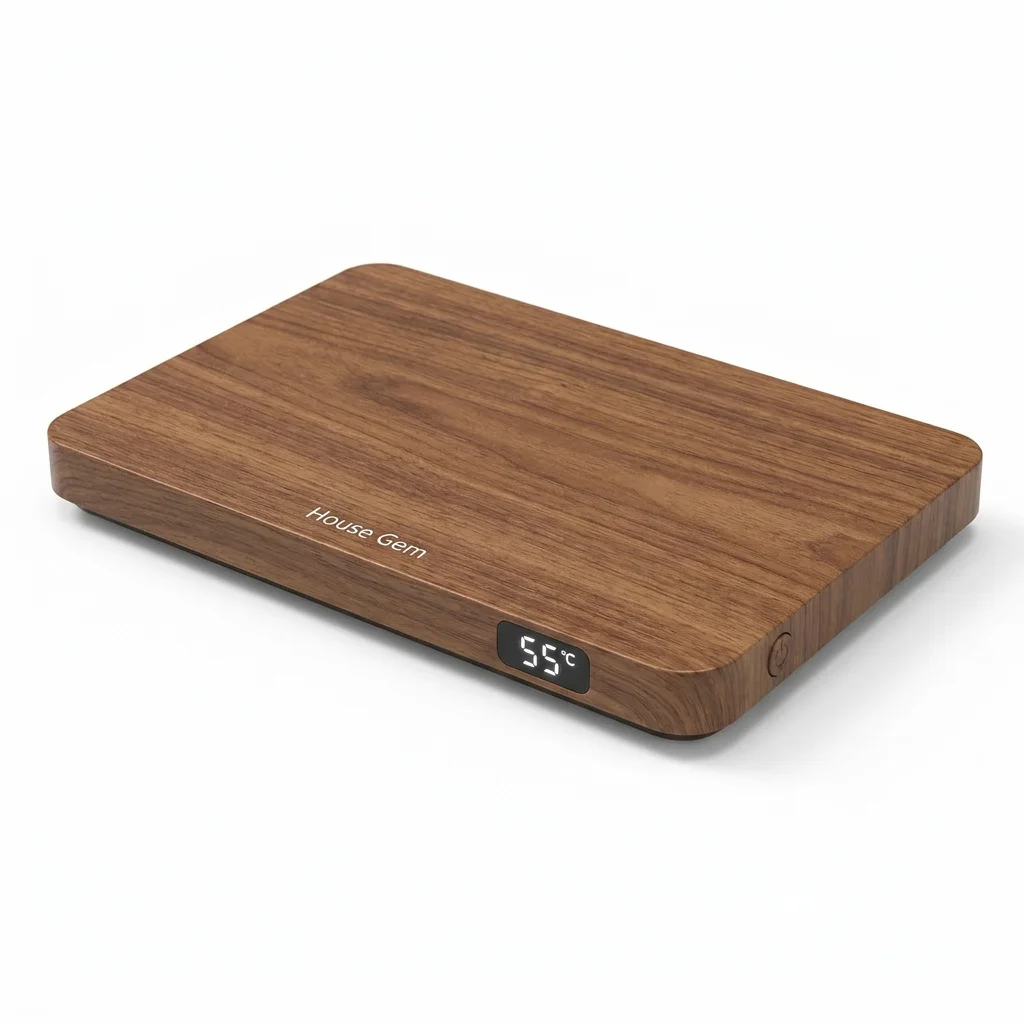
Examples: the Cosori, House Gem 36W, and Mr. Coffee all have metal plates.
Glass plates
A few warmer designs use a tempered glass plate. The visual is a transparent or frosted glass disc on top of the heating element. The glass conducts heat but not as efficiently as metal.
What the glass does well:
- Easy to clean. Glass doesn't absorb coffee residue. A wipe with a damp cloth is enough.
- Visually distinct. The "transparent" plate is part of the product's aesthetic.
- Doesn't scratch. Glass is harder than metal for everyday use.
What the glass doesn't do well:
- Less efficient heat transfer. The glass plate is at a slightly lower temperature than the heating element, so the mug gets slightly less heat than a comparable metal plate.
- Thermal shock risk. A cold mug placed on a hot glass plate can crack the plate. This is rare but documented.
- More expensive. Glass plates are less common and tend to be on the higher-priced warmers.
Examples: some premium smart-mug warmers have glass plate surfaces. Most budget-mid warmers do not.
Ceramic plates
A small number of warmers use a ceramic plate. The visual is similar to a glass plate but with a different thermal profile. Ceramic is closer to glass than to metal in heat-transfer characteristics.
What the ceramic does well:
- Stable temperature. Ceramic has higher heat capacity than metal, so it holds temperature more steadily.
- Easy to clean. Same as glass.
- Looks distinct. Often part of the "premium" aesthetic.
What the ceramic doesn't do well:
- Chipping. Drop the mug and the plate can chip. Drop the warmer and the plate will likely crack.
- Slower warm-up. Higher heat capacity means longer to reach steady-state temperature.
- Rare. Most warmers use metal.
Examples: the candle-warmer-plate designs that double as mug warmers often have a ceramic top. True ceramic-plate mug warmers are uncommon.
How the material affects mug compatibility
The plate material affects what kinds of mugs you can put on the warmer safely.
| Plate material | Compatible mugs | Avoid |
|---|---|---|
| Metal (aluminum) | Ceramic, stoneware, glass, stainless steel | Paper-thin porcelain (can scorch) |
| Metal (stainless) | Same as aluminum | Same |
| Glass | Ceramic, stoneware, glass | Drop the mug — thermal shock risk |
| Ceramic | Ceramic, stoneware, glass | Drop the mug — chipping risk |
For most users with a standard ceramic mug, metal is the right plate. It's durable, it transfers heat efficiently, and it works with the widest range of mugs.
How the material affects cleaning
| Plate material | Cleaning | Avoid |
|---|---|---|
| Metal (aluminum) | Damp cloth, mild soap | Abrasive scrubbers, harsh chemicals |
| Metal (stainless) | Same as aluminum | Same |
| Glass | Damp cloth, mild soap, glass cleaner | Abrasive scrubbers |
| Ceramic | Damp cloth, mild soap | Abrasive scrubbers, impact |
For all plate types, the same rule applies: damp cloth, no abrasives, no soaking. The detailed cleaning walkthrough is in how to clean a mug warmer.
How the material affects heat transfer
The thermal conductivity of the plate determines how fast the mug warms up and how even the heat is.
- Aluminum: ~200 W/m·K. Fast, even heat transfer.
- Stainless steel: ~15-25 W/m·K. Slower than aluminum, more even than glass.
- Glass: ~1 W/m·K. Slow heat transfer, hotspots possible.
- Ceramic: ~2-5 W/m·K. Slow heat transfer, but higher heat capacity means more temperature stability.
The practical difference: an aluminum plate hits steady-state in 5-7 minutes. A glass plate hits steady-state in 10-15 minutes. The 24W Cosori with an aluminum plate gets your coffee to drinking temperature faster than a 24W glass-plate warmer.
For a buyer who cares about warm-up time, aluminum is the right material. For a buyer who cares about even temperature once warm, glass and ceramic are equivalent. For most users, the difference is small enough that the material doesn't drive the purchase decision.
What you should actually look for
The plate material is a fine-grained spec that matters in edge cases (drop a heavy mug on a glass plate, the plate shatters; put a paper-thin porcelain mug on a high-wattage metal plate on "high" for 3 hours, the mug might crack).
For 95% of users, the plate material is "metal of some kind, in good condition." The mug compatibility and cleaning differences are minor. The heat transfer differences are small.
The cases where plate material matters:
- You have a glass or ceramic mug you want to use — both plate types work, but glass plates can have thermal shock issues
- You want the easiest-to-clean surface — glass and ceramic wipe clean more easily than metal
- You're rough on your desk gear — metal is more durable than glass or ceramic
For most users with a standard ceramic mug and a normal desk environment, metal is the default. Don't make the plate material a primary decision criterion.
The verdict
Most warmers you'll look at have a metal plate. That's the right answer for most users. The plate material is a fine-grained spec, not a primary decision criterion.
The Cosori, House Gem 36W, Mr. Coffee, and most other mid-tier warmers have metal plates. The differences between them are in wattage, display, and features, not plate material.
If you have a specific reason to want a glass or ceramic plate (preference for easier cleaning, visual aesthetic), look for those. Otherwise, the metal plate is the right default.
For more on the broader mug warmer spec landscape, see mug warmer wattage explained and the best mug warmer for office desks guide.
Methodology: AI-assisted editorial assessment based on manufacturer specifications, materials science references, and aggregated verified-purchaser reviews. We do not perform hands-on testing. See our editorial policy for how we work.