Best Mug Warmer for a Cold Office: Winter Desk Coffee Guide
A cold office drops coffee temperature faster and changes how a mug warmer behaves. Here's what actually works in winter, what to skip, and the wattage question that matters more in cold rooms.
A mug warmer that works fine in a 72°F office in October behaves differently in a 62°F office in January. The coffee still gets warm. It just doesn't stay warm for as long, and the warmer has to work harder to get it there. The fix isn't a different brand — it's a different set of priorities when picking one.
This is what changes in a cold room, what to look for, and where the practical picks land.
Why cold ambient temperature matters
A mug of coffee loses heat through three mechanisms: conduction (through the mug wall into the desk and air), convection (off the top surface into the air), and evaporation (water molecules leaving the surface and taking heat with them). All three scale with the temperature difference between the coffee and the surrounding air. The larger that difference, the faster the coffee cools.
At 72°F ambient, a 145°F mug of coffee has a 73°F delta. At 62°F, the same mug has an 83°F delta. That's roughly 14% more heat-loss pressure on the same mug. In practice, the coffee at the 90-minute mark is meaningfully cooler in a cold office than it would be in a warm one — sometimes by 10–15°F.
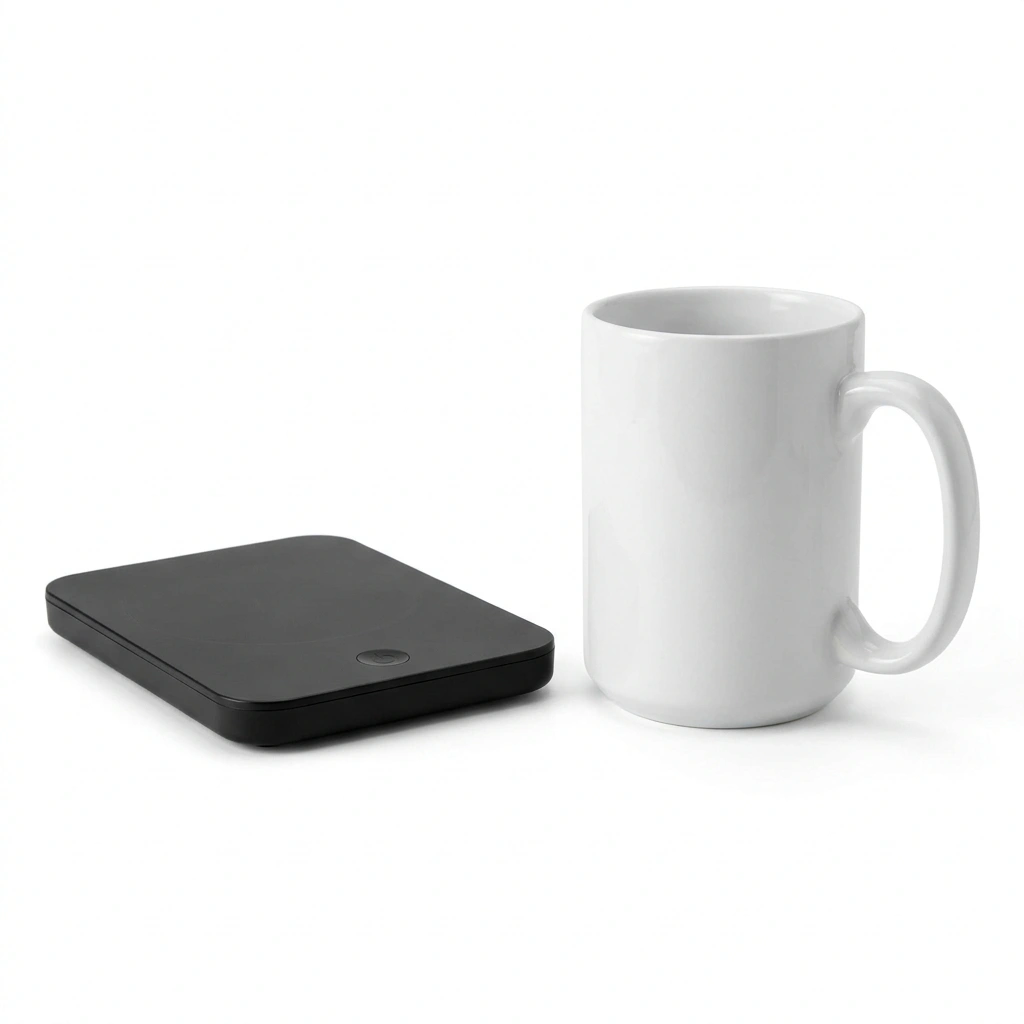
A plate warmer adds heat back from below to compensate. The question is whether the warmer can add enough.
What changes in a cold office
Three things shift, all related:
The plate has to cycle more aggressively. Most plate warmers target a fixed surface temperature — roughly 130°F on low, 145°F on medium, 160°F on high for the Cosori, for example. The plate reaches its target in any environment. But in a cold office, the heat loss through the side walls and top of the mug is faster, so the liquid temperature at the bottom of the mug drops faster, and the plate has to cycle on more often to maintain its surface temperature.
This matters because cheaper warmers cycle on audible relays (you hear a soft click) and because each cycle is a small dip in liquid temperature before the plate catches up. More cycles means more dips, which means the average coffee temperature over a 2-hour session is lower in a cold room than a warm one — even with the same warmer.
The plate material explainer covers why this matters more on glass and ceramic plates than aluminum — aluminum conducts faster, so the catch-up is quicker.
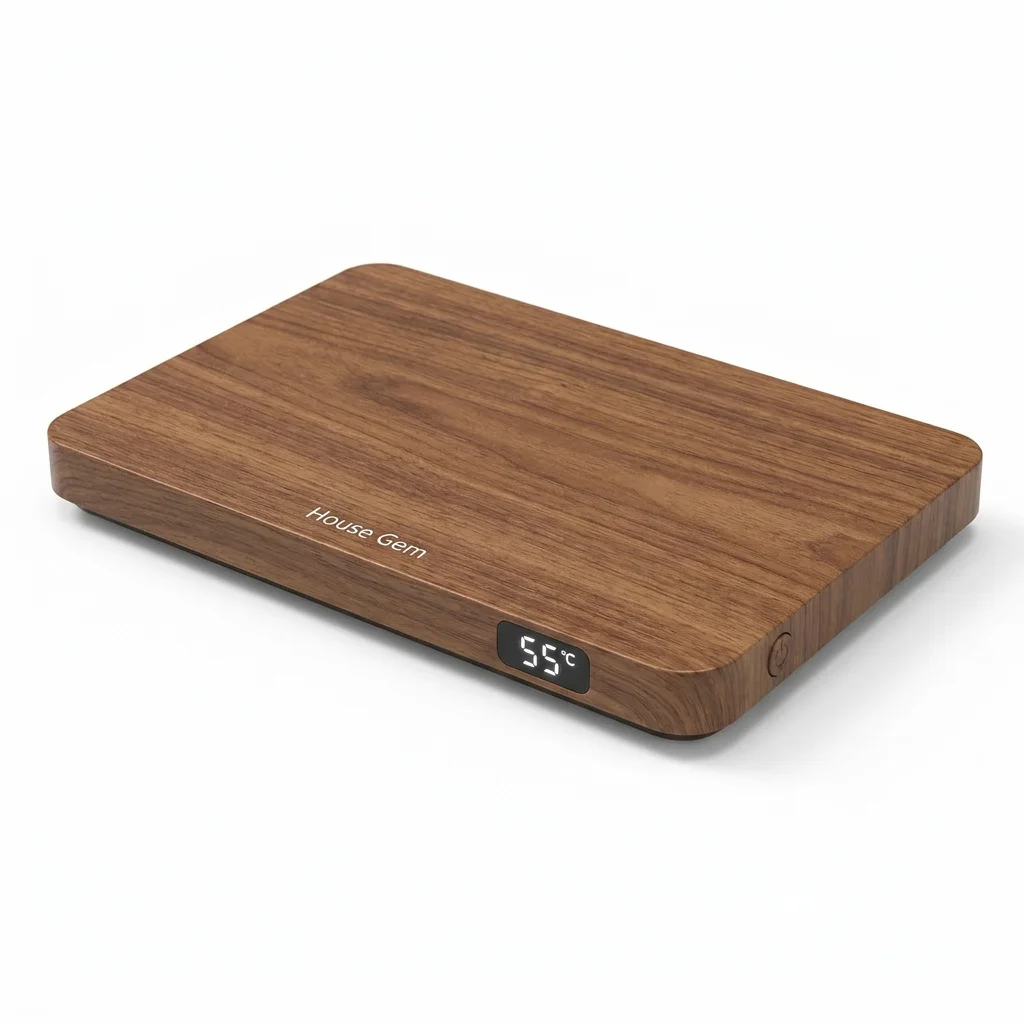
Higher wattage becomes more valuable. A 17W warmer (like the Mr. Coffee) has enough heat capacity for a 72°F office with a thin-walled ceramic mug. In a 62°F office with the same mug, the same 17W plate cycles more frequently and the average liquid temperature drifts lower. A 24W warmer (the Cosori) handles the cold office more comfortably. A 36W warmer (the House Gem 36W) is the right tool for the worst cold-office conditions — older buildings, north-facing windows, gaps under doors.
The wattage explainer walks through why wattage matters in this specific way. For most warm-climate buyers, 17–24W is plenty. For cold-office buyers, the calculus shifts toward the higher end.
Auto-shutoff windows matter more. A warmer left running overnight in a warm office wastes electricity. A warmer left running overnight in a cold office with a cold mug on it can develop its own problem — condensation can form on the plate when the mug is removed in the morning, and that moisture plus heat cycles can stain the plate finish over time. A reliable 4-hour auto shutoff (Cosori) or a wider 2–12 hour timer (House Gem 36W) handles this. For more on the safety side, see the mug warmer safety guide.
The wood desk is also at higher risk in winter
This one gets missed. Wood finishes are more vulnerable to heat shadow in winter because indoor humidity drops — sometimes to 20–30% in heated buildings. Dry wood is more reactive to sustained low heat than wood at normal humidity. The finish softens at lower temperatures when it's dry, and the heat shadow appears faster.
The wood desk damage guide covers this in detail, but the short version: if you're running a warmer daily on a wood desk in a heated winter office, a cork coaster or ceramic tile underneath is more important in January than it is in July. The damage threshold is lower when the wood is dry.
When a smart mug wins instead
Plate warmers are still heat-from-below devices. They compensate for heat loss; they don't prevent it. In the worst cold-office conditions — old buildings with single-pane windows, north-facing desks, prolonged sessions of 3+ hours — even a 36W plate warmer can't fully compensate for the heat loss through the side walls.
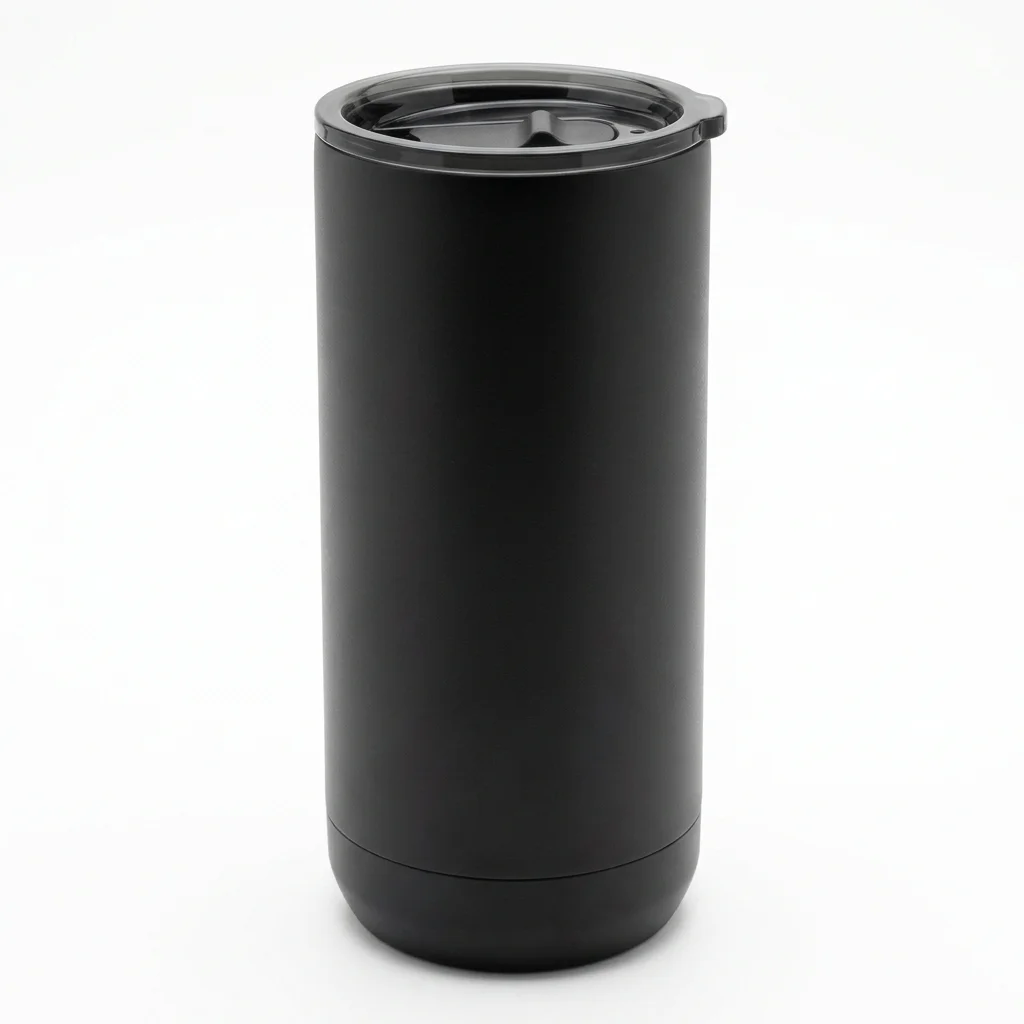
For those cases, a self-heating mug is the right answer. The Ember Mug 2 and the Nextmug heat the entire mug wall, not just the bottom. The wall temperature is held at the set point, so heat loss through the wall is essentially zero. The mug compensates only for losses through the open top (evaporation and convection), which is much smaller.
The trade-off is the price — check current price on Amazon for both, they're a meaningful step above the plate-warming segment — and the daily charging habit. For someone in a chronically cold office who also wants precision temperature control, it's the right answer.
Practical picks by cold-office severity
Moderately cold (65–70°F in winter). The Cosori on the medium setting. 24W is enough headroom for most cold offices. Add a cork coaster underneath if the desk is wood.
Cold (60–65°F in winter, north-facing, drafty). The House Gem 36W. The extra wattage covers the higher heat loss, the temperature display lets you confirm the plate is actually doing its job, and the 2–12 hour timer handles longer sessions. Wood desk: coaster mandatory.
Chronically cold (under 60°F, old buildings, single-pane windows). A self-heating mug. The Ember Mug 2 for app-controlled precision, or the Nextmug if you don't want an app. Plate warmers won't fully solve this regardless of wattage.
Hot desk / not your own desk. A standard Cosori or Mr. Coffee. Don't optimize for cold-office conditions on hardware you're not keeping. For more on the general desk-warmer decision, see the office desks buying guide.
A few small winter-specific habits
A preheated mug helps more in winter than summer — the 10–15°F starting boost compounds with the higher heat-loss rate to add 20+ minutes of drinkable coffee. The how-to guide covers the preheating trick and a few other things that work without a warmer.
Moving the warmer away from the window helps in winter too. Cold drafts from window gaps are a real heat source, even when the window is closed. Back-of-the-desk placement is more important in cold months.
Covering the mug when you're not actively sipping is also more impactful in winter. Evaporation cooling scales with the temperature delta, so the open-top cooling is faster in a cold room. A small ceramic lid or a saucer on top adds 15–20 minutes of usable warmth for zero cost.
The short version
A cold office makes a plate warmer work harder and get worse results. The fix is mostly wattage — 24W for moderate cold, 36W for serious cold, and a self-heating mug for chronically cold rooms. Pair any of those with a coaster on a wood desk and a preheated mug, and winter desk coffee is essentially solved.
For the broader question of whether a mug warmer is worth it at all, see are mug warmers worth it. For a more general setup guide that doesn't change with the season, see the WFH desk coffee guide.
Methodology: AI-assisted editorial assessment based on manufacturer specifications for the Cosori, Mr. Coffee, House Gem, Ember, and Nextmug (manufacturer manuals and Amazon product listings), basic heat-transfer physics for convection and conduction in mug warmers, and aggregated verified-purchaser reports. We do not perform hands-on thermal testing across temperature-controlled environments. See our editorial policy for how we work.