Do Mug Warmers Damage Wood Desks? A Practical Guide
A plate warmer on a wood desk can leave a heat mark over time. Here's what actually happens to the wood, when it's a real problem, and the cheap fixes that prevent it.
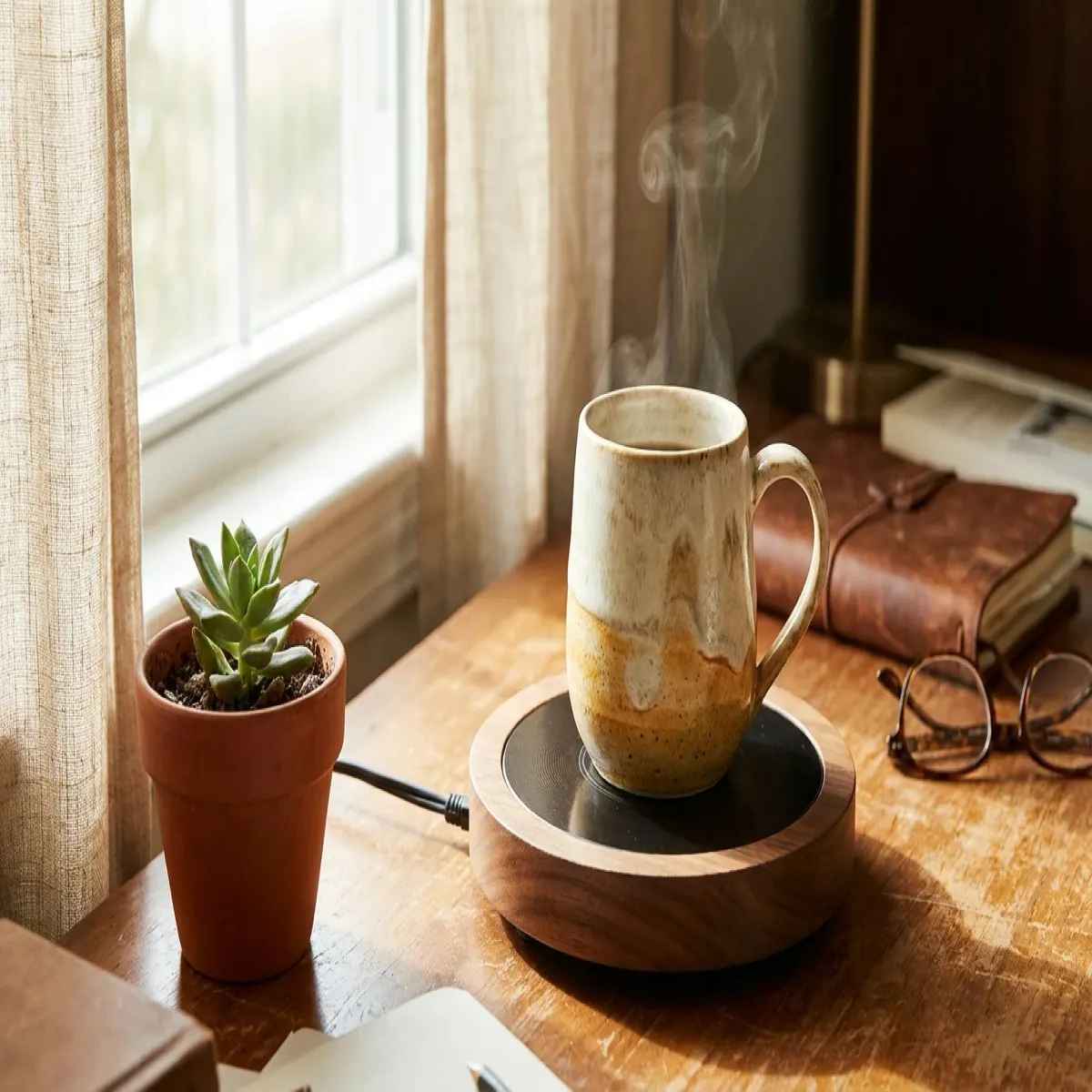
The short answer: a mug warmer running on a wood desk can leave a visible heat mark over time, but the fix costs a dollar and takes 30 seconds. You don't need to choose between the warmer and the desk.
What heat shadow actually looks like
The most common damage is a light tan or darker oval directly under the plate. It looks like a permanent coffee stain but it's heat damage to the finish — the wood under the plate has been at a slightly elevated temperature for hundreds of hours, and the finish (polyurethane, lacquer, or hard wax oil) has yellowed or discolored in that shape.
It's not a burn. There's no scorch. The wood itself is fine. The finish is what shows the mark.
The mark is permanent if you do nothing about it, but preventable if you put anything between the plate and the desk.
Why the plate is hot enough to do this
Plate warmers run their surface at roughly 130°F to 160°F at the high setting — that's the Cosori's published spec, and most other budget and mid-tier warmers land in the same range. That's well below the temperature that damages wood structurally (wood chars above 450°F and self-ignites around 500°F), but it's well above the temperature at which most finishes start to discolor under extended exposure.
The relevant comparison: a hot mug straight out of the microwave is around 160°F to 180°F at the ceramic. A plate warmer at the high setting is similar. You've probably put a hot mug directly on a wood desk a hundred times without thinking about it. The difference is that the mug is on the wood for a few minutes; the plate is on the wood for hours, often every day.
Extended low-grade heat is what does it. Not the temperature. The duration.
The four desk finishes, ranked by risk
Not all wood desks react the same way. The risk depends on the finish, not the wood.
Hard wax oil finishes (rubio monocoat, osmo, and similar) are the most vulnerable. The wax softens at relatively low temperatures and re-hardens unevenly, leaving a visible patch that doesn't blend with the surrounding finish. Once a wax finish heat-marks, it needs to be re-oiled and re-waxed over the affected area to match. This is a real fix, not a one-second wipe.
Lacquer and shellac finishes are middle-of-the-road. They resist short-term heat well but will yellow under sustained low heat. The yellowing is permanent but usually blends in over 6–12 months as the surrounding finish naturally ages.
Conversion varnish and catalyzed finishes (common on higher-end office furniture) hold up best. They're designed for commercial use and tolerate sustained low heat well. You might never see a mark.
Polyurethane (the standard finish on most mass-market wood desks) is somewhere in the middle. Heat-resistant enough that you won't see damage in the first year, but it will eventually yellow under a daily-use warmer.
The first category is the one to take seriously. The other three are "nice to fix" rather than "must fix."
What to put under the warmer
Three options, in increasing cost and effectiveness:
Cork coaster. A 4" cork coaster costs about a dollar and works for most setups. Cork is a poor heat conductor, so it interrupts the heat path from plate to desk. The coaster itself absorbs the heat without discoloring. Replace the coaster yearly as the cork dries out.
Ceramic tile. A 4" to 5" ceramic tile (the kind sold at hardware stores as floor samples) is the most durable option. It doesn't absorb heat, doesn't dry out, doesn't discolor. It looks clean on a minimalist desk. Cost: a few dollars per tile.
Silicone mat. A food-grade silicone mat cut to size works similarly to cork but lasts longer. The aesthetic is less clean than a ceramic tile but more protective than a thin coaster. Cost: a few dollars.
The cheapest fix is the cork coaster. The most durable is the ceramic tile. Either prevents heat shadow completely on a polyurethane or lacquer finish.
What doesn't work as a barrier
A wooden coaster. Puts wood directly under the plate. The coaster heat-marks instead of the desk. You've moved the problem, not solved it.
A thin fabric coaster. Fabric insulates poorly and can scorch at lower temperatures than most wood finishes.
A glass coaster. Conducts heat well, so it passes the heat straight through to the desk. Glass coasters are designed for cold drinks (condensation), not hot appliances.
A paper coaster. Single-use. Won't last a week.
When you don't need to worry
If your desk is laminate, metal, glass, stone, or solid surface, you don't need a barrier. None of these materials heat-mark under a plate warmer. The concern is specifically wood with a finish.
If you only use the warmer occasionally (a few times a month rather than daily), the cumulative heat exposure is low enough that most finishes won't show damage for years.
If you use the low or medium setting rather than the high setting, the plate runs cooler and the heat exposure is meaningfully lower. The wattage explainer covers the temperature differences between settings.
The plate material matters less than the barrier
The plate material explainer walks through metal, glass, and ceramic plates. For wood-desk protection, the plate material doesn't change the answer: a metal plate at 130–160°F will heat-mark a wax finish just as readily as a glass plate at 130–160°F. The heat transfer differences between plate materials are real (aluminum is faster, glass is slower) but they don't meaningfully change the sustained-surface-temperature equation. The barrier is what matters, not the plate.
If you want the easiest physical setup, pair a cork coaster with the Cosori on medium setting and stop thinking about it. The Cosori at 0.7" tall and the coaster at 0.25" tall still sit lower than most desk objects.
A practical desk setup
For a permanent wood-desk setup with a daily-use warmer:
- Place the warmer on a 4"–5" cork coaster or ceramic tile.
- Run the cord straight back to the wall outlet, not along the desk surface — the cord itself carries a small amount of heat on extended runs.
- Set the warmer to the lowest setting that keeps your coffee drinkable, which is usually medium or low rather than high.
- Wipe spills immediately. A spill that reaches the desk surface and sits under the plate for hours will do more damage than the plate heat alone.
That's it. The coaster handles the heat. The cord routing prevents the cord from heating a strip of the desk. The lower setting reduces both heat and electricity use — the power consumption breakdown shows the difference is a few dollars a year, but it's real.
For specific warmer picks that work well in this kind of setup, see the best mug warmer for office desks guide. For tighter workspaces where every inch of desk space matters, the same selection logic applies — a low-profile plate warmer with a small footprint works on most desks, and a coaster underneath handles the heat concern regardless of desk size.
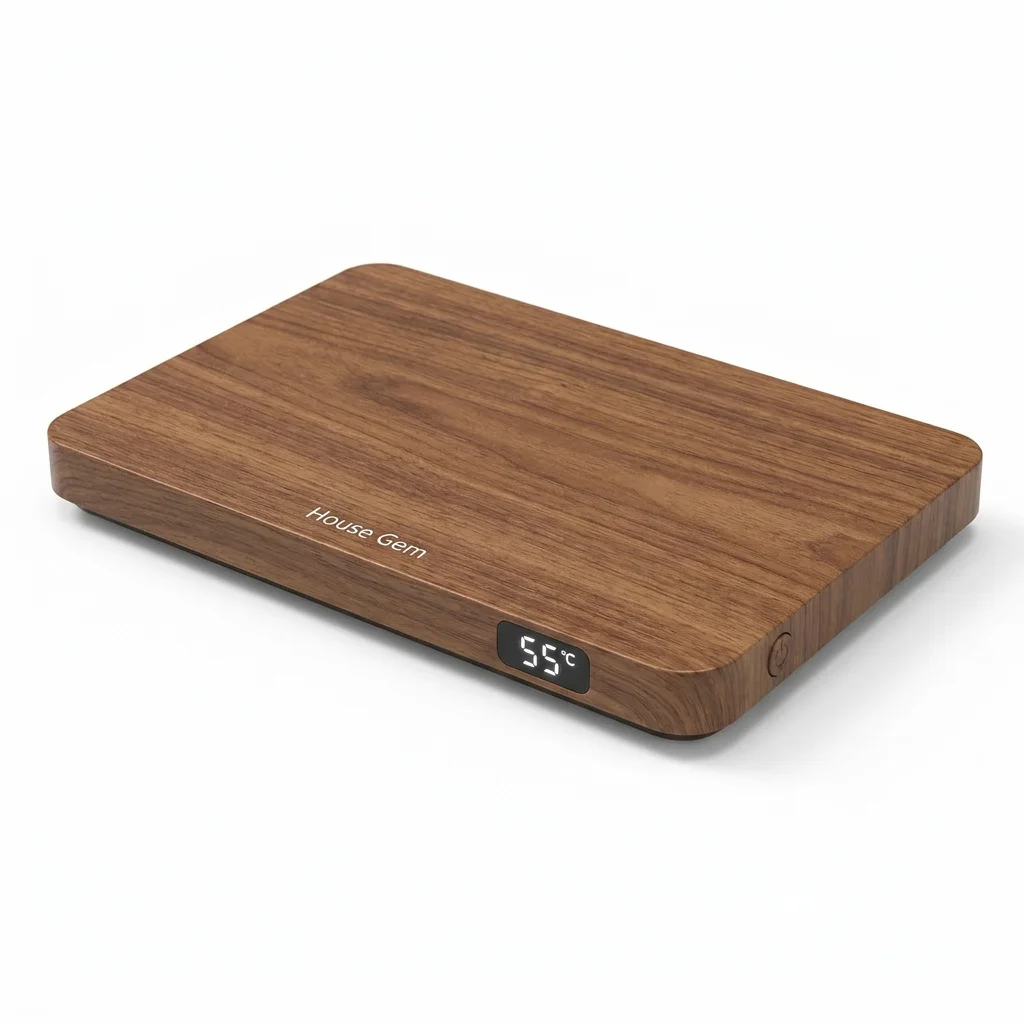
The Cosori, Mr. Coffee, and House Gem 36W all work fine on a wood desk with a coaster underneath. None of them require a special mat or surface treatment to use safely.
Methodology: AI-assisted editorial assessment based on manufacturer specifications for the Cosori, Mr. Coffee, and House Gem (cosori.com, mrcoffee.com, manufacturer manuals and Amazon product listings), general product-class knowledge of plate temperatures and common wood finishes, basic heat-transfer physics, and aggregated verified-purchaser reports. We do not perform hands-on testing of wood finishes or thermal exposure. See our editorial policy for how we work.