Desk Coffee Setup: A Complete Guide for WFH Workers
The full kit for better desk coffee — brewer, mug, warmer, beans, water — and the tradeoffs at each step.
A good desk coffee setup is more than a mug warmer. It's a small system: brewer, mug, warmer, beans, water, and a workflow. This is the full guide.
What "good desk coffee" actually means
Most people accept worse desk coffee than they have to. The default is "instant coffee from the office kitchen, lukewarm in 20 minutes, microwaved at 11am, bad at 2pm." That experience trains people to expect desk coffee to be bad.
It doesn't have to be. The full setup that produces genuinely good desk coffee costs $100-200 and takes about 5 minutes per cup. After the initial setup, the daily overhead is roughly 5 minutes total: grinding, brewing, washing.
This guide is the components, the order to buy them in, and the tradeoffs at each step.
The four things you actually need
In order of impact:
- A good brewer. Pour-over, French press, or single-serve pod. This is where the coffee quality comes from.
- A good mug. Heavy ceramic, double-walled, or stainless. The mug determines heat retention more than anything else in the setup.
- A mug warmer. Holds the coffee at drinking temperature across a long session.
- A grinder. Fresh-ground coffee is meaningfully better than pre-ground. A $30 burr grinder is the entry point.
The supporting cast (kettle, scale, water filter) helps but isn't required. The four above are the foundation.
Component 1: The brewer
Three options in the price-and-quality range most WFH workers care about:
Pour-over (Hario V60, Chemex, Kalita Wave)
Cost: $20-50 for the brewer, $30 for a gooseneck kettle, $30 for a burr grinder. Total ~$80-110.
Time per cup: 3-4 minutes active.
Coffee quality: excellent when done right. The best cup you can get at a desk.
Tradeoff: requires attention. You stand at the brewer, you pour in a controlled stream, you wait 3 minutes for the draw. You can't walk away mid-brew.
Best for: people who treat coffee as a ritual and want the best possible cup.
French press
Cost: $20-40 for the press. Total ~$80-110 with grinder.
Time per cup: 30 seconds of setup, 4 minutes of waiting, 30 seconds of plunging.
Coffee quality: very good. Heavier mouthfeel than pour-over. Less nuanced on light roasts.
Tradeoff: the press and the brewing vessel are the same object. You can't pour half and walk away — the grounds are in the way. For a single desk cup, fine. For a half-cup top-off, awkward.
Best for: people who want a low-attention brew method with very good results.
Pod brewer (Nespresso, Keurig, etc.)
Cost: $100-200 for the machine, $0.50-1.00 per pod.
Time per cup: 30 seconds active. Push button, wait, done.
Coffee quality: acceptable to good. Not as good as fresh-ground, but better than instant.
Tradeoff: ongoing cost per pod. Waste. Limited variety compared to whole-bean.
Best for: people who want zero-attention, repeatable, fast coffee and accept the ongoing cost.
Component 2: The mug
The mug is the part most people under-invest in. A heavy stoneware mug or a double-walled ceramic mug retains heat dramatically better than a thin porcelain one.
Heavy stoneware
A 12-16oz stoneware mug is the default pick. Examples: Le Creuset, Fiestaware, most restaurant-style mugs. The weight is the tell — heavy means thick walls, thick walls mean better heat retention.
Double-walled ceramic
A double-walled mug (like the OHOM Ui 3 or the Ember Mug 2) has a vacuum-like air gap between two ceramic walls. The heat retention is similar to a stainless travel mug but with the aesthetic of a normal mug. Price is higher — check current price on Amazon.
Stainless steel
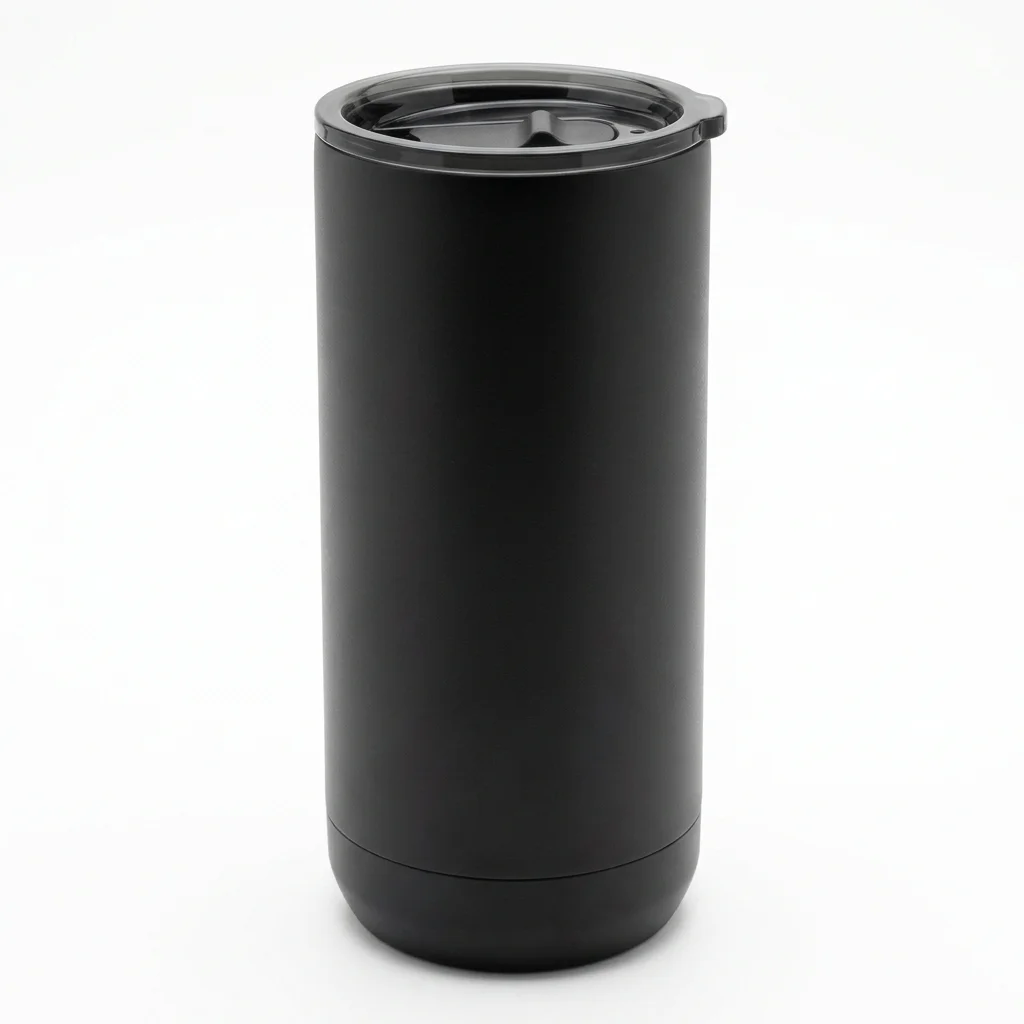
The Yeti Rambler, Hydro Flask, and similar 12-16oz stainless mugs. The thermal performance is excellent. The aesthetic is more "travel mug" than "desk mug," but on a personal desk, that's fine.
What to skip
Thin porcelain mugs (1/8" wall) lose heat fast. Pretty but functional underperformers. Mugs with a recessed bottom (some ceramic mugs do this to prevent wobble on a saucer) sit 2-3mm above a plate warmer, dropping surface temperature by 15-20°F. Avoid these.
Component 3: The mug warmer
This is the focus of the rest of the site, so the short version:
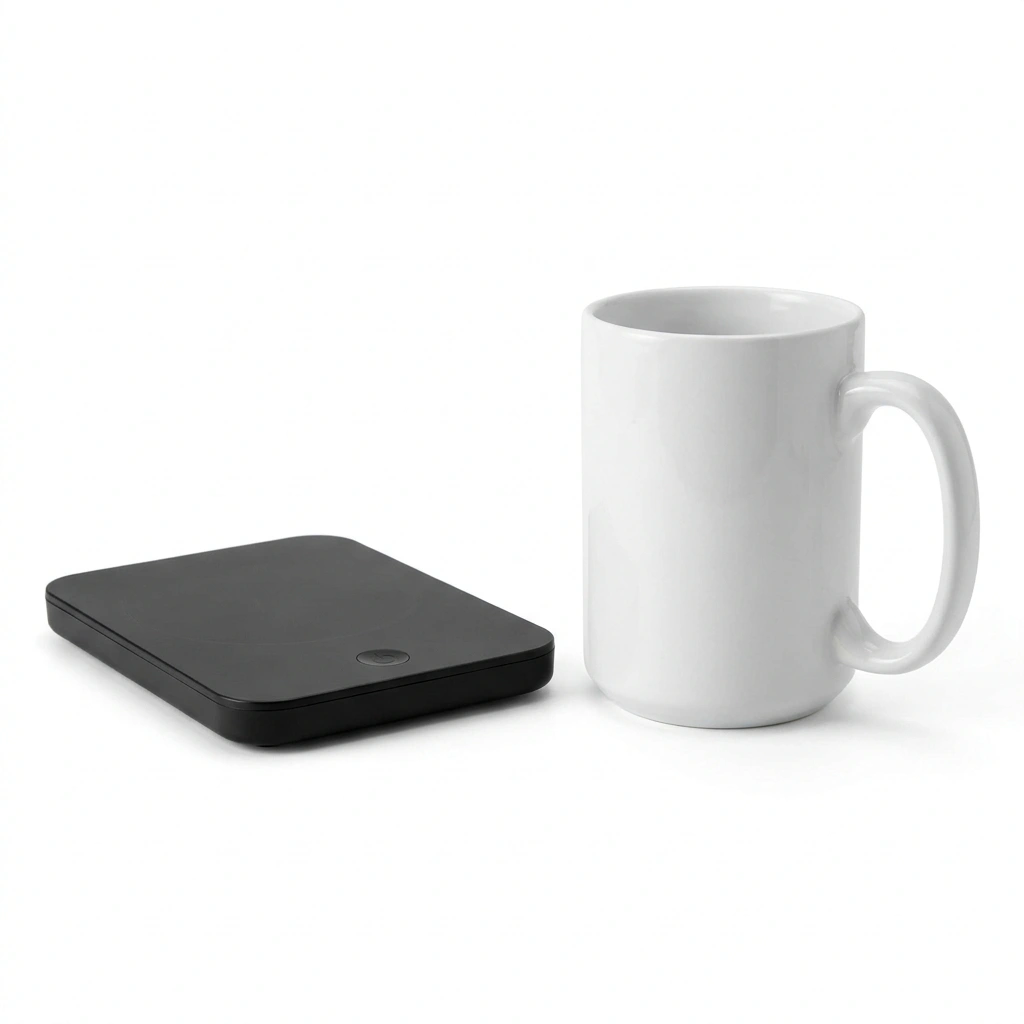
- Budget pick: the Cosori. 24W, 3 temperature settings, 4-hour auto shutoff, 6-foot cord.
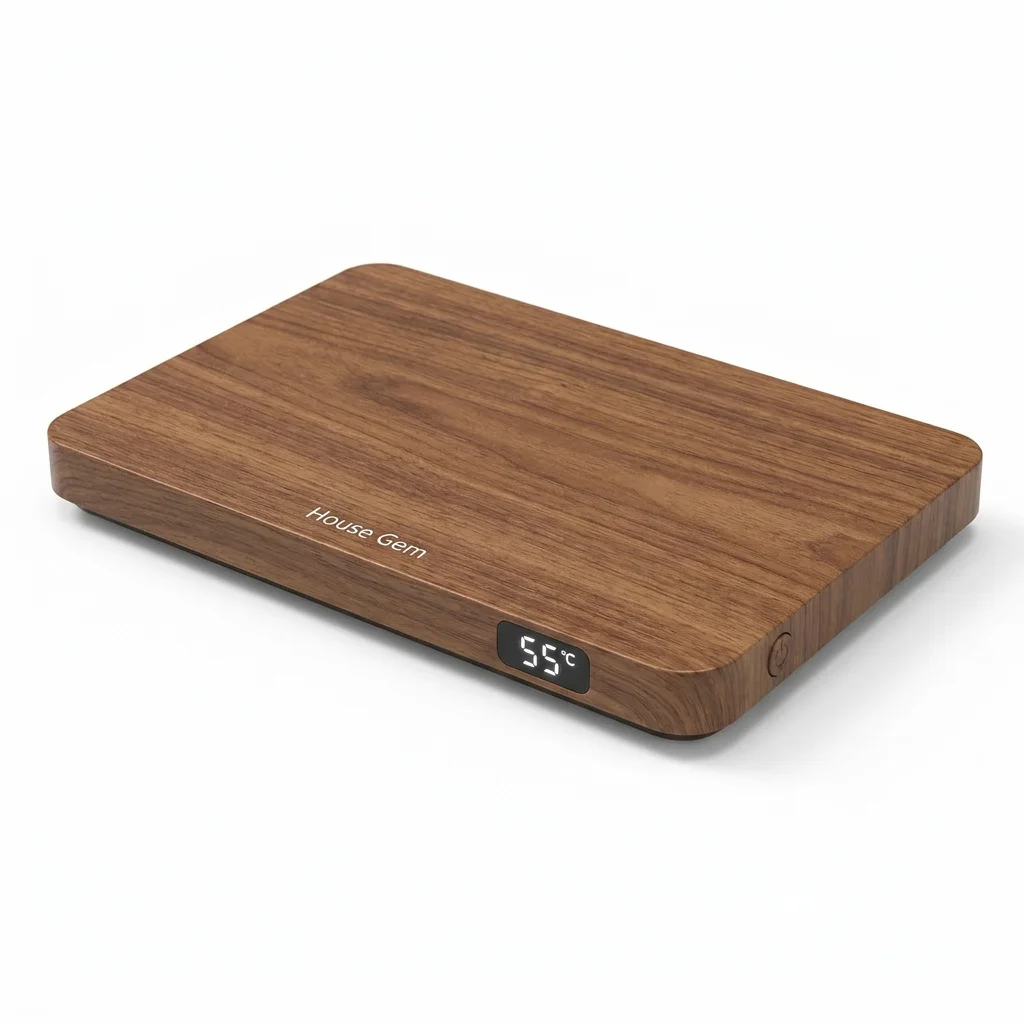
- Upgrade: the House Gem 36W. 36W, real-time display, 2-12 hour auto shutoff.
- Premium / desk-locked: the Ember Mug 2 or Nextmug. Active temperature control, app-free option.
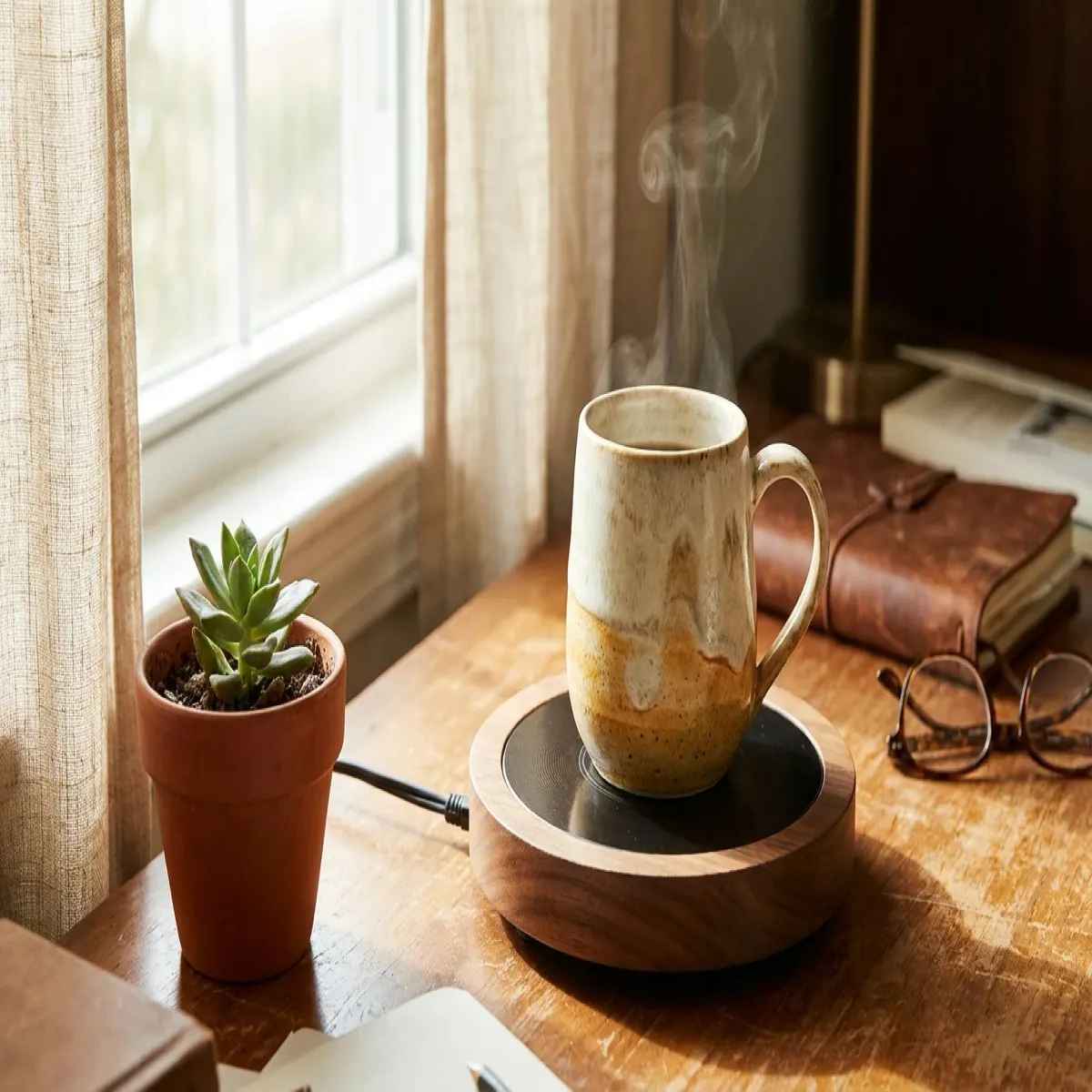
The mug warmer is the part that makes "drink coffee across 2 hours" work. Without it, the coffee goes from 200°F to 130°F in 30 minutes. With it, the coffee stays at 130-140°F for 2+ hours.
Component 4: The grinder
A burr grinder is the entry point. Blade grinders (the cheap "coffee grinder" with a propeller) produce inconsistent grounds. Burr grinders produce uniform grounds, which means consistent extraction.
Manual burr grinders
Cost: $25-40. Examples: 1Zpresso, Hario Skerton Pro, Comandante.
Time per grind: 30-45 seconds for a single cup.
Tradeoff: physical effort. You're standing there grinding by hand. For a single cup, fine. For two cups, annoying.
Best for: small batches, no outlet, portability.
Electric burr grinders
Cost: $40-200. Examples: Baratza Encore, Breville Smart Grinder, OXO Brew.
Time per grind: 10-15 seconds for a single cup.
Tradeoff: counter space, cost, noise.
Best for: daily use, multiple cups, low-attention grinding.
For a desk setup, a manual grinder is fine if you're brewing one cup. If you're brewing for two or more, an electric grinder saves time.
The supporting cast
Kettle
A gooseneck kettle is required for pour-over (controlled pour rate). A standard kettle is fine for French press. Temperature control is a nice-to-have — different coffees and teas brew best at different temperatures.
Scale
A small kitchen scale (10-20g range, 0.1g precision) is required for repeatable pour-over. Most recipes assume 15-18g coffee to 250-300g water. Eyeballing works but isn't repeatable.
Water
Filtered water is meaningfully better than tap. Chlorine and other water treatments affect coffee flavor. A simple pitcher filter (Brita, etc.) is enough.
If you have very hard water, a more aggressive filter helps. The mineral content of hard water affects extraction and flavor.
The order to buy in
If you can't afford the full setup at once, this is the priority order:
- Mug warmer ($25-40). The Cosori at $25 is the cheapest entry point with the biggest day-to-day impact.
- Mug ($15-30). A heavy stoneware mug from a restaurant supply or home goods store.
- Burr grinder ($30). A manual grinder, or an electric one if you have counter space.
- Brewer ($20-50). Pour-over if you want the best cup, French press if you want the easiest.
- Kettle + scale ($30-50). Required for pour-over, optional otherwise.
A working setup can be done in steps. Start with a Cosori and a stoneware mug. Add the grinder. Add the brewer. Add the kettle and scale as needed.
The workflow
Once the kit is assembled, the daily workflow is:
- Boil water. 1 minute.
- Grind 15-18g coffee. 30 seconds manual, 15 seconds electric.
- Brew. 3-4 minutes for pour-over, 4-5 for French press.
- Pour into the preheated mug. Pre-warm the mug with hot water for 30 seconds, dump it, pour.
- Set the mug on the warmer. Lower setting for green tea, higher for black coffee, medium for most coffee drinkers.
- Drink across the next 2 hours. The warmer handles the rest.
Total active time: 5-6 minutes per cup. Total "I'm working and drinking coffee" time: 2 hours.
The verdict
A good desk coffee setup costs $100-200 and produces coffee that is meaningfully better than the office kitchen default. The components are: brewer, mug, warmer, grinder. The workflow is: 5-6 minutes per cup, coffee stays drinkable for 2+ hours.
If you can only afford one component, get a mug warmer. The Cosori is the entry point. The rest of the setup compounds from there.
For more on each component, see the mug warmer buying guides and the wattage explainer.
Methodology: AI-assisted editorial assessment based on brewing references, manufacturer specifications, and aggregated verified-purchaser reviews. We do not perform hands-on testing. See our editorial policy for how we work.