Best Mug for a Mug Warmer: A Compatibility Guide
The mug is the bigger variable, not the warmer. Here's what to look for in a mug — material, weight, base flatness, capacity — and the specific specs that make a mug work well on a plate warmer.
The mug warmer market focuses almost entirely on the warmer. Reviews compare wattage, plate material, auto-shutoff windows. The mug gets treated as a given — "use any flat-bottom mug."
That's backward. The mug is the bigger variable. A 24W plate warmer on the right mug holds coffee at 135°F for two hours. The same warmer on the wrong mug holds it at 105°F for forty minutes. The warmer didn't change. The mug did.
This is what actually makes a mug work on a plate warmer.
The four things that matter
A mug's performance on a plate warmer is determined by four characteristics, in order of importance:
- Material — how well the mug conducts heat from the plate
- Wall thickness and weight — how well the mug holds the heat it receives
- Base flatness — how much of the mug bottom actually contacts the plate
- Capacity and proportions — how much liquid the warmer has to heat and how fast it loses heat through the walls
Get those four right and almost any reasonable plate warmer works. Get them wrong and the warmer barely helps.
Material: ceramic wins, by a real margin
Ceramic (stoneware and porcelain) is the default for a reason. It conducts heat moderately — roughly 2-3 W/(m·K) — so the plate's heat moves into the mug efficiently, but the wall doesn't conduct heat away from the liquid quickly. The mug gets warm, holds the warmth, and the coffee inside stays at 130-145°F steady-state on a 24W plate warmer.
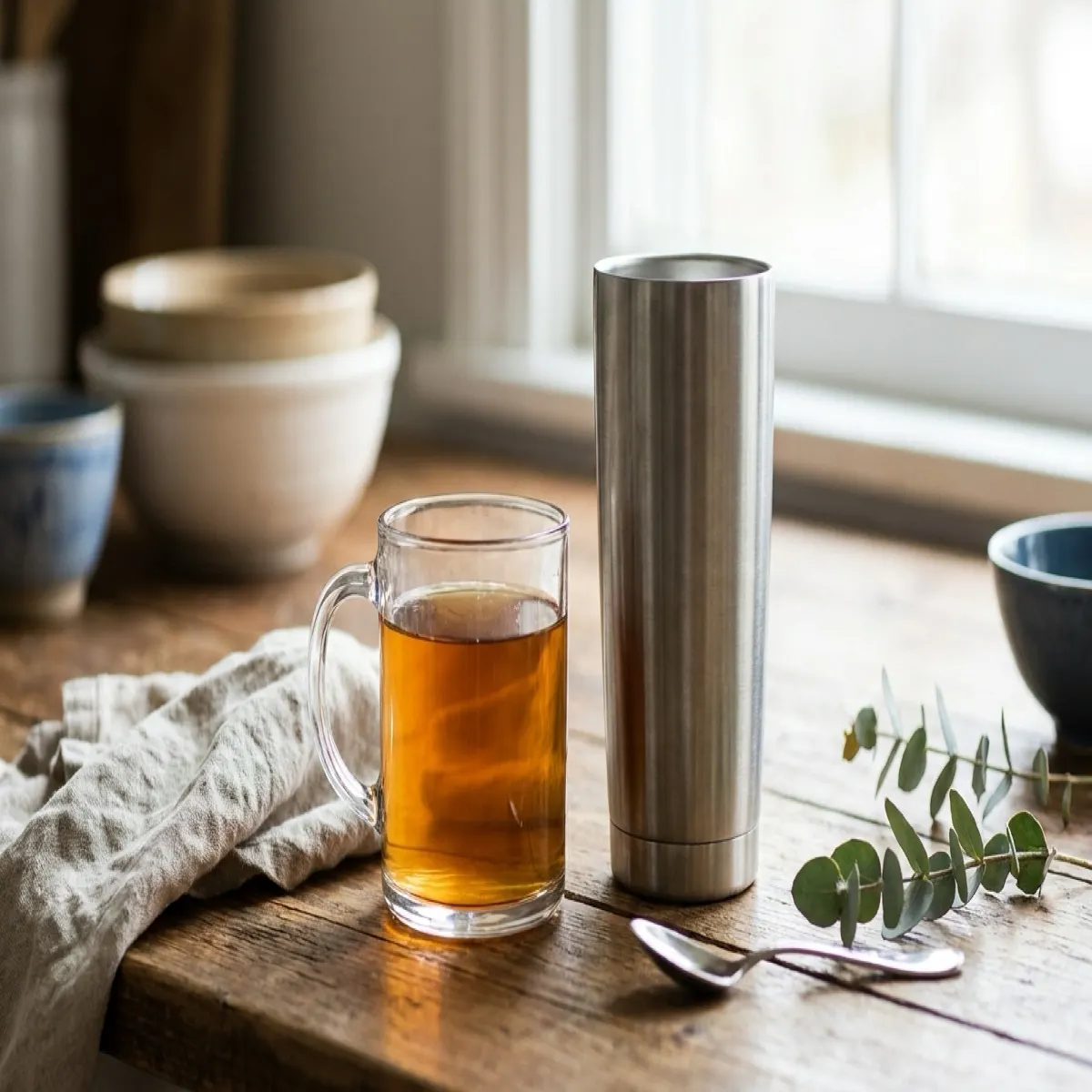
Glass is in the same range. Borosilicate glass mugs (Bodum, Pyrex) conduct at about 1 W/(m·K), slightly slower warm-up than ceramic but similar steady-state. The full breakdown is in can you use a mug warmer with a glass mug.
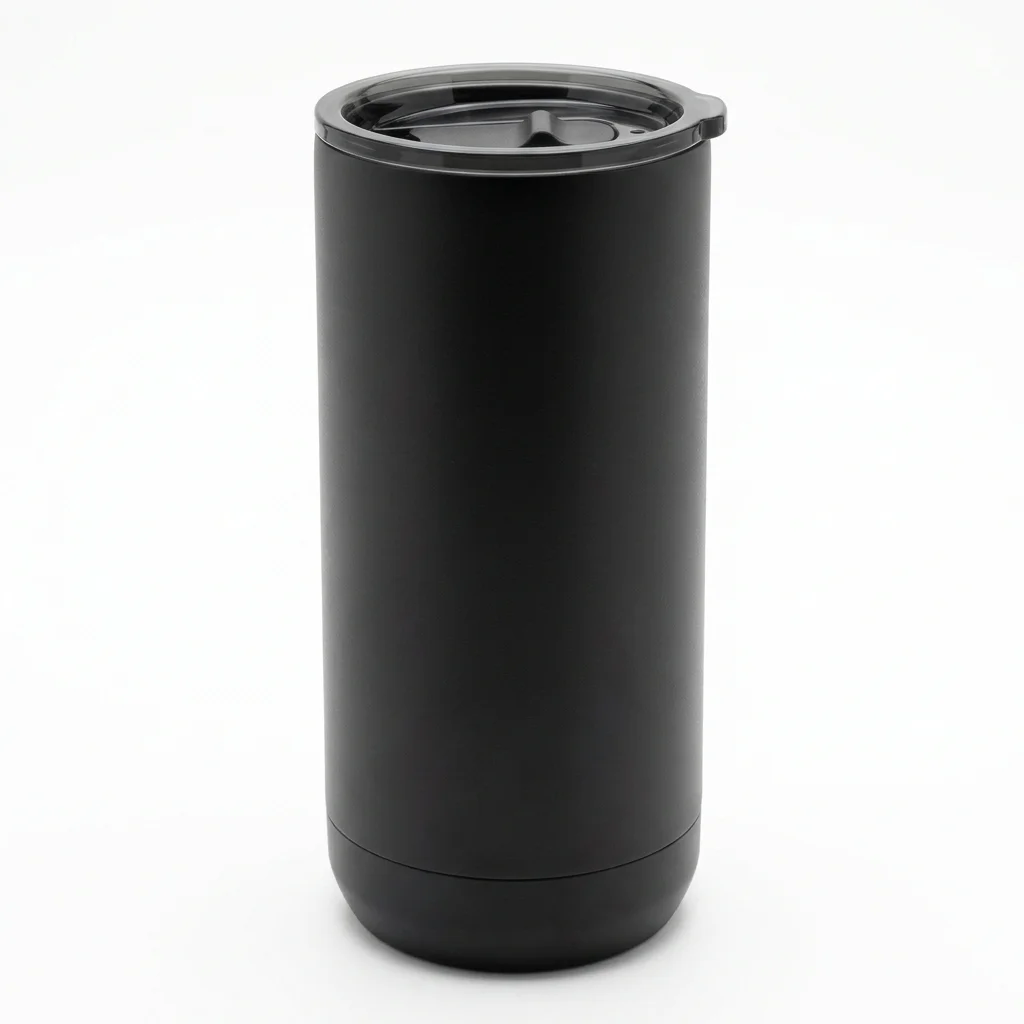
Stainless steel is the tricky one. Single-wall stainless conducts well (around 16 W/(m·K)) but it radiates heat from the walls just as fast as it absorbs heat from the plate. The coffee plateaus at a lower temperature than ceramic — typically 110-120°F instead of 130-140°F. Double-wall vacuum insulated stainless (Yeti, Hydro Flask, Stanley) doesn't work at all — the vacuum blocks heat transfer entirely. The full breakdown is in do mug warmers work with stainless steel mugs.
For the practical buyer: ceramic is the answer nine times out of ten. A heavy stoneware mug from any kitchen-supply brand works on any standard plate warmer.
Weight and wall thickness: heavier is better
A thick, heavy ceramic mug holds heat better than a thin, light one. The physics is straightforward — more mass means more thermal capacity, more material between the coffee and the room, and slower cool-down once the warmer is no longer compensating.
The test is simple. Pick up the mug. If it feels substantial and rings with a dull thud when tapped, it's a thick mug and it will work well. If it feels light and rings with a high-pitched bell, it's thin-walled and it will lose heat faster.
The difference is real. A 12oz thick-walled stoneware mug on a Cosori at medium holds coffee at 130-140°F for 90+ minutes. The same Cosori with a thin-walled porcelain mug of the same capacity drops to 115-125°F in the same window. Both setups are "working." One is dramatically better.
For more on this from the other side — keeping coffee hot without a warmer at all — the how-to guide walks through the preheated-mug trick and why a thick mug matters even without a heating element.
Base flatness: the most-skipped spec
Most plate warmers have a plate about 3-3.5" wide. A standard coffee mug has a base diameter in the same range. The mug should sit flat on the plate, with the entire bottom in contact.
Two failure modes are common:
Recessed or curved base. Some mugs — and most travel mugs — have a slightly recessed or curved bottom that lifts the actual contact area 1-2mm off the plate. That air gap kills heat transfer. The plate heats the air between the mug and itself; the air convects; little heat reaches the mug. The mug stays cold.
Too-small base. A 2" espresso-cup base on a 3.5" plate has the plate heating air around the mug as much as the mug itself. The mug doesn't get full benefit.
For standard 8-15oz ceramic mugs from a kitchen-supply brand, base flatness is rarely a problem. The mugs sit flat, the plate fills the bottom, the contact is full. For travel mugs, novelty mugs, and decorative ceramics, check before committing.
The plate material explainer covers why the plate surface itself also matters — aluminum and stainless plates transfer heat better than glass or ceramic plates.
Capacity: 10-15oz is the sweet spot
Plate warmers are sized for normal coffee mugs. The plate is 3-3.5" wide. The heating element is 15-25W. The system is calibrated for the heat capacity of a 10-15oz pour.
Smaller mugs (6-8oz) heat up faster but have less thermal mass — they cool down faster once the plate cycles off. They're fine for fast drinkers but the warming benefit is shorter-lived.
Larger mugs (16-20oz) have more thermal mass but also more surface area through which to lose heat. A 20oz ceramic mug on a 24W plate warmer holds coffee at a slightly lower steady-state temperature than a 12oz mug on the same warmer — the warmer can't quite keep up.
The sweet spot is 10-15oz. Most standard coffee mugs fit this range. If you drink a smaller pour (8oz), a standard mug is still fine — there's just more air space above the coffee. If you drink a large pour (16oz+), a standard mug works but the plate needs to be on the high setting, not medium.
What to skip
A few mug types don't work well on plate warmers:
- Double-wall vacuum insulated travel mugs. The vacuum blocks heat transfer. The plate heats up; the coffee doesn't. See the stainless steel article for the full breakdown.
- Thin porcelain espresso cups. The walls are too thin to retain heat, and the base is often too small for the plate.
- Conical or angled mugs. A mug that narrows toward the base has less contact area with the plate. Heat transfer drops.
- Plastic mugs and novelty coatings. Most ceramic-and-plastic mugs are fine at plate temperatures (~130-160°F), but printed designs, decals, and decorative coatings can be heat-sensitive in ways that aren't always documented. If the mug has any decoration, check the manufacturer's heat rating before committing to a full session.
The first two are absolute no-gos on a plate warmer. The third and fourth depend on the specific mug.
The setup that works
For most desk-bound coffee drinkers, the right answer is:
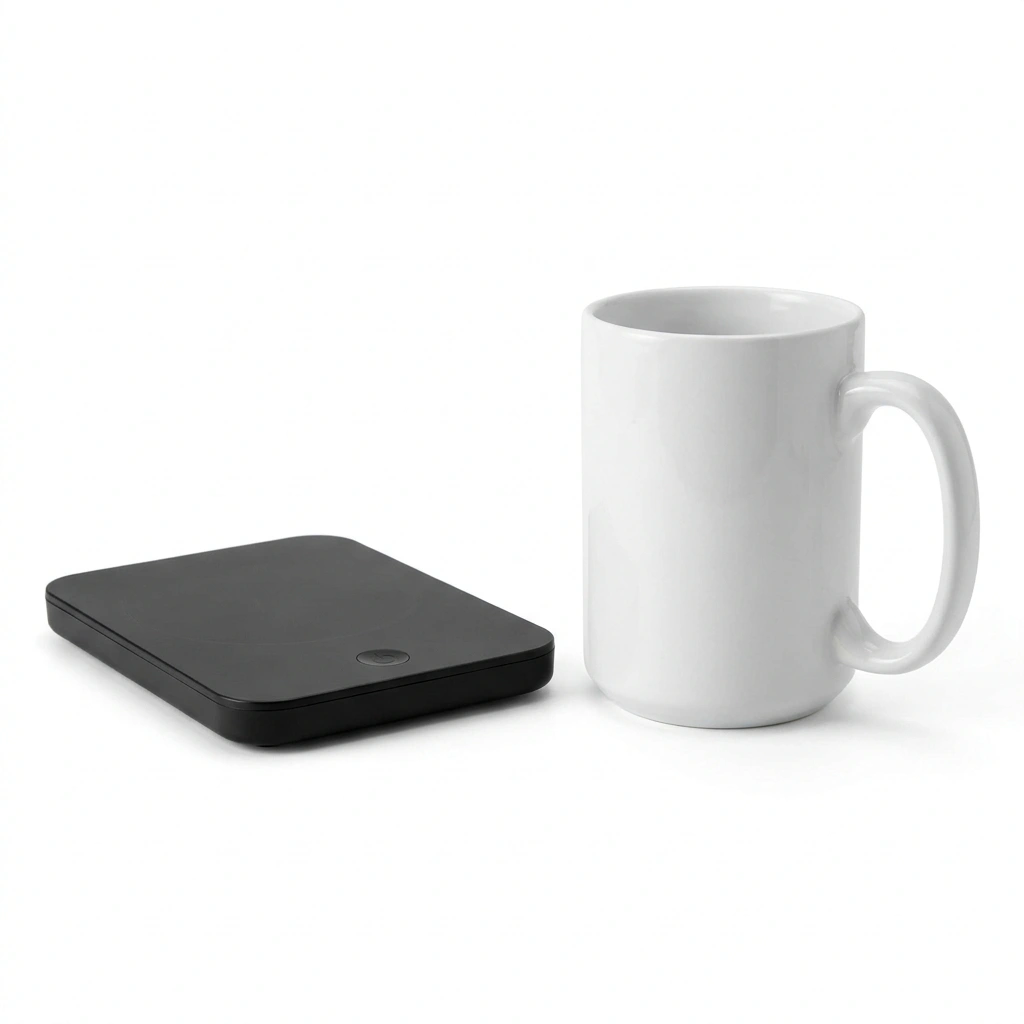
- A 12-15oz ceramic stoneware mug, thick-walled, flat-bottomed. Any kitchen-supply brand. Doesn't need to be expensive — the weight, not the price, is what matters.
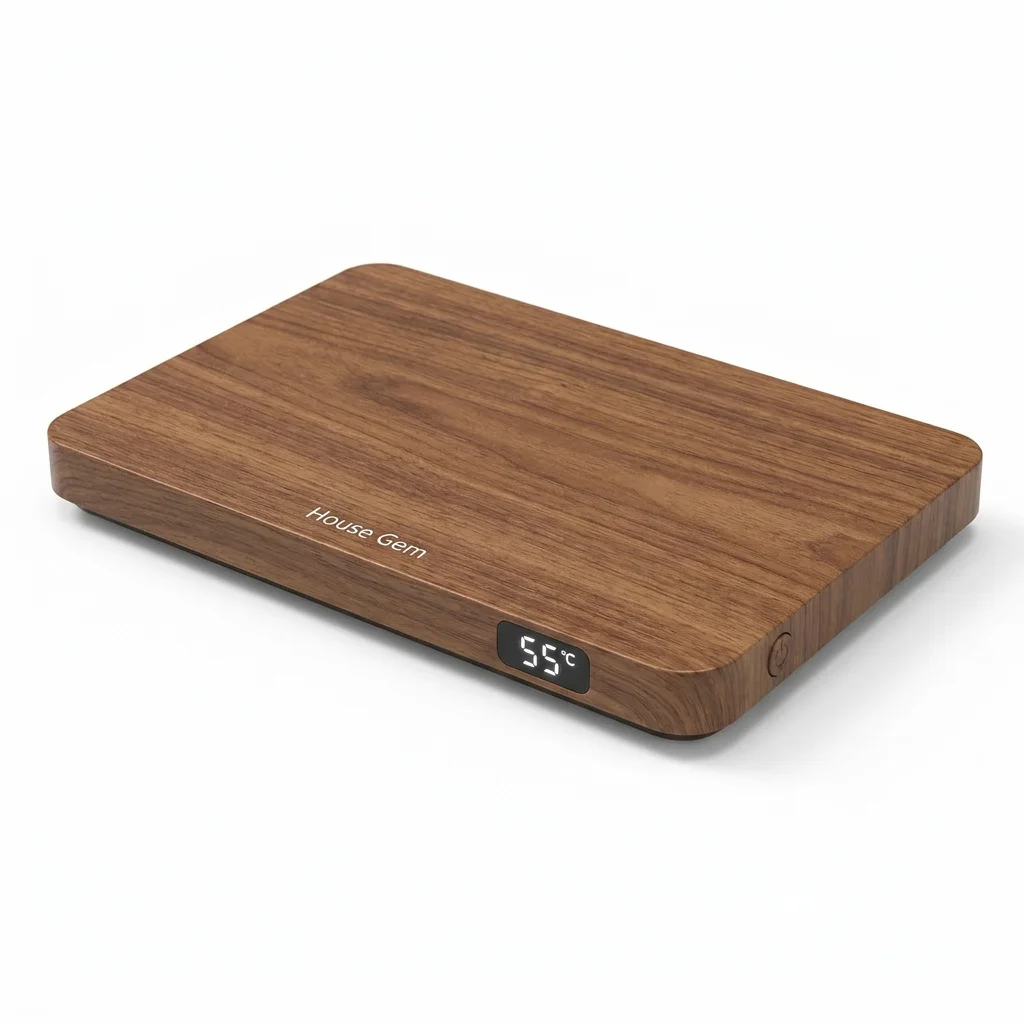
- A 24W plate warmer. The Cosori or Mr. Coffee are both fine defaults. Check current price on Amazon.
- Medium setting for the steady state, high setting for the first 10 minutes. Let the plate cycle up to temperature, then drop to medium for the session.
This combination holds coffee at 130-140°F for 90+ minutes. It doesn't require an expensive mug, an expensive warmer, or any special equipment. The "trick" is matching a heavy ceramic mug to a standard plate warmer — the warmer does the rest.
For the broader desk setup, see the WFH desk coffee guide. For the material side, see the plate material explainer and the glass mug compatibility article.
Methodology: AI-assisted editorial assessment based on manufacturer specifications for plate warmers and ceramic mugs, basic heat-transfer physics (thermal conductivity values are standard reference figures), and aggregated verified-purchaser reports. We do not perform hands-on thermal testing. See our editorial policy for how we work.