Do Mug Warmers Work With Stainless Steel Mugs?
A direct answer to whether a plate-style mug warmer can keep coffee hot in a Yeti, Hydro Flask, Stanley, or other stainless steel travel mug — and what to use instead when it can't.
Short answer: it depends on whether the mug is single-wall or double-wall vacuum insulated. Single-wall stainless works (with caveats). Double-wall vacuum insulated — the Yeti, Hydro Flask, Stanley, Owala category — does not. The plate heats up, the mug stays room temperature, and your coffee goes cold anyway.
This is the longer answer.
The two kinds of stainless steel mugs
"Stainless steel mug" covers two very different products:
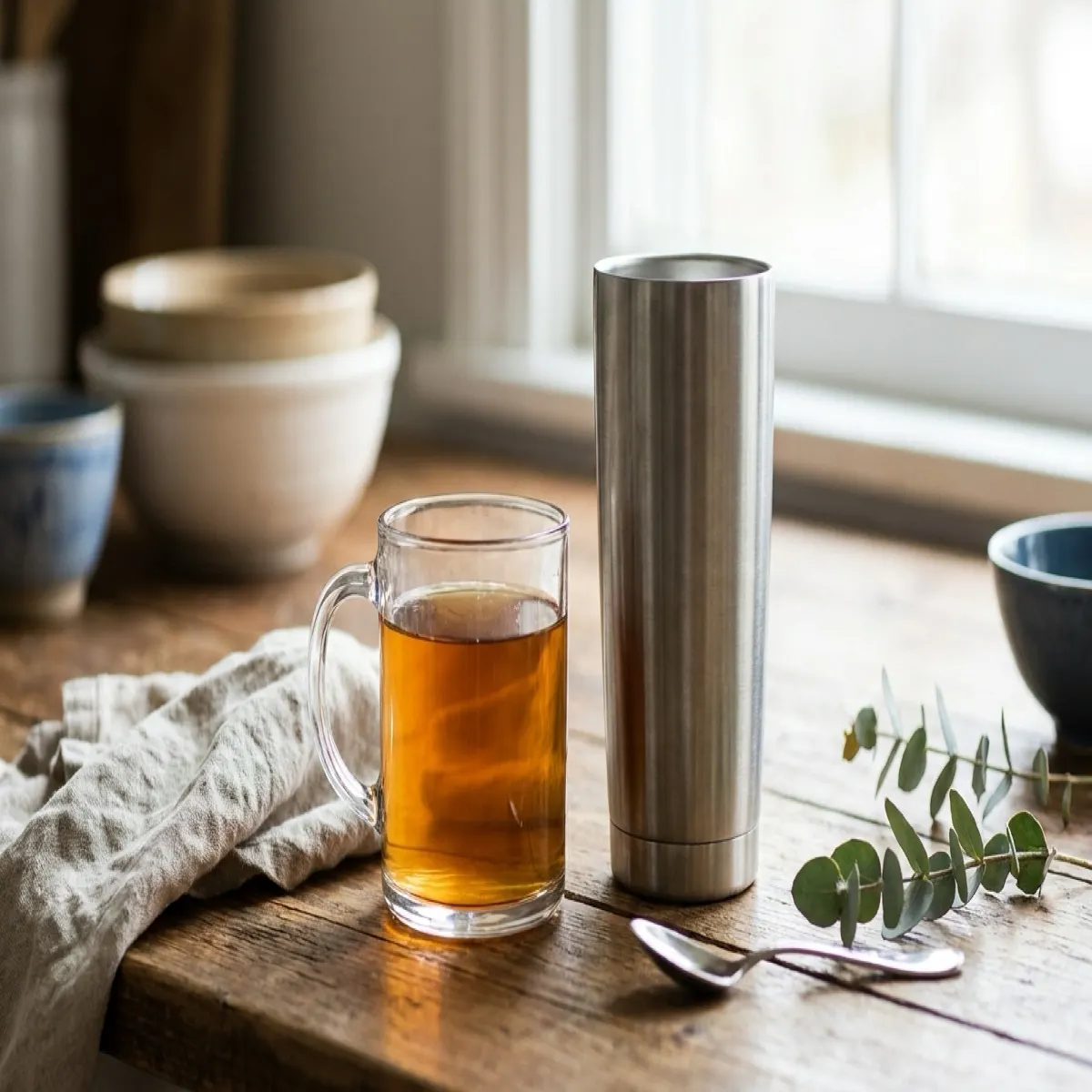
Single-wall stainless steel. A single layer of metal, often with a thin air gap if it's a double-walled mug without vacuum. Common in cheaper "travel mugs" in the budget tier. The metal is in direct thermal contact with the liquid. The metal conducts heat reasonably well — about 16 W/(m·K), versus about 2-3 W/(m·K) for ceramic. Heat from the plate transfers into the metal and into the coffee.
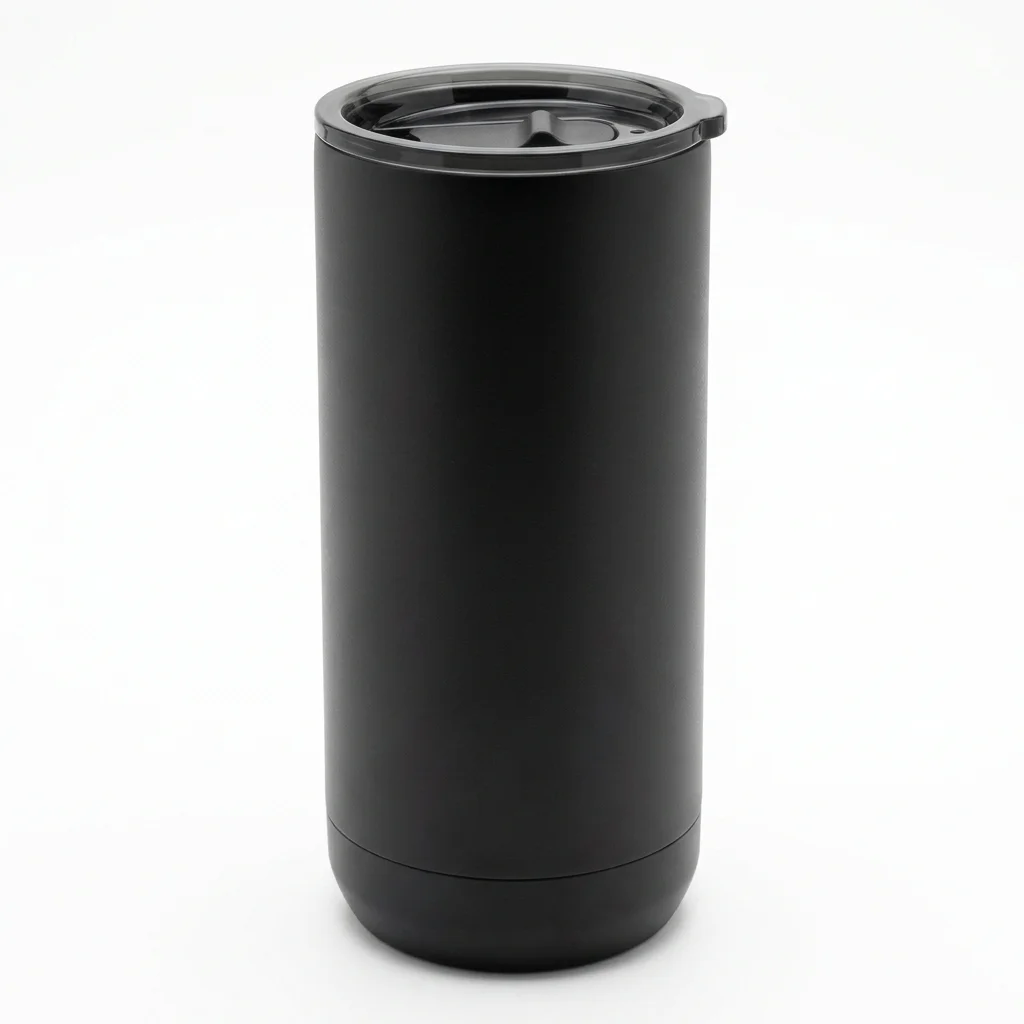
Double-wall vacuum insulated. Two layers of stainless steel with a vacuum between them. This is the Yeti Rambler, Hydro Flask, Stanley, Owala, Simple Modern, and most of the premium "travel mug" category. The vacuum eliminates conduction and convection through the wall. The liquid is essentially insulated from the outside world.
The category matters more than the brand. A Yeti lowball (single-wall) behaves differently from a Yeti Rambler (double-wall vacuum). A "travel mug" without explicit vacuum insulation is a different product from a "thermos."
Single-wall stainless: works, but unevenly
A single-wall stainless mug on a plate warmer does warm up. The plate heat transfers through the metal bottom into the coffee. The catch: stainless steel conducts heat both ways. The same property that lets heat in also lets heat out. The mug radiates heat from its sides as fast as the plate adds heat from the bottom. The coffee warms up, then plateaus at a temperature lower than ceramic would reach.
In practice: a single-wall stainless mug on a 24W plate warmer holds coffee around 110-120°F instead of the 130-140°F a ceramic mug holds. Lukewarm, not hot. It's better than nothing — the coffee doesn't go cold — but it's not the result people expect.
The other issue with single-wall stainless: the metal bottom is often thinner than a ceramic mug's bottom, and it can warp slightly with repeated heating. Warping creates an air gap, which kills heat transfer. A single-wall stainless mug that's been through a few hundred dishwasher cycles doesn't sit flat anymore.
For single-wall stainless, the Cosori on "high" is the right warmer if you're committed to the metal mug. The extra wattage compensates for the heat-loss problem. Check current price on Amazon.
Double-wall vacuum: doesn't work
This is the case most people actually have. The Yeti Rambler, the Hydro Flask, the Stanley, the Owala — these are double-wall vacuum. The vacuum between the walls is the entire point: it blocks heat transfer so the coffee stays hot without external power.
The same vacuum that keeps coffee hot on the kitchen counter also keeps the plate warmer's heat out. The plate heats up. The outer wall of the mug warms slightly. The inner wall — the one in contact with the coffee — stays at whatever temperature it was. The vacuum blocks the heat transfer.
Plate temperature on a Cosori "high": roughly 160°F. Outer wall of the vacuum mug after 30 minutes: maybe 110-120°F. Inner wall and the coffee: unchanged from when you poured it. The coffee cools on its normal curve, completely unaffected by the warmer.
This is consistent across the category. There's no plate warmer wattage high enough to overcome the vacuum — the physics is a wall, not a hill. A 100W plate warmer would do the same thing as a 24W plate warmer: warm the outer wall, leave the coffee alone.
Plate size and contact issues
There's a secondary problem with travel mugs on plate warmers: they often don't fit.
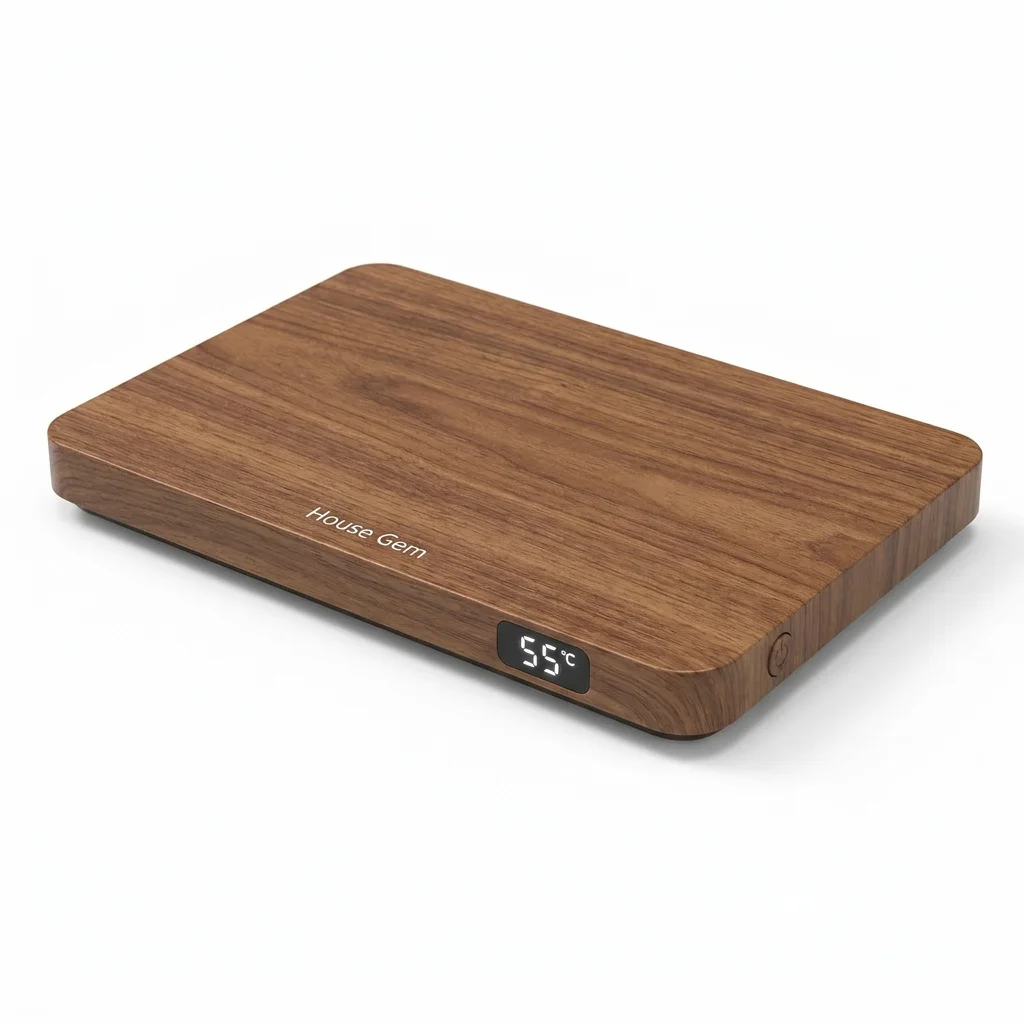
Most plate warmers have a plate diameter of about 3-3.5" and a vertical clearance of 4-5" above the plate. A 16oz Yeti Rambler has a base diameter of about 2.8" and a height of about 8". The base fits the plate, but the mug extends 3" above the top of the warmer. On a Cosori or Mr. Coffee, this is fine — the warmer is open above the plate, no lid. But some smart mugs and tumbler warmers have a recessed plate or a lid that doesn't accommodate the taller form factor.
The bigger issue: many travel mugs have a slightly recessed or curved bottom. The YETI Rambler has a flat bottom, which is good. The Owala and some Stanley models have a small ridge around the base. The ridge lifts the actual contact surface 1-2mm off the plate. That air gap drops heat transfer by 50% or more — which is a real problem on a single-wall mug and doesn't matter on a double-wall (already not working).
If you want a travel mug that works on a plate warmer, the requirements are:
- Flat bottom, no ridges
- Single-wall or thin-wall construction (not vacuum)
- Height under 5" (fits under any standard warmer)
- Base diameter 2.5"-3.5" (fits standard plate)
These requirements together describe a "cheap travel mug." A $20 unbranded stainless travel mug. Not what most people own.
What to use instead for travel mugs
If you want to keep coffee hot in a Yeti, Hydro Flask, Stanley, or Owala at your desk, the answer is a self-heating mug with a battery. The plate warmer is the wrong category.
The Ember Tumbler is the strongest option here. 16oz, double-wall vacuum insulated, AND has a built-in heating element and battery. The vacuum keeps heat in; the heater adds heat back in as it leaks out. The Ember app sets the target temperature (typically 130-140°F). Battery life is about 3 hours per charge — enough for a normal work session.
For a non-smart alternative, the Nextmug is a similar self-heating travel mug with a 16oz capacity and longer battery life (about 4 hours per charge). Temperature is set via a button on the base, no app.
Both are premium-tier purchases — check current price on Amazon, they're a step above plate warmers. But they're the right answer if the use case is "keep my travel mug hot at my desk."
The setup that actually works
For most people, the answer is "don't mix the categories." A plate warmer is for a ceramic mug at a desk. A travel mug is for transit. Use them in their natural environments.
The practical workflow for someone who wants hot desk coffee and a travel mug for the commute:
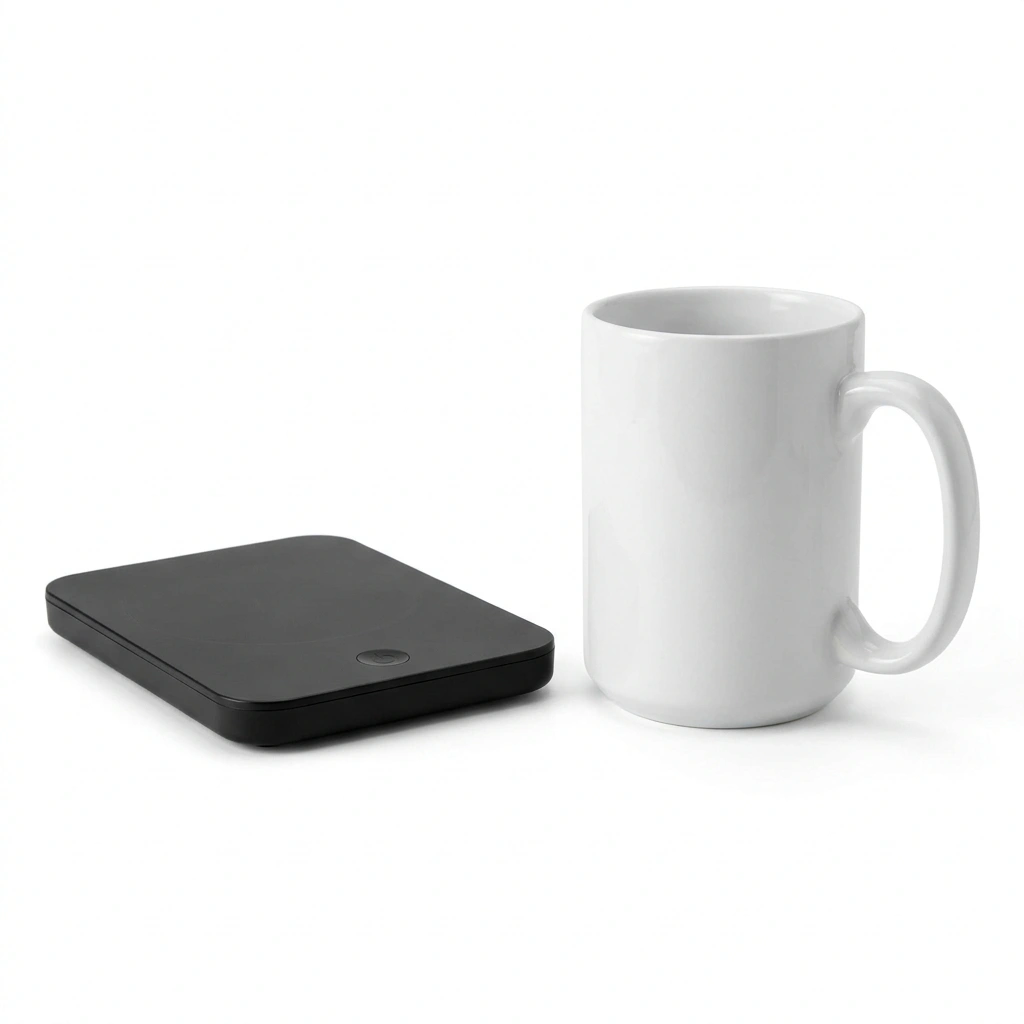
- At the desk: ceramic mug on a plate warmer. A flat-bottom ceramic mug, 12-15oz, on a Cosori or Mr. Coffee. The coffee stays at 130-140°F for the full session. This is what plate warmers are designed for.
- For the commute: travel mug with vacuum insulation. Yeti, Hydro Flask, Stanley, or similar. The vacuum handles the heat retention. No external power needed.
- For long sessions or specific temperatures: self-heating mug. Ember Tumbler or Nextmug for "I want 140°F for 3 hours regardless of where the mug is."
This is the standard three-piece setup. A plate warmer, a vacuum travel mug, and (optionally) a self-heating smart mug. Total investment is in the mid-range tier, with the smart mug being the only premium purchase.
The takeaway
A plate-style mug warmer works with single-wall stainless steel mugs but not with double-wall vacuum insulated mugs. The vacuum blocks heat transfer; the plate runs hot while the coffee stays cold.
If you want to use a Yeti or Hydro Flask on a desk, the right answer is a self-heating mug with a battery, not a more powerful plate warmer. The plate warmer is for ceramic. The vacuum mug is for transit. They don't cross over well.
For more on the plate material side, see the plate material explainer. For the broader travel mug question, see the travel mug warmer guide and the mug warmer vs insulated tumbler comparison.
Methodology: AI-assisted editorial assessment based on manufacturer specifications for plate warmers and vacuum-insulated mugs, basic heat-transfer physics, and aggregated verified-purchaser reports. We do not perform hands-on thermal testing. See our editorial policy for how we work.