Can You Use a Mug Warmer With a Glass Mug?
A glass mug on a mug warmer works in most cases. Here's how the heat transfer compares to ceramic, which glass mugs to avoid, and what to expect at the desk.
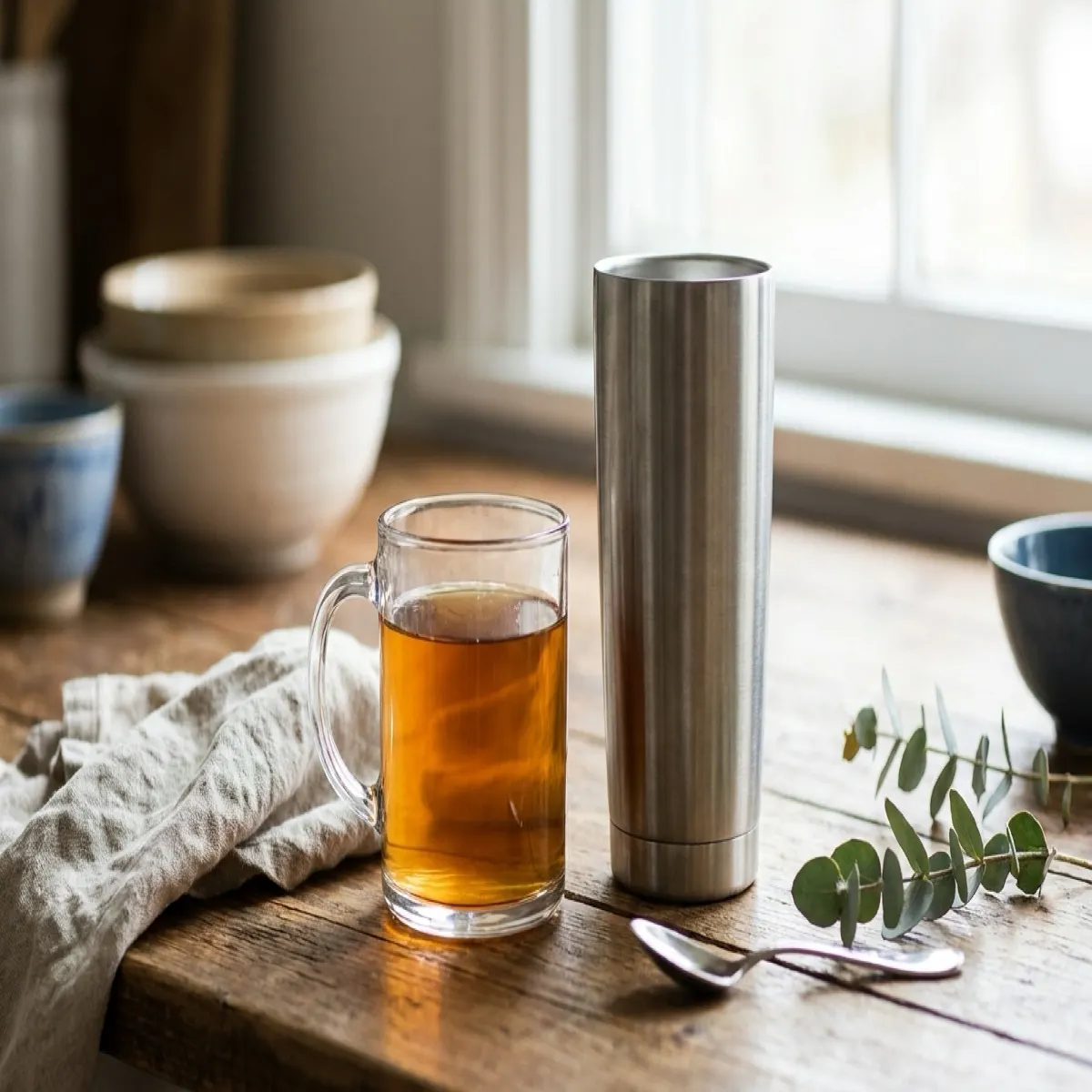
Short answer: yes, with normal caveats. A glass mug on a plate warmer works about as well as a ceramic mug of the same size and wall thickness — slightly slower warm-up, slightly faster cool-down, otherwise in the same range. The exceptions are thin soda-lime glass mugs, glass mugs with heat-sensitive decorations, and glass mugs with metal trim.
This is the longer answer.
Glass as a mug material
Most coffee mugs on the market are ceramic (the standard stoneware or porcelain mug) or stainless steel (the travel-mug category). Glass is the third material, less common but a real category.
The glass mugs on the market fall into three types:
Borosilicate glass. The Pyrex / Bodum category. Borosilicate glass has a low thermal expansion coefficient (around 3.3 × 10⁻⁶/K) and handles temperature swings well. A borosilicate mug can take the dishwasher cycle and a hot liquid without cracking. Bodum makes most of the borosilicate coffee mugs you'll see — the Bodum Bistro, the Bodum Assam, and the double-wall Pavina line.
Soda-lime glass. The cheap clear glass category. Most drinking glasses, mason jars, and budget glass mugs are soda-lime. Thermal expansion is higher (around 9 × 10⁻⁶/K) and the glass is more sensitive to thermal shock. Sudden temperature changes can crack it.
Double-wall glass. Two thin layers of glass with an air gap between them. The Pavina line and similar products. The air gap insulates, but it isn't a vacuum — heat still transfers, just slower.
Glass thermal conductivity sits around 1 W/(m·K), versus 2-3 W/(m·K) for ceramic and about 16 W/(m·K) for stainless steel. Glass is a worse conductor than ceramic, which means slower heat transfer in both directions: slower warm-up and slightly faster cool-down once the heat source is steady.
How a glass mug behaves on a plate warmer
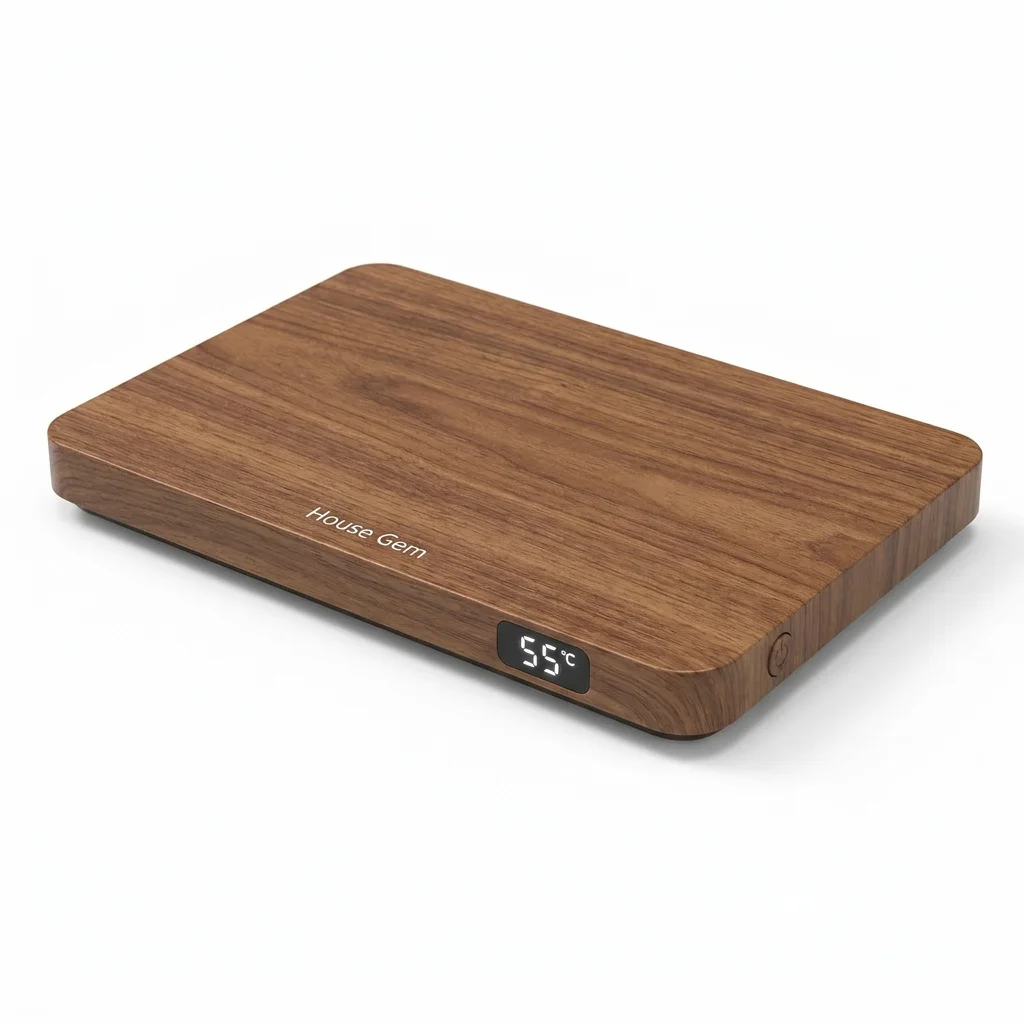
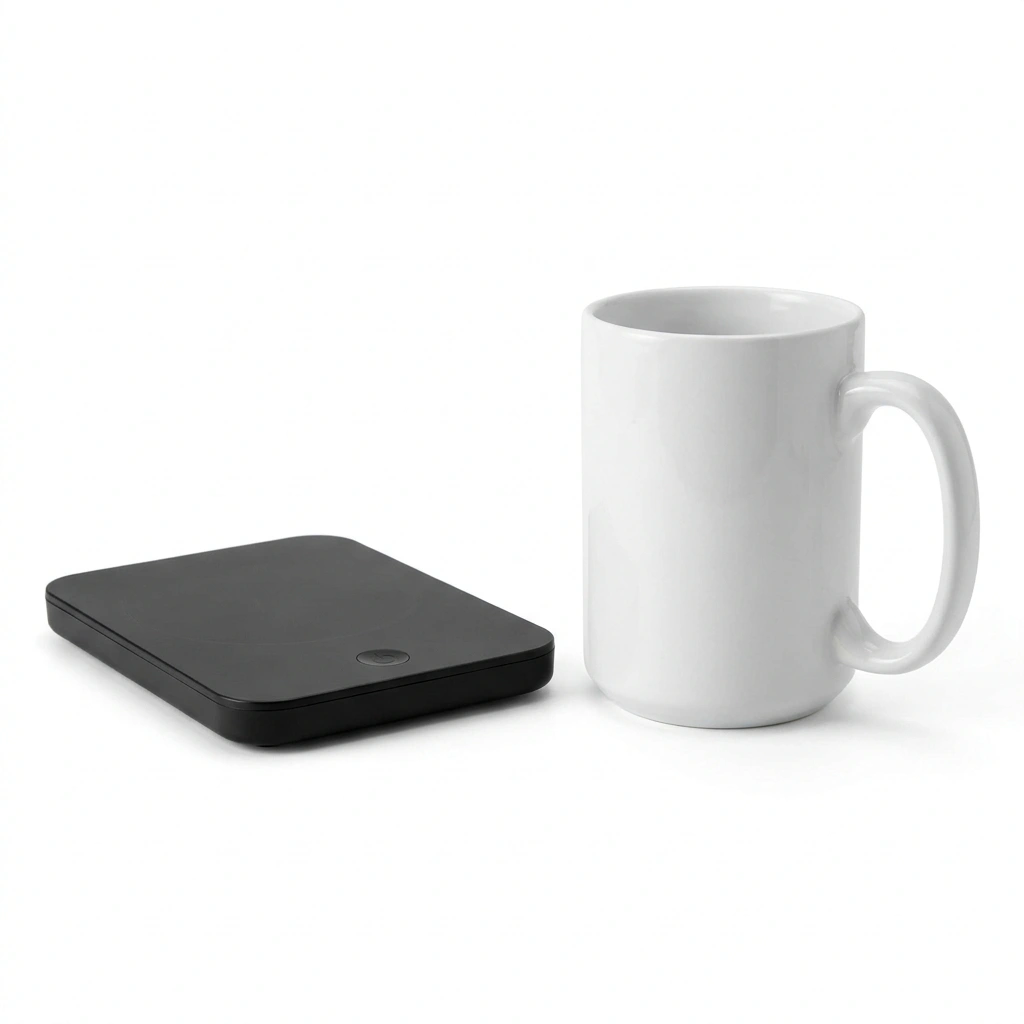
The plate on a 24W mug warmer reaches around 150-160°F on the high setting. Heat transfers from the plate through the mug bottom and into the coffee. For a ceramic mug, this is straightforward: the ceramic conducts, the heat moves in, the coffee warms to 130-140°F at steady state.
For a glass mug, the same physics applies, just slightly slower:
- The mug takes longer to reach thermal equilibrium. A ceramic mug on a Cosori "high" reaches steady state in about 10 minutes. A borosilicate glass mug of the same size takes 12-15 minutes.
- The coffee in a glass mug holds at a slightly lower steady-state temperature. Expect 125-135°F instead of the 130-140°F a ceramic mug reaches.
- The mug wall doesn't get as hot to the touch. Glass at 1 W/(m·K) doesn't conduct heat away from the contact point the way ceramic does. A ceramic mug with the same setup has noticeably warmer sides after 20 minutes; a glass mug stays cooler to the touch on the sides and top.
In practical terms: a glass mug on a plate warmer holds coffee in the drinkable-but-not-piping range for an hour or so. It's slightly worse than ceramic, but well within the "yes, this works" range.
When glass is fine
A standard borosilicate glass mug — Bodum Bistro, Bodum Assam, or a thick-walled double-wall glass mug — works without issues on any plate warmer. The thermal expansion is low enough that the bottom of the mug can handle a 150°F plate without stress. Heat transfer is adequate. Cleaning is straightforward.
The Cosori and Mr. Coffee are both fine with standard borosilicate glass mugs. The plate material side of this is covered in the plate material explainer.
When glass isn't fine
Three cases where glass is risky on a plate warmer:
Thin soda-lime glass mugs. A cheap clear glass mug — the kind sold in a 4-pack from a big-box store — is often thin-walled soda-lime glass. Thermal expansion is high. The plate at 150°F is well within the glass's working range, but if the mug is cold (right out of the cabinet) when placed on the plate, the temperature shock can crack the bottom. This is rare but documented, especially with thinner glasses.
Mugs with printed decorations. Many glass mugs have a printed logo, decal, or color band that isn't dishwasher-safe or heat-rated. The print can warp, fade, or peel at sustained 130°F+ temperatures. If the glass mug has a printed design, check whether the decoration is rated for hot liquids — most are, but the budget ones sometimes aren't.
Glass mugs with metal trim. A glass mug with a metal handle, metal base ring, or metal rim has two materials with different thermal expansion rates. The trim expands faster when heated, which stresses the glass at the connection point. The Bodum Assam has a plastic handle — fine. A glass mug with a metal handle is uncommon but exists, and the metal/glass interface is the failure point over time.
For all three cases: the failure is rare, but real. Avoid these on a plate warmer, or test carefully before committing.
Glass vs ceramic: the practical comparison
For a desk-bound coffee drinker choosing between a glass mug and a ceramic mug on a plate warmer:
| Material | Warm-up time | Steady-state coffee temp | Heat retention | Failure risk |
|---|---|---|---|---|
| Ceramic (standard) | ~10 min | 130-140°F | High | Low |
| Glass (borosilicate) | ~12-15 min | 125-135°F | Medium | Low |
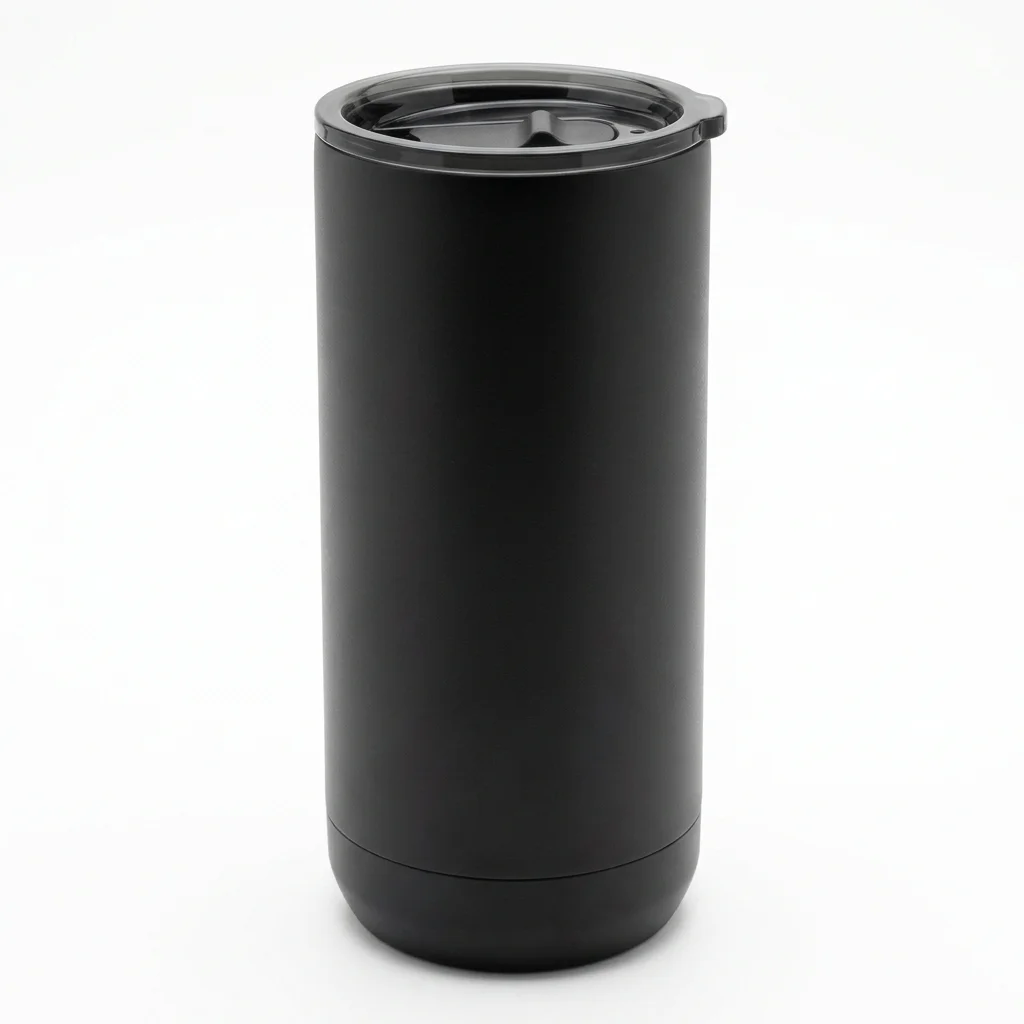
| Stainless (single-wall) | ~10 min | 110-120°F | Low | Medium |
| Stainless (vacuum) | N/A | N/A | N/A | Doesn't work |
Glass is closer to ceramic than to stainless. Heat transfer is adequate. The tradeoff is mainly heat retention: glass cools faster than ceramic because the wall is thinner and conducts less, so heat radiates from the coffee through the thin wall to the room. A glass mug at the back of the desk goes cold faster than a heavy ceramic mug once you stop refilling.
For more on the stainless steel side, see do mug warmers work with stainless steel mugs. For the broader material story, see plate material explained.
The setup that works
For desk-bound coffee with a glass mug, the standard setup is:
- A borosilicate glass mug, 8-12oz. Bodum or similar. Thick walls, no metal trim, no printed decorations. A double-wall glass mug works too, with slightly better retention.
- A 24W plate warmer. The Cosori or Mr. Coffee are both fine.
- High setting for the first 10-15 minutes, then auto-shutoff or low. The Cosori's "high" reaches 150°F+ on the plate. After warm-up, switching to "low" or letting the auto-shutoff cycle keeps the coffee in the 125-135°F range.
Total cost is in the budget tier. Check current price on Amazon for both the warmer and the mug. The combination holds coffee in the drinkable range for an hour or more — slightly less than ceramic, but adequate for most desk-bound work.
The takeaway
A glass mug works on a mug warmer. The heat transfer is slightly slower than ceramic and slightly worse at retention, but it's well within the "yes, this works" range. The exceptions are thin soda-lime glass mugs, mugs with printed decorations not rated for heat, and glass mugs with metal trim.
For the standard setup, get a borosilicate glass mug (Bodum or similar) and a 24W plate warmer. The combination works without issues. If you want the longer retention of ceramic, use a ceramic mug; if you want the lighter feel and visual of glass, a borosilicate mug on the same warmer is the answer.
For more on the material side, see plate material explained and do mug warmers work with stainless steel mugs. For the broader use case, see best mug warmer for travel and how to keep coffee hot at your desk.
Methodology: AI-assisted editorial assessment based on manufacturer specifications for plate warmers and glass mugs, basic heat-transfer physics, and aggregated verified-purchaser reports. We do not perform hands-on thermal testing. See our editorial policy for how we work.