Mug Warmer vs Thermos: Which Actually Keeps Coffee Hot Longer?
A side-by-side look at the two main approaches to keeping desk coffee warm — and when each is the right answer.
Mug warmers and insulated thermoses solve the same problem — coffee cools too fast — in two completely different ways. One uses active heat, the other uses passive insulation. The right answer depends on what your day looks like.
This is the actual comparison.
How a thermos works
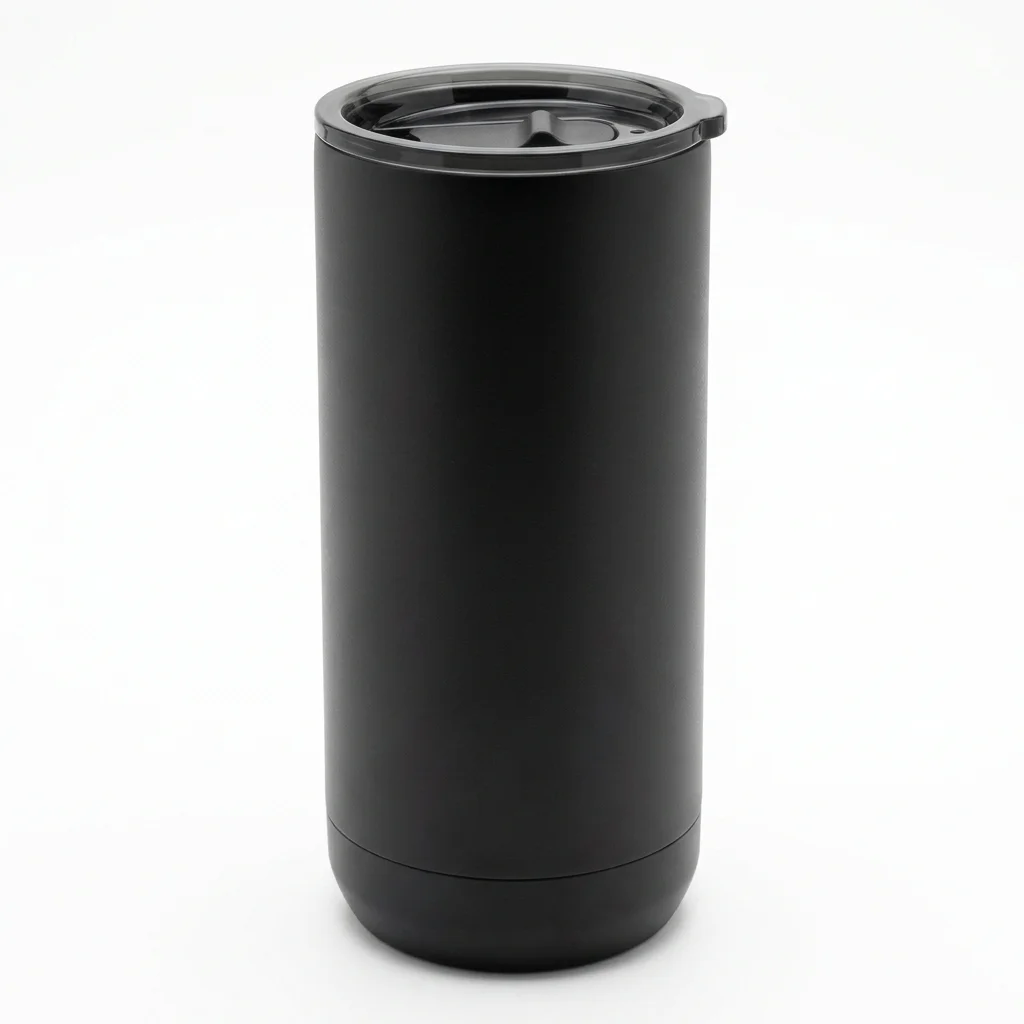
A vacuum-insulated thermos (Yeti, Hydro Flask, Stanley, etc.) has two stainless steel walls with a vacuum between them. The vacuum eliminates convection and conduction through the wall. Heat loss is reduced to radiation and the small conduction paths through the lid and the mouth.
A high-quality thermos keeps coffee at near-brew temperature for 2-4 hours. After 6 hours, the coffee is lukewarm but not cold. After 12 hours, the coffee is cool but drinkable.
The thermos doesn't actively heat. It just slows the cooling. This is its strength and its weakness.
The strength: no power, no cord, no charging, no maintenance. The thermos works as long as it's not opened.
The weakness: it's a sealed vessel. You pour out, you pour back in (or drink from it). It changes the coffee ritual.
How a mug warmer works
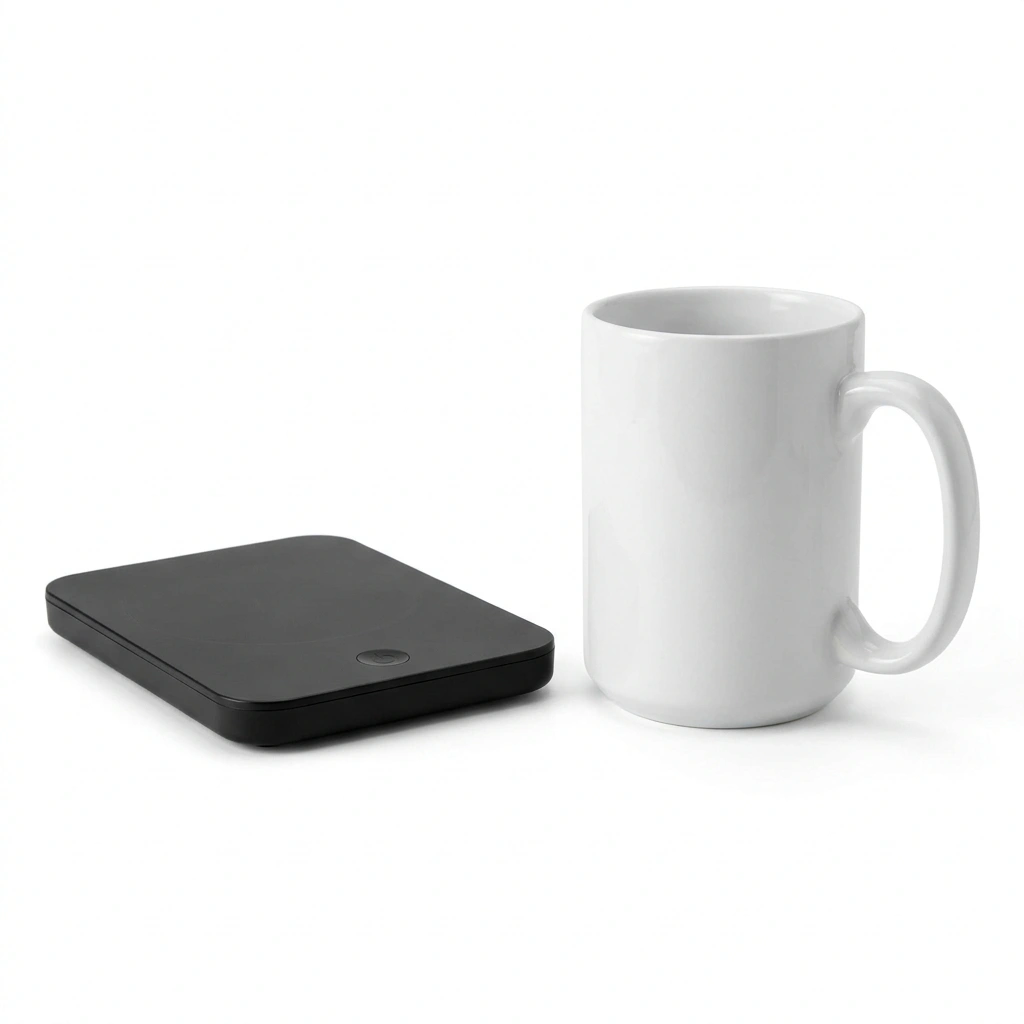
A mug warmer sits on your desk and provides constant low heat to the bottom of a mug. The plate is at 130-160°F (depending on the model), the liquid is at 110-140°F (depending on the plate, the mug, and the time).
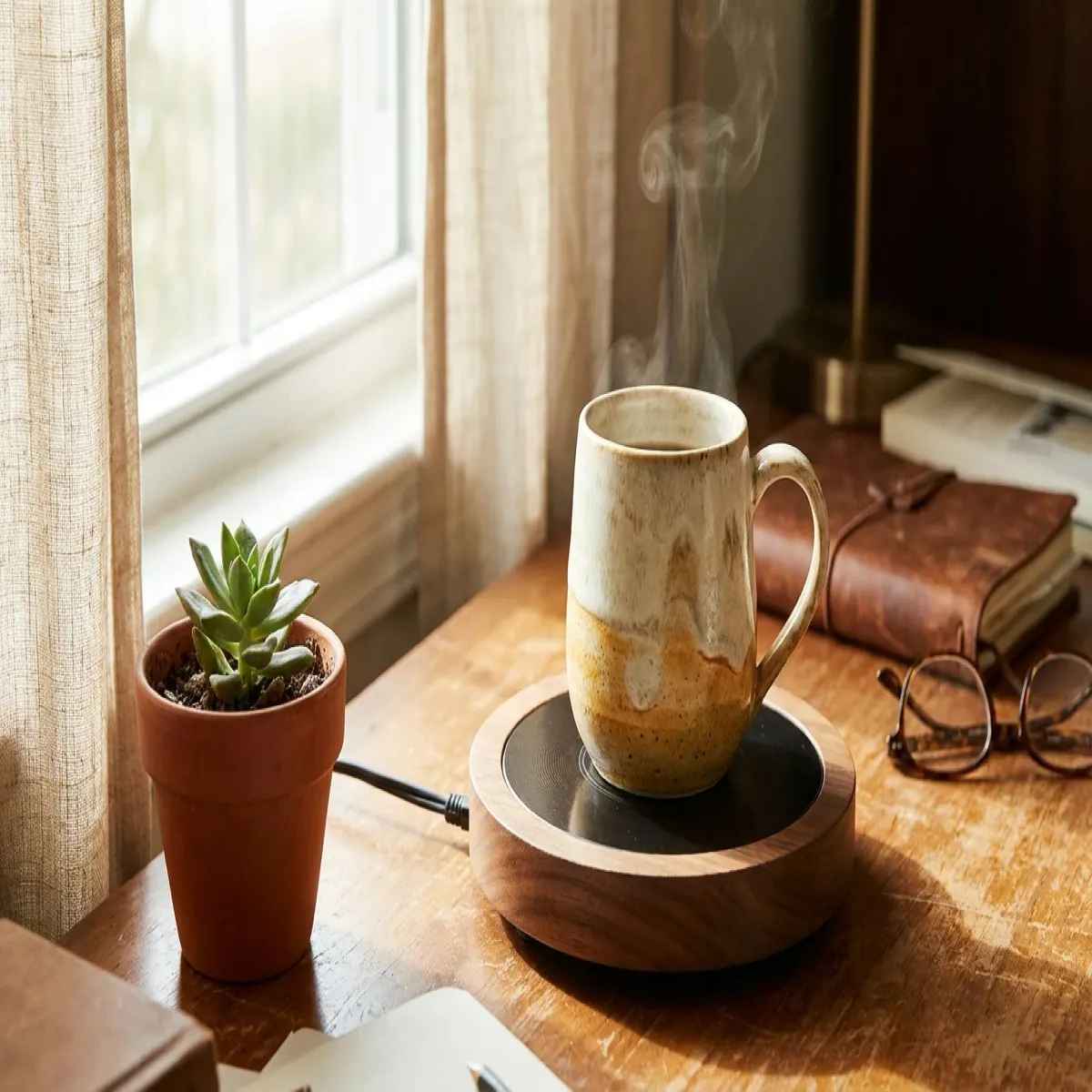
The mug warmer extends the "drinkable" window for a coffee that's already in an open mug. The coffee cools, the warmer brings it back up, the cycle repeats.
The strength: the coffee stays in a normal mug, you drink normally, the warming is automatic. No pouring into a different container.
The weakness: requires a power outlet, doesn't work on the go, can't recover from a fully-cold starting point.
Side by side: how long does coffee stay drinkable
| Time | Thermos (high-quality vacuum) | Mug warmer (24W plate, on a ceramic mug) |
|---|---|---|
| 0 min | 200°F (just poured) | 200°F (just poured) |
| 30 min | 185-190°F | 165-175°F (cooler than thermos) |
| 1 hour | 165-175°F | 145-155°F (still drinkable) |
| 2 hours | 145-155°F (slightly cooler than warmer) | 130-140°F (cooler) |
| 3 hours | 130-140°F | 120-130°F (cooling) |
| 4 hours | 120-130°F | 110-120°F (lukewarm) |
| 6 hours | 105-115°F | not relevant (cooler long ago) |
The pattern: a thermos keeps coffee hotter for the first 1-2 hours, then the two approaches are roughly equivalent. After 3 hours, the thermos is the clear winner. After 6 hours, the thermos still works and the mug warmer is irrelevant.
The catch: the mug warmer is adding heat continuously, so it can recover from a cold start. The thermos can't — once the coffee in the thermos is cold, it's cold.
The use cases
A thermos is the right answer when:
- You're going to be away from a power outlet (commuting, traveling, working in a coworking space with limited outlets)
- You want coffee to stay hot for 3+ hours
- You're okay with the coffee being in a sealed container for part of the day
- You want zero power, zero maintenance
A mug warmer is the right answer when:
- You work at a desk with a power outlet
- You want to drink from a normal mug, not a sealed container
- You drink coffee across 1-3 hours, not 3-6 hours
- You want the warming to be automatic, not something you have to remember to do
Neither is the right answer when:
- You drink coffee in 15-30 minutes (just drink it)
- You want a 6+ hour hot-coffee solution (you need a thermos plus a warmer, or you need to brew fresh)
The hybrid
For people who work at a desk and also commute or travel, the hybrid is the answer:
- Thermos for the commute and the first 2 hours
- Mug warmer on the desk for the rest of the day
This is what many office coffee setups look like. Brew at home, pour into a thermos, drink on the way to work, top off the mug at the desk with a warmer waiting.
The Ember Tumbler is the smart-mug version of this hybrid: a thermos-shaped mug with a built-in heater, 3-hour battery, app-controlled. Not as insulating as a pure thermos, not as warm as a pure warmer, but both in one.
What about the cheap travel mugs?
A "travel mug" in the $15-25 range is a single-wall stainless steel mug with a lid. No vacuum insulation. The thermal performance is poor — coffee is lukewarm in 30 minutes. These mugs are not thermoses. They're a marketing category that conflates "travel" with "vacuum insulated."
If you want a thermos, buy a vacuum-insulated one. The Yeti, Hydro Flask, Stanley, and similar brands at $30-50 are the actual category. The cheap "travel mug" is a different product that doesn't keep coffee hot.
The verdict
The mug warmer and the thermos are not competing products. They cover different scenarios.
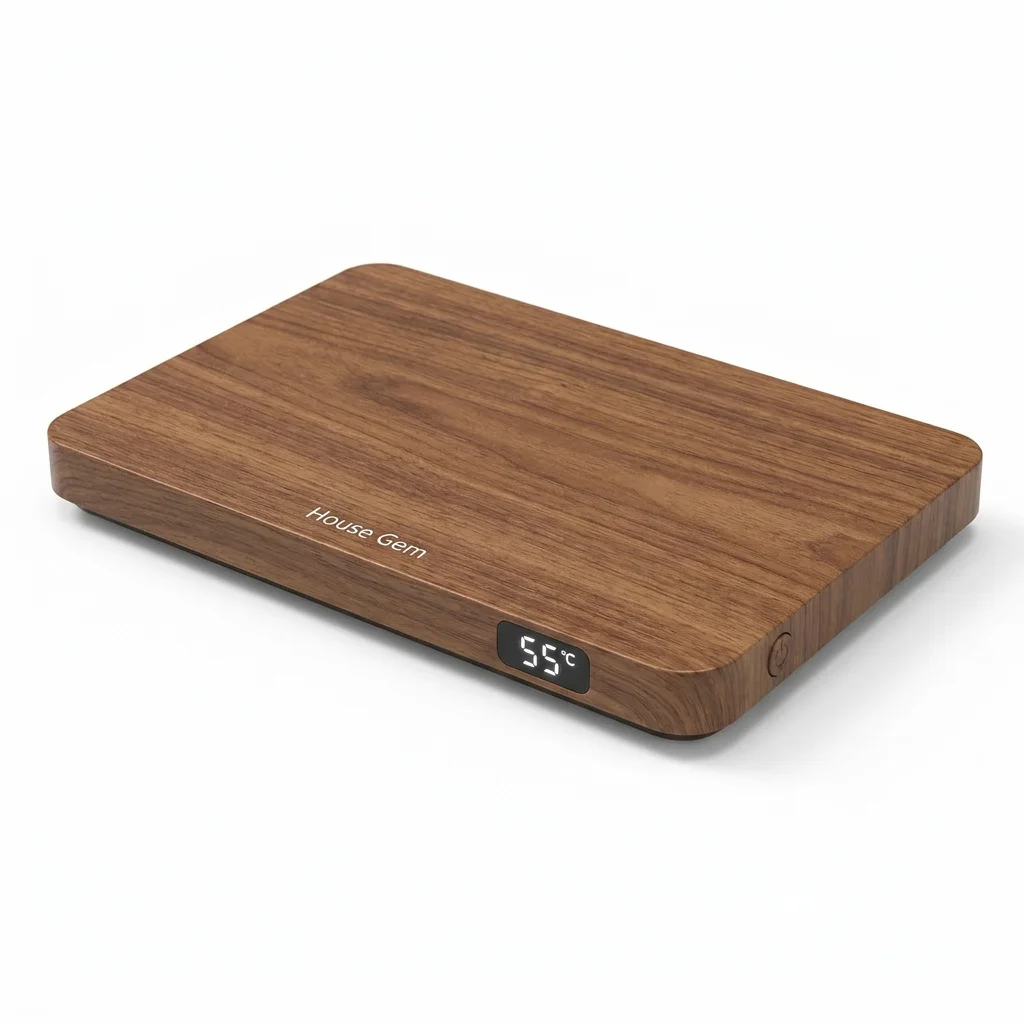
For a desk worker: a mug warmer (Cosori for the budget pick, House Gem 36W for the upgrade) is the right tool.
For a commuter or traveler: a real vacuum-insulated thermos. The brand matters less than the construction.
For the hybrid scenario: both. The thermos for the commute, the warmer for the desk.
For temperature precision and the slow-sipper use case: a smart mug (Ember for app control, Nextmug for on-mug control). The smart mug replaces both the thermos and the plate warmer for desk use, at a higher price.
For more on the active vs passive heat question, see the mug warmer vs microwave article on the taste side and the mug warmer vs insulated tumbler article on the same comparison from the other direction.
Methodology: AI-assisted editorial assessment based on manufacturer specifications, basic thermal physics, and aggregated verified-purchaser reviews. We do not perform hands-on testing. See our editorial policy for how we work.