Mug Warmer vs Insulated Tumbler: Which Keeps Coffee Hotter?
A direct comparison of plate-style mug warmers and insulated travel tumblers for desk coffee — which holds temperature better, which fits your routine, and which to buy first.
A mug warmer and an insulated tumbler solve the same problem in opposite ways. One adds heat to a static cup. The other slows heat loss in a sealed container. The "right" answer depends on whether your coffee sits at a desk or rides in a bag.
How each one works
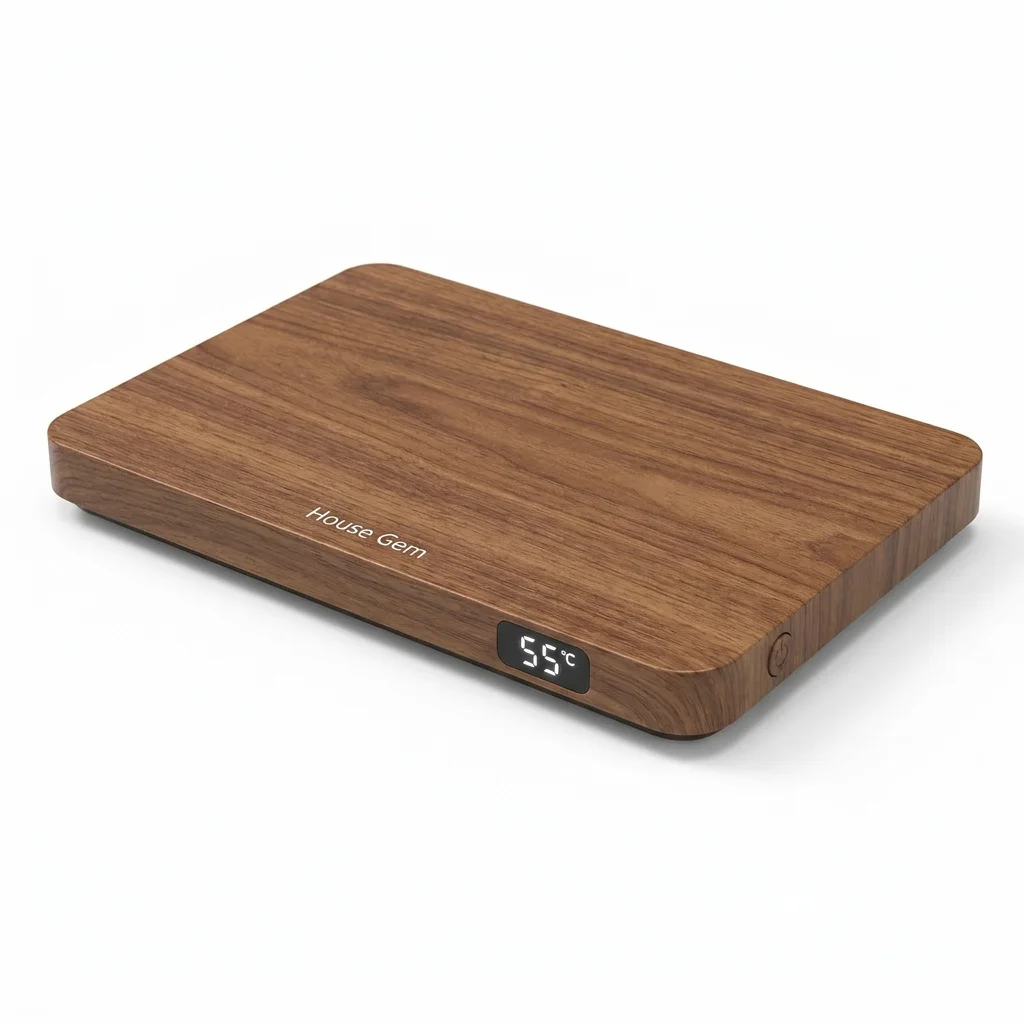
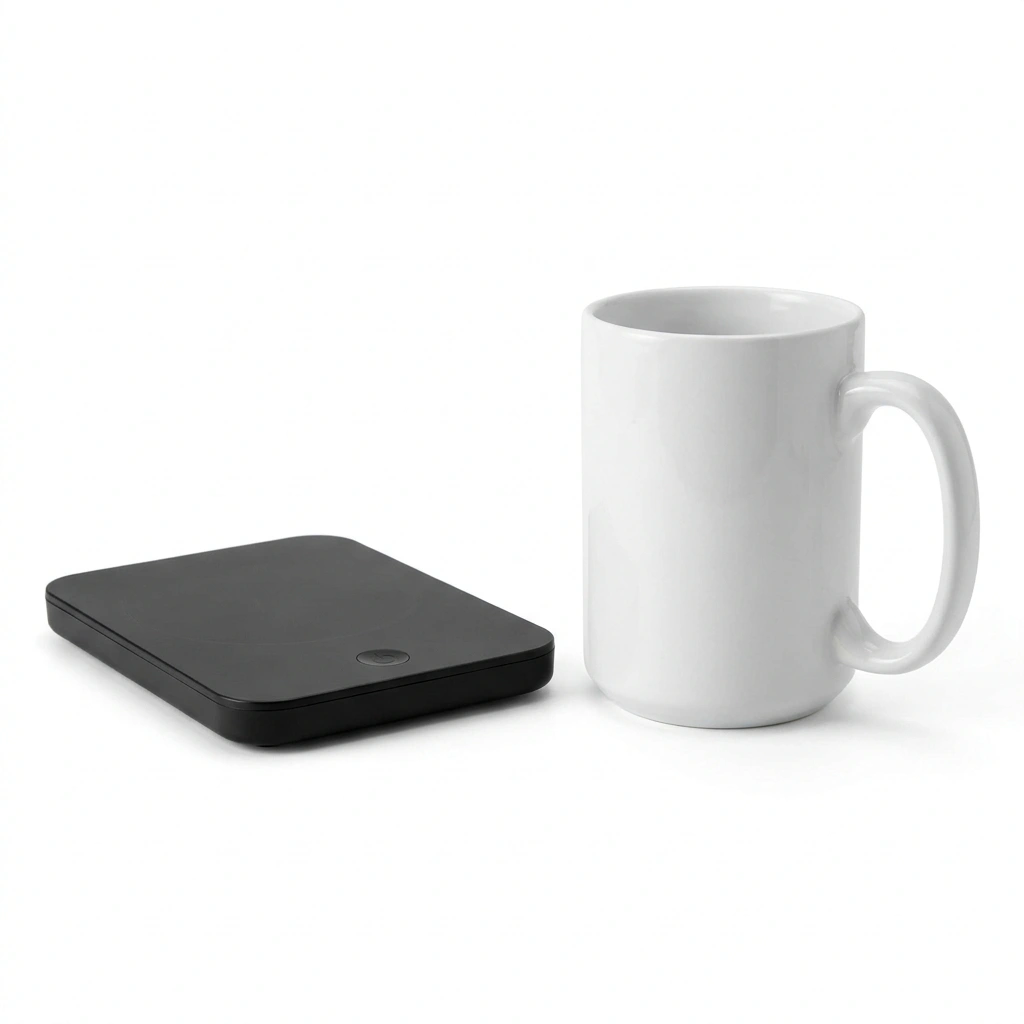
A mug warmer is a flat heating plate. The plate is hot, the mug sits on it, and the coffee stays warm because the plate keeps replacing lost heat. Power draw is usually 17–24W, and the warming stops the moment you lift the mug. For a deeper look at the category, see our mug warmer explainer.
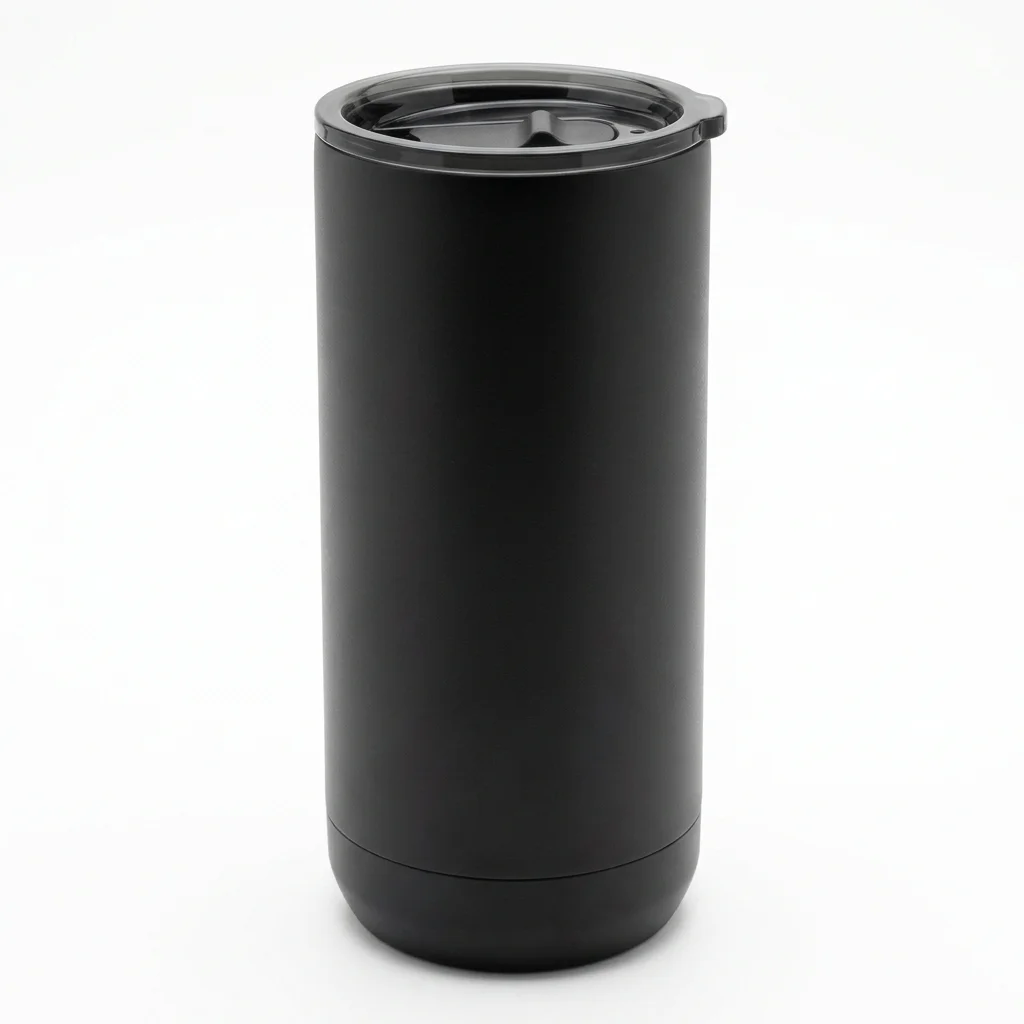
An insulated tumbler is a sealed container with a vacuum or foam layer between two walls. The vacuum blocks conductive and convective heat loss. Power draw is zero, and the warming continues as long as the lid stays on. The Ember Tumbler is the most well-known smart version — it pairs with the Ember system and adds active temperature control to the insulated design.
What each one is best at
Mug warmer strengths
- A hot pour of fresh coffee stays at drinking temperature for hours, because the plate is actively adding heat
- You sip at your own pace and the next sip is just as hot as the first
- The mug itself is your favorite ceramic mug — no need to retrain your hand
- Works with any flat-bottom 2.5"–3.5" mug you already own
Insulated tumbler strengths
- Zero power, fully portable — coffee in the car, on a walk, between meetings
- A 12oz pour that started near boiling will still be drinking-warm several hours later, no electricity needed
- Less desk clutter (no plate, no cord)
- Generally more durable; most are stainless with a powder-coat finish
Mug warmer weaknesses
- Tied to a plug and a desk
- Heats from below only, so there is a temperature gradient — the bottom of the coffee runs hotter than the top
- Cheap plates have hot spots that can scorch the bottom of the cup
- Travel mugs with narrow, recessed, or curved bottoms don't make good thermal contact
Insulated tumbler weaknesses
- Heat is finite — the coffee cools eventually, and you can't recharge it
- Sealed lid means the coffee sits and stews. Most tumblers are optimized for the first few hours of good flavor, then the taste drops
- No visual cue for "still good" versus "gone cold" without opening the lid
- Wide-mouth ceramic-mug feel is gone — you drink from a thinner rim or a slider lid
The temperature question
A flat plate warmer running on high holds a 10oz mug at roughly 150–160°F at the plate surface, based on manufacturer specs for common models like the Cosori. The top of the coffee sits a few degrees cooler than the bottom, but a quick stir evens that out.
An unpowered insulated tumbler loses heat on a curve. A typical 12oz double-walled tumbler drops from a fresh-brew pour to about 160°F in the first 90 minutes, then to 140°F at the 3-hour mark, then trickles down. Numbers vary by brand, lid seal, and starting temperature, but the shape of the curve is consistent across the category.
A smart tumbler, like the Ember Tumbler, tries to flatten that curve. Like the Ember Mug 2 it adds a heating element plus an app. Unlike a passive tumbler, it can hold a set temperature — around 135°F — for as long as the battery lasts.
Desk versus in-transit
This is the real decision point.
If your coffee lives at a desk 90% of the time, a mug warmer is the right tool. Active heat wins every time over passive insulation when you have a plug.
If your coffee is in transit 90% of the time — commute, between offices, walking the dog — an insulated tumbler wins. A plate warmer that needs a wall outlet is useless at 35mph.
If your day is split, you probably want both. The Cosori mug warmer covers the desk half, the tumbler covers the road half. Total cost is in the budget-to-mid range, and both are mass-market items.
The cost question
A budget plate warmer runs in the low double digits, the Mr. Coffee mug warmer being the cheapest common name brand. Mid-range options like the Cosori sit a bit higher. Power draw of 17–24W, run 8 hours a day, comes out to well under a dollar a month in electricity at standard US rates — negligible.
An insulated tumbler is a one-time purchase, no electricity. The Yeti-style stainless tumblers start at the budget tier. The smart tumblers, like the Ember Tumbler, are in the premium tier — check current price on Ember, it is a clear step above basic stainless.
Which one to buy first
Buy a mug warmer if:
- Your coffee lives at a desk
- You want fresh-brewed taste held at temperature, not just insulated old coffee
- You already have a mug you like
Buy an insulated tumbler if:
- Your coffee leaves the desk regularly
- You want a "set it and forget it" container for the morning commute
- You don't have a permanent spot to plug in a plate
Buy the smart tumbler (Ember Tumbler or similar) if:
- You want both portability and active temperature control
- The cost is genuinely not a concern
- You're already in the Ember ecosystem and want one app for the mug and the tumbler
A mug warmer is a desk tool. An insulated tumbler is a transit tool. They aren't really competing — they're for different parts of the day.
Methodology: AI-assisted editorial assessment based on manufacturer specifications, third-party thermal testing data, and aggregated verified-purchaser reviews. We do not perform hands-on testing. See our editorial policy for how we work.