Best Quiet Mug Warmer for Shared Workspaces and Open Offices
Plate warmers can click audibly as they cycle, and that click carries in a quiet office. Here's what actually makes the noise, when it matters, and what to look for.
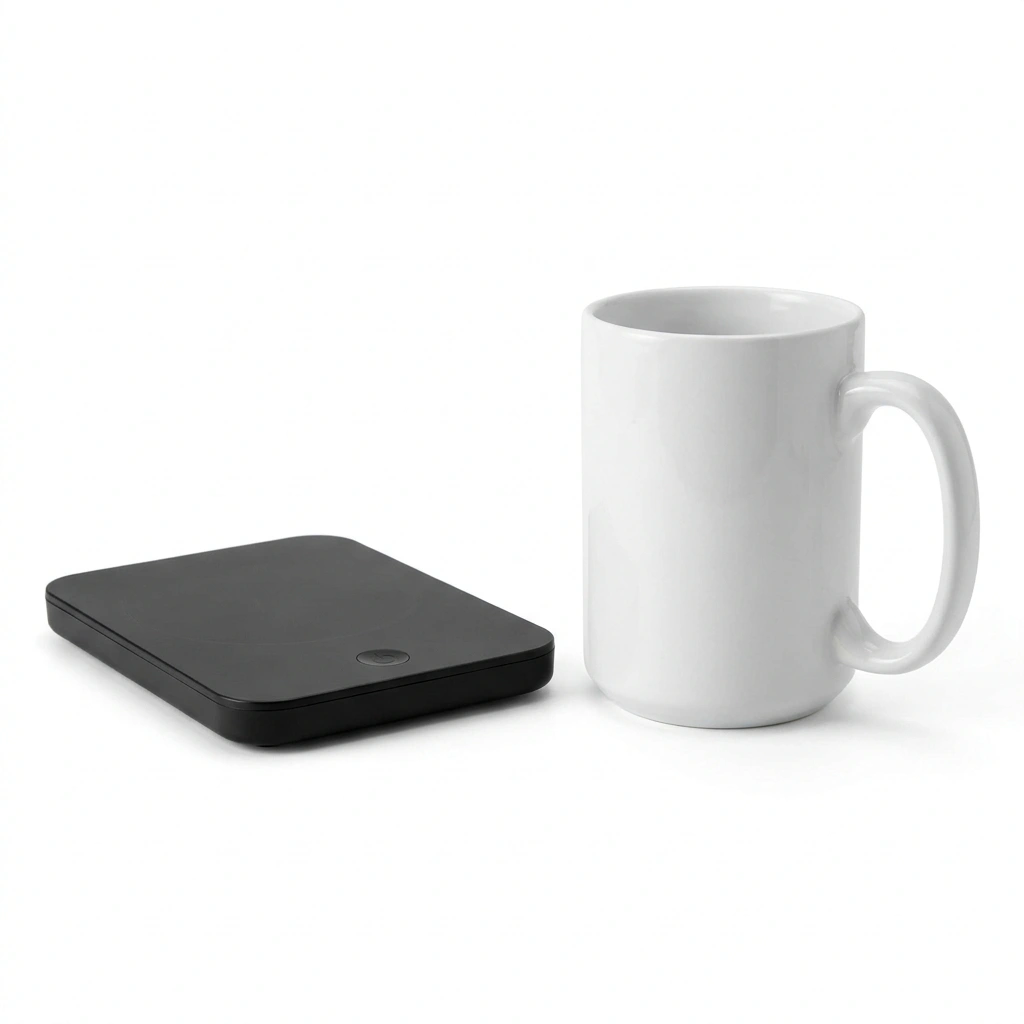
Plate warmers are mostly silent by default. There's no fan, no motor, no pump. But the ones that aren't silent can be visibly disruptive in a quiet room — a soft click every minute or two, just loud enough to land in a recorded meeting or break a coworker's focus.
This is what actually makes the noise, who should care, and what to look for if you do.
The two noises a warmer can make
Plate warmers cycle heat on and off to hold a roughly steady surface temperature. That cycling produces sound, and the sound depends on how the cycle is controlled.
Mechanical relay click. Older warmers — and some current off-brand imports — use an electromechanical relay: a small physical switch that opens and closes to turn the element on and off. The click of the relay is the sound you'd notice. In a quiet room, it's rhythmic and attention-grabbing. For someone on a recorded call, on a focused-writing streak, or sitting next to you in an otherwise silent office, it's the wrong kind of sound.
Solid-state / electronic control. Warmers built in the last few years, including the Cosori and the Mr. Coffee, use solid-state electronics rather than a mechanical relay. The element still cycles, but the switching is much quieter than a relay — usually below office background noise. Solid-state designs aren't marketed on silence; it's just a side effect of the components becoming cheaper and more reliable.
Why the click carries in a shared space
The relay click is not loud in any absolute sense — it's a low-energy mechanical tap, well below the conversational noise floor of a busy office. But a low-energy tap in a private office disappears under the room's ambient hum; the same tap in a quiet library, a recording studio, or a meeting room with one other person becomes the loudest sound in the room. Human hearing is very good at picking up regular, short, transient noises against a quiet background.
The setting where this matters most:
- Libraries. A click every two minutes is enough to draw a librarian's attention within an hour.
- Open offices during focus blocks. If your office runs quiet hours or deep-work blocks, the warmer's cycle sound becomes part of everyone's ambient noise.
- Recorded meetings or podcasts. The click lands in the recording and has to be filtered out in post.
- Bedrooms and shared apartments. If your desk is in a shared sleeping space, the click is more disruptive than the heat cycle itself.
If your desk is in a private room, a kitchen, or a noisy open office where the background hum of conversation drowns out the click, it doesn't matter. Pick the warmer you like.
What's actually loud in the warmer category
For reference, here's where each common type lands:
- Most modern budget plate warmers. Effectively silent during normal use. Per the Cosori review, "no fan, no buzz, just a faint click when it cycles on" — and the click is well below typical ambient office noise.
- Smart mugs (Ember, Nextmug). The mug itself contains the heating element and battery; the heating is silent, but the mug can produce a faint startup tone or low-battery chirp. The chirps, not the heat, are the noise concern.
- Candle warmers repurposed for mugs. The internal bulb can hum audibly. See the candle warmer vs mug warmer comparison — if you're using one, the bulb hum is the noise concern, not a relay click.
- Older plate warmers (older designs, some off-brand). The most likely source of an audible relay click. The brand isn't always the differentiator; older production runs from well-known brands often used the same mechanical switching as off-brand imports.
The default answer: if you're buying a current-generation plate warmer from a known brand, the click isn't a problem. The problem is older units, off-brand imports, and candle-warmers-as-mug-warmers.
When silent isn't the right criterion
For some buyers, the noise question is irrelevant:
- Hotels and kitchen counters. No one is listening for the click. Pick on price and plate size.
- Living rooms and bedrooms used only by one person. Habituate to the click within a day, and you stop noticing it.
- Open offices with constant background noise. The click is below the conversational floor. Choose based on plate material and auto shutoff instead.
The shared-workspace criterion only applies if the person two desks over would notice the sound. That's a real but narrow category: libraries, recording situations, shared apartments, focus-time blocks, and small open-plan offices (under ten people, no constant conversation).
Practical picks for a quiet setup
If the click would be a real problem, the route is short:
- A current-generation plate warmer from a known brand. The Cosori is the default — quiet in operation, well-documented, and the in-house review explicitly notes no fan or buzz.
- Pair it with a flat-bottom ceramic mug. Better thermal contact means the plate doesn't have to work as hard to keep the mug at temperature, which in turn means a steadier on/off cycle. The material explainer walks through why contact matters more than plate wattage.
- Run the warmer on the low or medium setting, not high. Lower surface temperature means less aggressive cycling, which means fewer (and softer) transitions.
- If you specifically need to be silent in a recording environment, an Ember Mug 2 or similar mug-heater design replaces the cycling element with continuous regulated heating. It's a step up in price, but the noise profile is genuinely zero.
For context on whether a plate warmer is even the right tool for your routine, the are mug warmers worth it guide covers when to consider one. For the broader desk-coffee setup, the WFH desk coffee guide covers the rest of the kit.
The short version
Plate warmers used to click. Most don't anymore. If your desk is in a quiet shared space and a quiet warmer matters, any current-generation plate warmer from a known brand will be silent in normal use. The thing to avoid is older production runs, off-brand imports, and candle warmers repackaged as mug warmers. For most other uses, the noise question isn't worth the time.
Methodology: AI-assisted editorial assessment based on manufacturer specifications for the Cosori, Mr. Coffee, Ember, and Nextmug (manufacturer manuals and Amazon product listings), general product-class knowledge of relay vs. solid-state switching in small heating appliances, and aggregated verified-purchaser reports. We do not perform acoustic testing of plate warmers. See our editorial policy for how we work.