Why Does Reheated Coffee Taste Burnt? (And How to Avoid It)
The chemistry behind that bitter, burnt taste when you microwave day-old coffee — and what to do instead.
Reheated coffee tastes bad. Specifically, it tastes burnt — bitter, sharp, almost acrid. The flavor is different from "cold coffee" and different from "fresh coffee." It's a third thing, and the chemistry is well-understood.
This is what causes it, and what to do about it.
The chemistry of bad reheated coffee
Three things happen to coffee as it sits:
- Volatile aromatics evaporate. Coffee's flavor is largely in the volatile compounds that evaporate at high temperatures. As the coffee cools, these compounds leave the liquid. The result: less aroma, less flavor.
- Chlorogenic acids break down. Chlorogenic acids (CGAs) are the main source of coffee's bitterness. As the coffee sits, the CGAs break down into smaller molecules that are more bitter. The result: more bitter taste.
- Lipids oxidize. Coffee contains oils (lipids). As the coffee sits, these oils oxidize. The result: stale, sometimes cardboard-like off-flavors.
Reheating the coffee to 170-180°F (the typical microwave output) accelerates the CGA breakdown — the same chemistry that happened slowly at room temperature happens quickly at high temperature. The result is amplified bitterness, on top of the original "lost aromatics" and "oxidized lipids" issues.
The burnt taste is the CGA breakdown reaching a point where the bitter compounds are the dominant flavor.
Why microwaves make it worse
Microwaves heat unevenly. The center of the mug can be 20°F hotter than the edge. The hotspots reach 180-190°F. The 180°F hotspots have accelerated CGA breakdown to a much greater degree than if the whole mug had been heated evenly to 165°F.
The 20°F gradient in the mug is part of the off-taste. Even if the average temperature is "right," the hotspots are doing the damage.
What hot plate / mug warmer does differently
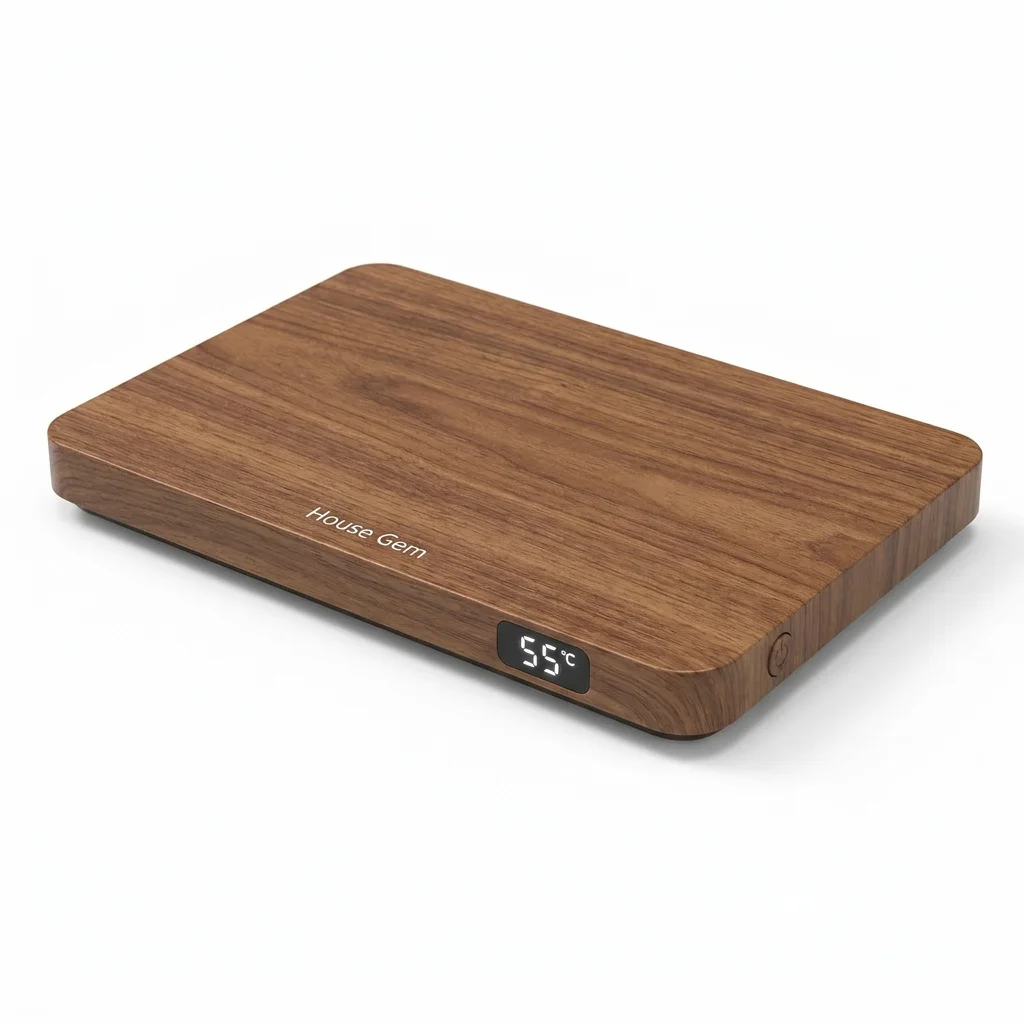
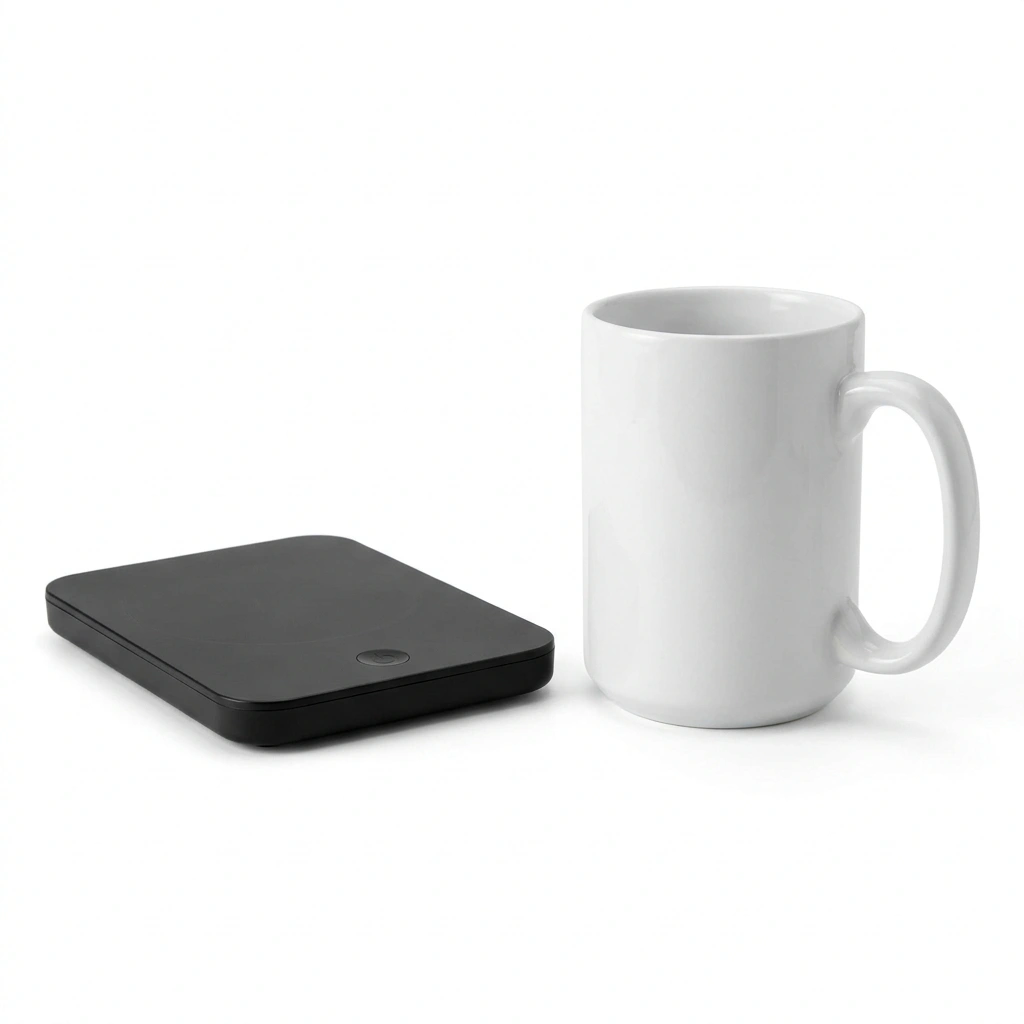
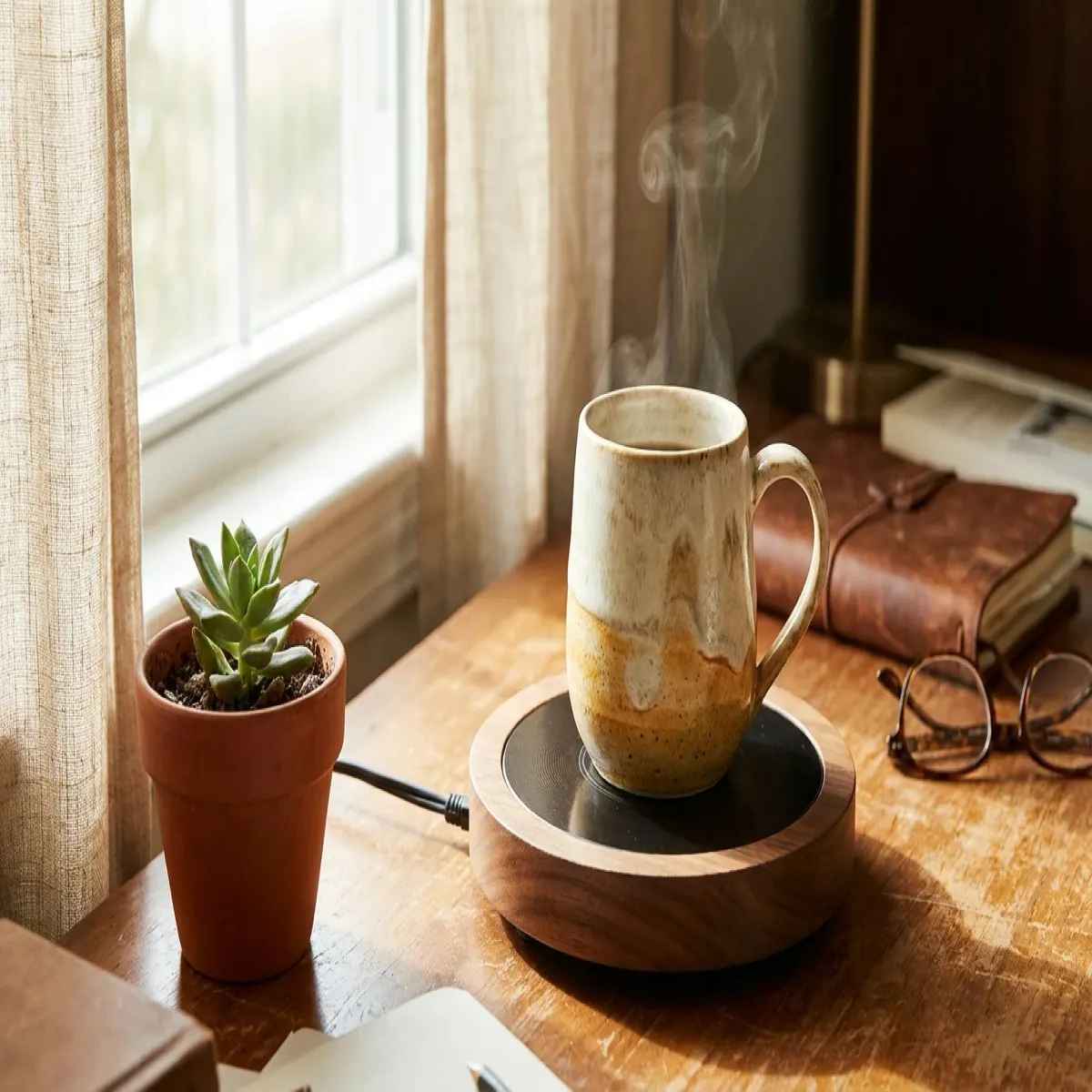
A mug warmer holds the coffee at a steady 130-140°F. No temperature spike. No hotspots. The CGA breakdown that happens at room temperature continues, but at the same rate it was happening before.
The mug warmer doesn't fix the "lost aromatics" or "oxidized lipids" issues. Those are unavoidable for any coffee that sits for hours. What the warmer avoids is the additional CGA breakdown that comes from the microwave spike.
The taste difference between microwaved and warmer-held coffee is real but specific: the microwaved version has a sharper, more aggressive bitterness. The warmer-held version has a flatter, less-bad version of the same coffee. The warmer is the lesser of two evils, not a fix.
How to reheat without making it worse
If you have to reheat — the coffee went cold, you want it hot now — there are ways to minimize the damage:
1. Heat in short bursts
A 20-30 second microwave cycle instead of 60. The mug reaches 150°F instead of 180°F. The CGA breakdown is much less.
2. Stir thoroughly
Stirring equalizes the temperature. The hotspots are blended into the bulk. The average temperature becomes the actual temperature.
3. Don't bring it to boiling
A 20-second burst that gets the coffee to 140-150°F is the target. A 60-second burst that gets it to 180°F is the failure mode.
4. Use a lower-wattage microwave
A 600W microwave takes longer to heat the same volume than a 1000W microwave. The longer cycle is closer to "soak" than "spike." Less hotspot damage.
5. Add fresh coffee to the reheated coffee
Mix 30% reheated coffee with 70% fresh. The dilution brings the off-flavors below the perception threshold. This is a real barista trick.
The hybrid: warm + brief reheat
For coffee that's been on a mug warmer for 90+ minutes and is now lukewarm, the hybrid is the right answer:
- The warmer did the slow part (kept it drinkable, not great, for 90 minutes)
- A 20-second microwave brings it back to hot for the last 30 minutes
- The CGA breakdown from the brief reheat is minimal
This is the practical workflow for a long desk session. Don't use the microwave as the primary tool. Use the warmer for 90% of the time and the microwave for the recovery at the end.
What to skip
Reheating on a stovetop
Worse than the microwave. Direct stovetop heat can take the coffee above 200°F, accelerating the CGA breakdown to the same level as a 90-second microwave burst. Plus, the practical problem of transferring a mug to a stove.
Adding hot water to extend the coffee
Adding hot water dilutes the coffee (less flavor), accelerates cooling (more volume, more surface area), and doesn't address the CGA breakdown. A common home remedy that makes the underlying problem worse.
Reheating the same coffee multiple times
Each reheat cycle accelerates CGA breakdown. Reheating once is the limit. Reheating the same coffee twice is making it noticeably worse.
The verdict
Reheated coffee tastes burnt because of chlorogenic acid breakdown, accelerated by high temperatures, made worse by uneven heating. The mug warmer avoids the problem by not spiking the temperature. The microwave makes it worse by spiking the temperature unevenly.
The right workflow: warm the coffee from the start, don't microwave unless you have to, and if you do microwave, use short bursts and stir.
For the active vs passive warming question from a different angle, see the mug warmer vs microwave article. For the broader desk-coffee workflow, see the desk coffee setup guide.
Methodology: AI-assisted editorial assessment based on food-chemistry references, manufacturer specifications, and aggregated verified-purchaser reviews. We do not perform hands-on testing. See our editorial policy for how we work.