Mug Warmer for Espresso and Small Cups: Does It Work?
Whether a plate-style mug warmer can keep a 2-4oz espresso or demitasse cup hot — the physics of small mug sizes, what plate warmers are actually designed for, and when a different category is the right answer.
Plate-style mug warmers are designed for standard coffee mugs — 8 to 15 ounces, flat base, roughly 3 to 3.5 inches wide. Espresso cups and demitasse mugs sit well outside that range. The standard product copy ("use any flat-bottom mug") skips the actual question buyers ask: will a 2 to 4 ounce cup work?
The short answer: yes, with a real caveat. A small cup on a plate warmer reaches drinking temperature faster but loses it faster. The warming benefit is shorter-lived. For a single espresso shot, the math barely matters because the shot is gone in two sips. For double shots, cortados, and small flat whites, the warming benefit is real but lasts 20-30 minutes, not hours.
What "small cup" means in this category
The mug warmer world has informal size buckets:
- Standard coffee mug: 8-15oz, base 2.8-3.5", the default plate-warmer target.
- Large mug: 16-20oz, base 3-3.5", works on plate warmers but holds a cooler steady state than a smaller mug on the same warmer.
- Small mug: 6-8oz, base 2.2-2.8", sits on the plate but with noticeable air around the contact area.
- Demitasse / espresso cup: 2-4oz, base 1.5-2.2", the smallest practical cup for warm beverages and the focus of this article.
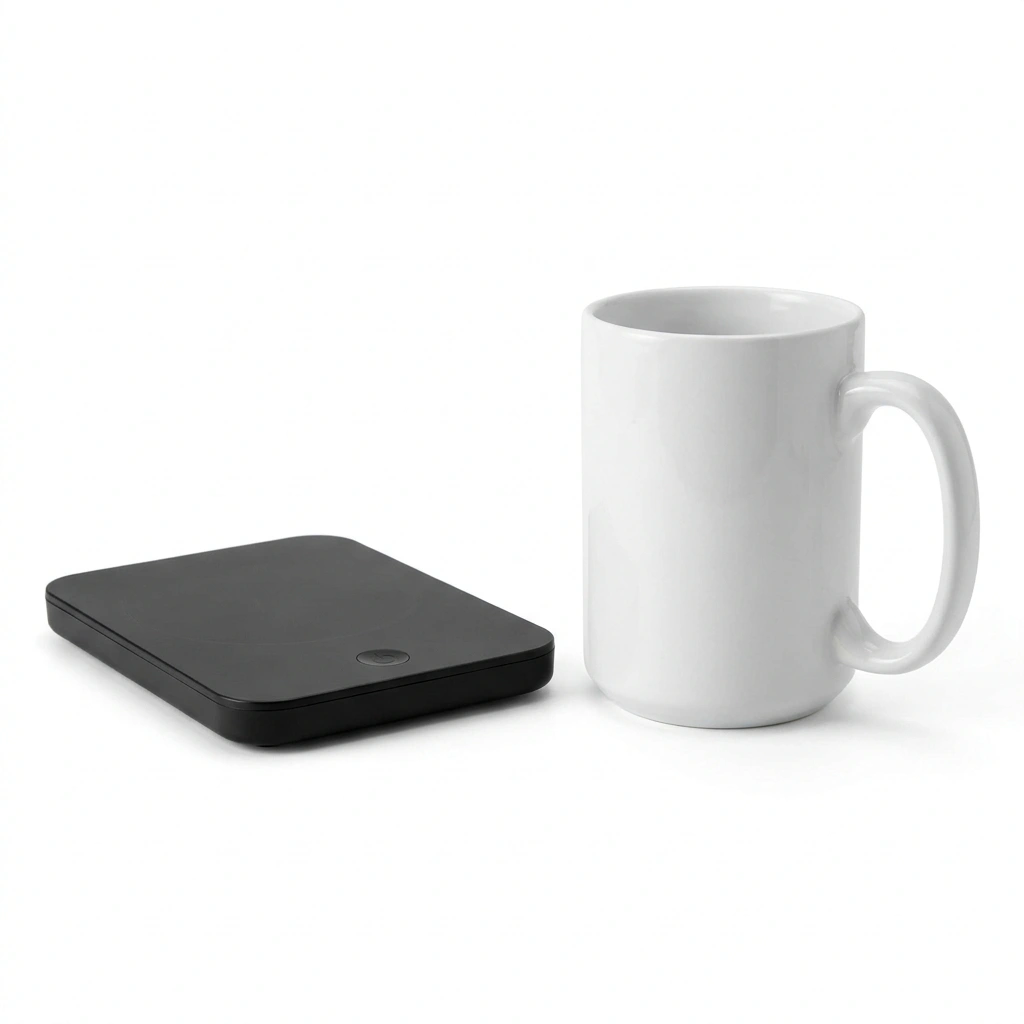
A typical espresso cup is 2-3oz for a single shot or 3-4oz for a double. Both have small bases — usually under 2.5". A standard plate warmer has a plate about 3-3.5" wide. A 2" espresso cup on a 3.5" plate has the plate heating air as much as the cup itself.
The two physics problems with small cups
Less contact area
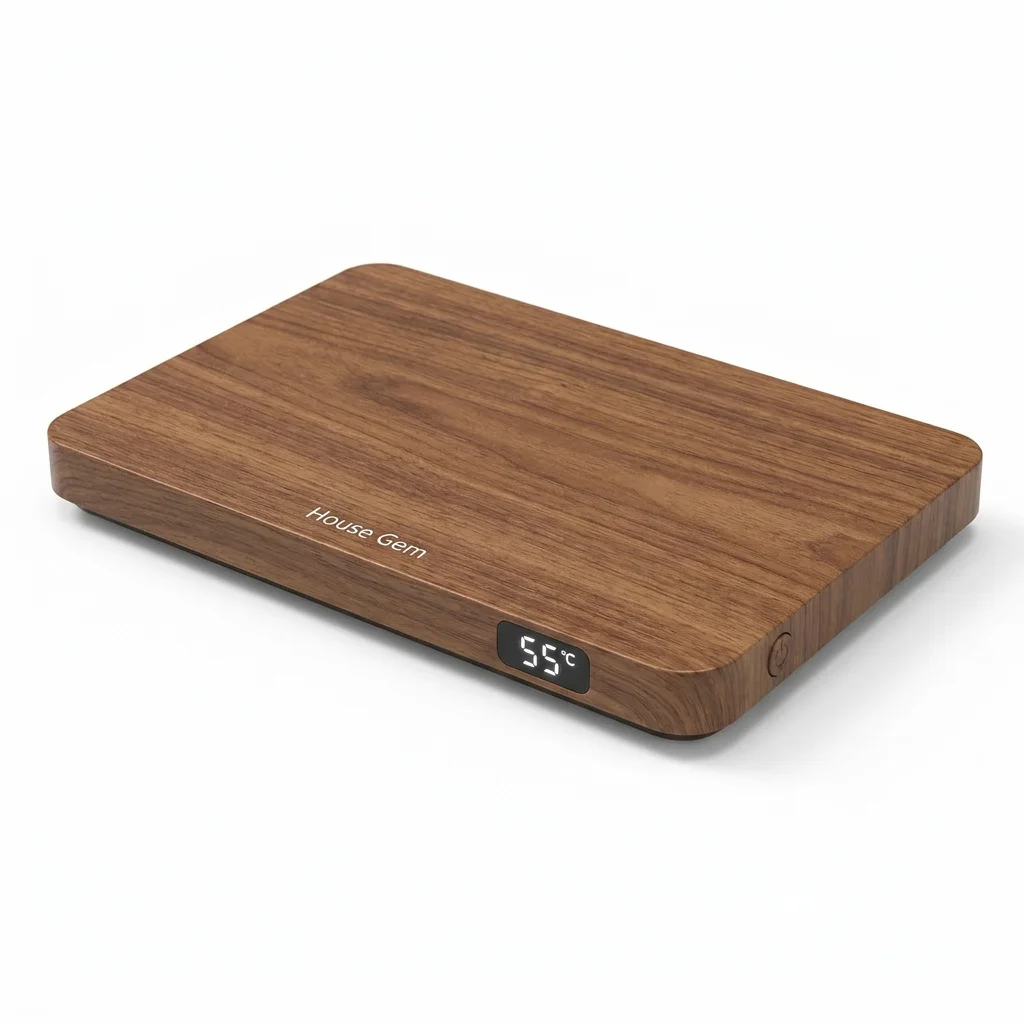
A standard mug's flat bottom is roughly the size of the heating plate — full contact, full heat transfer. An espresso cup's bottom is half to two-thirds the size of the plate. The plate still puts out the same wattage, but only a fraction of that wattage enters the cup. The rest heats the air around the cup.
In practice, a 24W plate warmer puts substantially less than its full rating into a 3oz cup. The cup still warms up — but slower and at a lower temperature ceiling than a standard mug would on the same plate.
The Cosori is officially rated for "flat-bottom mugs 2.5"-3.5" wide." An espresso cup at 1.5-2.2" falls below the official compatibility threshold. It still physically sits on the plate, but the manufacturer is signaling that performance isn't guaranteed.
Less thermal mass
A 3oz espresso cup has about a quarter of the thermal mass of a 12oz mug — less liquid, thinner walls. It heats up faster but also loses heat faster. The cup reaches drinking temperature in a few minutes instead of ten, but it cools back toward lukewarm in 15-20 minutes instead of 90+.
This is the core trade-off. A small cup on a plate warmer behaves more like a "delayed cooling" tool than a sustained warming tool. It buys maybe 20-30 minutes of extra drinkable temperature instead of 90+.
For a single espresso shot — gone in two sips — the warming does nothing. The mug warmer explainer recommends against a warmer for espresso drinkers, and that's the right call.
For a double shot, cortado, or piccolo — 3-4oz of liquid, sipped across 10-15 minutes — the warming helps, but only for the first 20-30 minutes. After that, the cup cools back to lukewarm on its natural curve and the plate warmer doesn't change that.
What actually works for small cups
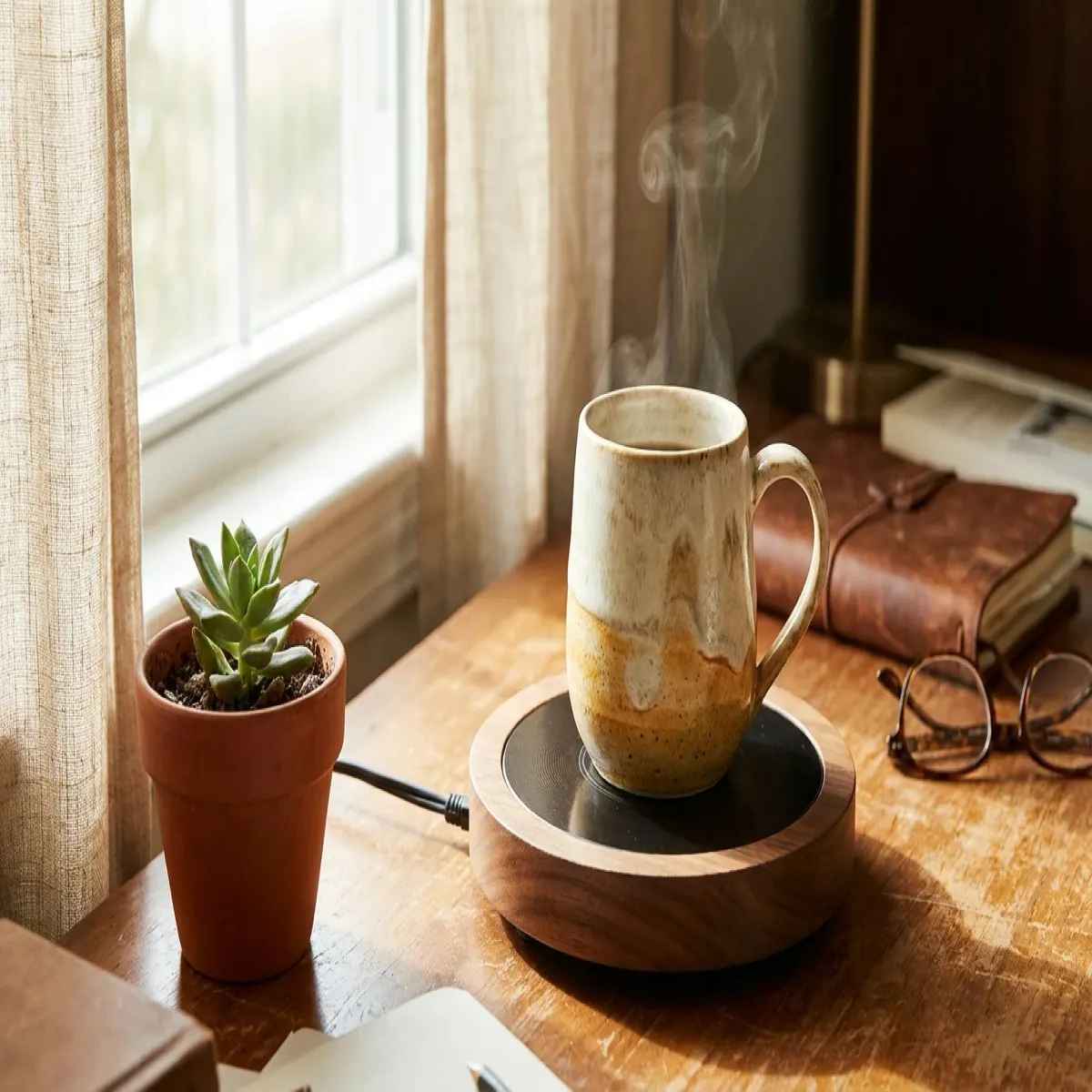
Preheated cup, then drink quickly. The preheated-mug trick — rinse with hot water for 30 seconds, dump, pour — works well for any small cup. The cup starts warm, the coffee goes in hot, and you have 5-10 minutes before the temperature drops noticeably. For a 2-3 minute cortado, this is enough. The how to keep coffee hot at your desk guide walks through this approach.
A larger cup with less coffee. Pour your double shot into a 6-8oz cappuccino cup instead of a 3oz demitasse. The cup has more thermal mass, the plate contacts more of the bottom, and the warming benefit lasts longer. The aesthetic isn't espresso-traditional but the temperature holds.
A double-wall ceramic espresso cup. Some ceramic espresso cups are made with thicker walls (1/4" or more) and a flat base that fills more of the plate. These work better on a plate warmer than a thin porcelain espresso cup does. The mug compatibility guide covers thick-walled ceramic in more detail.
The standard thin-walled porcelain espresso cup that ships with most espresso machines is the worst case — thin walls, small base, fast heat loss. The plate warmer helps marginally. The Cosori review explicitly lists espresso shot drinkers in the skip-it category for the same reason.
The Cosori and Mr. Coffee on small cups
The two default recommendations handle small cups differently.
Cosori (24W, three settings). The Cosori has enough wattage that a small cup does warm up, even with reduced contact. On high, a small demitasse reaches a drinkable temperature within a few minutes. The trade-off is that the warming window is shorter than with a standard mug. On medium, the ceiling is lower and the window is even shorter. For best results with a small cup, run the Cosori on high and accept that the warming benefit is time-limited rather than sustained. Check current price on Amazon.
Mr. Coffee (17W, on/off). The Mr. Coffee has less wattage and no setting control. A small cup warms slowly and reaches a lower ceiling than a standard mug would on the same warmer. For an espresso cup, the Mr. Coffee adds maybe 10 extra minutes of drinkable temperature versus no warmer at all. Not nothing, but not impressive.
Both warmers are designed for standard mugs and work less well for small cups. That's not a defect — it's a category mismatch. The wattage explainer breaks down why more wattage helps with mug thickness and size; the same logic applies in reverse to smaller mugs.
The smart mug alternative
For genuine small-cup warming, a smart mug or self-heating mug is a better tool. These have heating elements in the mug wall, not under a plate. The contact area doesn't matter because the heat comes from every direction, and the mug actively maintains the liquid temperature regardless of size.
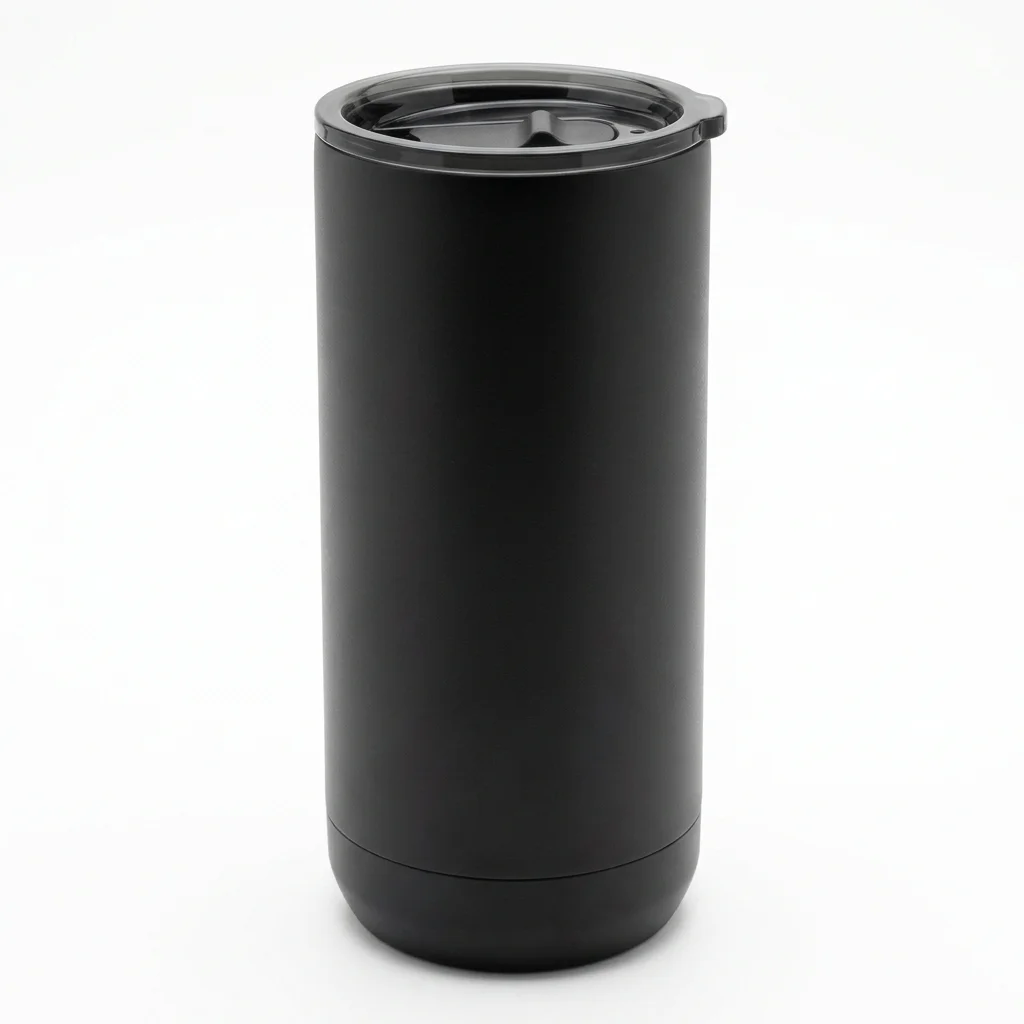
The Ember Mug 2 at 10oz is larger than a demitasse but works well for cortados and piccolo drinks — the heating element wraps the entire mug wall so the smaller volume of liquid still gets maintained heat. The Nextmug at 14oz is closer to a small coffee mug than an espresso cup but handles small-format drinks through the same active-heating approach. The Ember Tumbler at 16oz is closer to a small mug than a demitasse and includes a lid that helps with heat retention.
None of these are espresso-machine cups in the traditional sense. If you want a true espresso cup that warms itself, the category is thin — most heated mug products are 10oz or larger. The practical workaround is a 6-8oz self-heating mug with a smaller-than-standard volume of coffee.
The takeaway
A plate-style mug warmer works with small cups but with real limits. The warming window shrinks from 90+ minutes (standard mug) to 20-30 minutes (small mug) because the small cup has less thermal mass and less plate contact. For single espresso shots, the warmer does nothing. For cortados and small flat whites, it helps for the first 20 minutes of the drink.
If small-format coffee is your main use case, a smart mug (Ember, Nextmug) is a better tool than a plate warmer. If you already have a plate warmer and use it for both standard and small drinks, accept the trade-off and use the high setting when pouring into a small cup.
For the broader buying decision, see the office desk buying guide and the wattage explainer. For the material angle — why some small cups work better than others — see the mug compatibility guide.
Methodology: AI-assisted editorial assessment based on manufacturer specifications for plate warmers and common espresso cup form factors, basic heat-transfer physics (heat loss scales with surface-area-to-volume ratio, which is worse for small cups), and aggregated verified-purchaser reports. We do not perform hands-on thermal testing. See our editorial policy for how we work.